

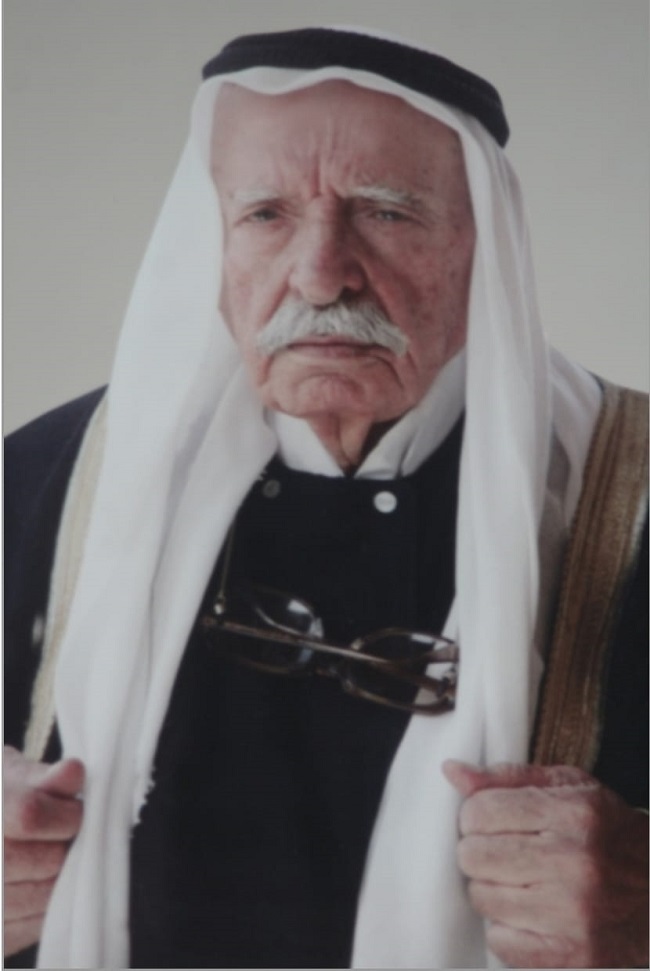
Zaid al-Atrash, the knight of the sword and the pen, brother of the General Commander of the Great Syrian Revolt, Sultan Pasha al-Atrash, is one of the most important historical figures in Jabal al-Arab. He was a knight and a poet who participated in the revolt against the French in Jabal al-Arab and Lebanon, and was sentenced to death three times.
Zaid al-Atrash was born in the town of al-Qurayya in 1904, where he learned to read and write, and drew inspiration from his older brother, Sultan, especially after their father, Dhuqan, was executed in 1911 by the Ottomans. He was a man of thought who experienced life in Jabal al-Arab and was a great poet with a prolific output in both quantity and quality.
He was a major national figure who participated in the revolt against the French in 1922 following the arrest of Adham Khanjar. He then held the position of Director of the al-Qurayya District just before the Great Syrian Revolt of 1925, in whose battles he participated, including al-Kafr, al-Mazraa, and al-Musayfirah. He later led major battles in Lebanon, "Hasbaya and Rashaya," in addition to battles in the Ghouta of Damascus, and emerged as a spokesman for the leader of the revolt.
Zaid accompanied the revolutionaries led by Sultan al-Atrash in their exile abroad, and the French issued three death sentences against him. He later returned to Syria following the general amnesty for the revolutionaries in 1936.
Zaid al-Atrash was elected as a deputy in the Syrian Parliament to continue his political struggle against the occupation. He then joined the Syrian Gendarmerie in 1942, held the position of battalion commander, and attained the rank of Colonel. He later transferred to the civilian police and retired with the rank of Major General.
Zaid al-Atrash passed away in 1996 at the age of 92, leaving behind a significant political, intellectual, and cultural legacy, earning him the title of “Knight of the Sword and the Pen.”