

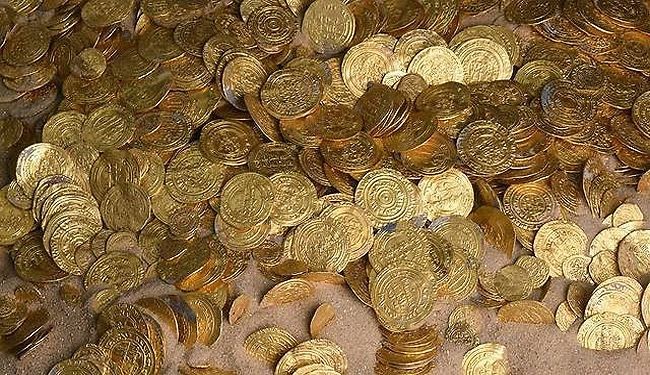
In February 2015, Israeli divers found a gold treasure off the coast of Caesarea at a depth of 12 meters. The treasure contains more than 2,000 gold coins dating back to the Fatimid era.
Media outlets reported that 5 amateur divers found the treasure by chance. The divers were later able to extract about 2,000 gold pieces, weighing up to 6 kg.
Estimates indicate that these gold pieces were on board a ship that sank in the area, as Caesarea was considered an important port for the Fatimid state and a starting point for maritime trade.
Specialists suggested that the coins found were either intended to pay the salaries of soldiers who were stationed in Caesarea to defend it a thousand years ago, or that the ship was carrying tax money destined for the central government in Egypt, or that the ship belonged to a major merchant who traded with Mediterranean coastal cities during that period.
The treasure included coins minted in various locations within the Fatimid state, whose borders reached Palestine and North Africa in the tenth century AD.
The pieces contain two types of currency, the dinar and the quarter-dinar. The oldest piece dates back to the ninth century and was minted on the island of Sicily, while the latest dates to the year 1036 AD; therefore, it is likely that the ship sank after this year.