

Prince Adel Arslan is one of the most important Druze political and cultural figures of the twentieth century. He played a major role in the significant events that the region witnessed in the Levant and the Hejaz, adding great imprints to the path of the Arslan family, whose history is characterized by science, knowledge, leadership, and patriotism.
Prince Adel Arslan was born in Beirut in 1887, studied in Istanbul and France, and mastered both Turkish and French, then returned to practice politics through several small local positions, and was chosen for the Ottoman Chamber of Deputies.
Prince Adel Arslan was the youngest member of the Chamber of Deputies when he joined. After the term of the Chamber of Deputies ended, he was appointed to the Ministry of the Interior as Director of Immigrants in the Province of Syria in 1914, and a year later, he became the Qaim-maqam (district governor) in the Lebanese Chouf region.
The Prince showed patriotic tendencies through his affiliation with the Al-Fatat (Young Arab Society) and worked with it secretly until the forces of King Faisal entered Damascus, at which point he rushed to join the King.
He was close to King Faisal until he was appointed as his private secretary, then moved on to become an administrative assistant to the head of the Faisal government, remaining in his position until King Faisal left Damascus following the Gouraud ultimatum.
Arslan was not satisfied with the French presence, so he stood against it and was active in the field against it, which led the Mandate authorities to sentence him to death. He left Syria for Switzerland, and from there to Amman in Jordan, after staying in Cairo for some time.
The Emirate of Transjordan was in the process of being formed, and he was appointed head of the Diwan of Prince Abdullah bin Al-Hussein until a dispute arose between him and Prince Abdullah's Prime Minister. He left Jordan for Mecca, where Sharif Hussein bin Ali was, and from there, Arslan traveled to Cairo once again, where he remained until the outbreak of the Great Syrian Revolt.
Prince Adel rushed to participate in the Great Syrian Revolt and was a right-hand man to Sultan Pasha al-Atrash, despite all that was said about competition between the two men for the leadership of the revolution. Sultan Pasha would entrust him with leading fighters in some of the revolution's campaigns, and he would attend Sultan Pasha's meetings with foreign journalists to act as an interpreter. The French sentenced the Prince to death for a second time, and he traveled with his fellow mujahideen to Azraq in Jordan, then to Nabk in Wadi Al-Sirhan in Saudi Arabia, where he remained until 1929.
After that, Prince Adel Arslan left for Cairo until the National Bloc concluded the 1936 treaty, when an amnesty was issued for everyone. Arslan returned to Syria and was appointed as a plenipotentiary ambassador to Turkey. However, France refused to sign the treaty, so they arrested the Prince and imprisoned him in Palmyra, but they soon released him, and he returned to Beirut.
Prince Adel Arslan appeared once again at the beginning of the national era after France had stripped him of any role, so he participated in the early national governments that followed the withdrawal of French forces as Minister of Education in the government of Saadallah al-Jabiri, and in the subsequent government headed by Jamil Mardam. Then, he was elected as a deputy for the Golan in the Syrian Parliament in the first elections held in 1947 after the end of the Mandate.
President Shukri al-Quwatli tasked him with forming a government after the disaster of the Palestine defeat in 1948, but he failed to form it due to the crisis on the internal front after the Palestine War. He then participated in the conference held about Palestine in London as a delegate in the Syrian-Palestinian delegation.
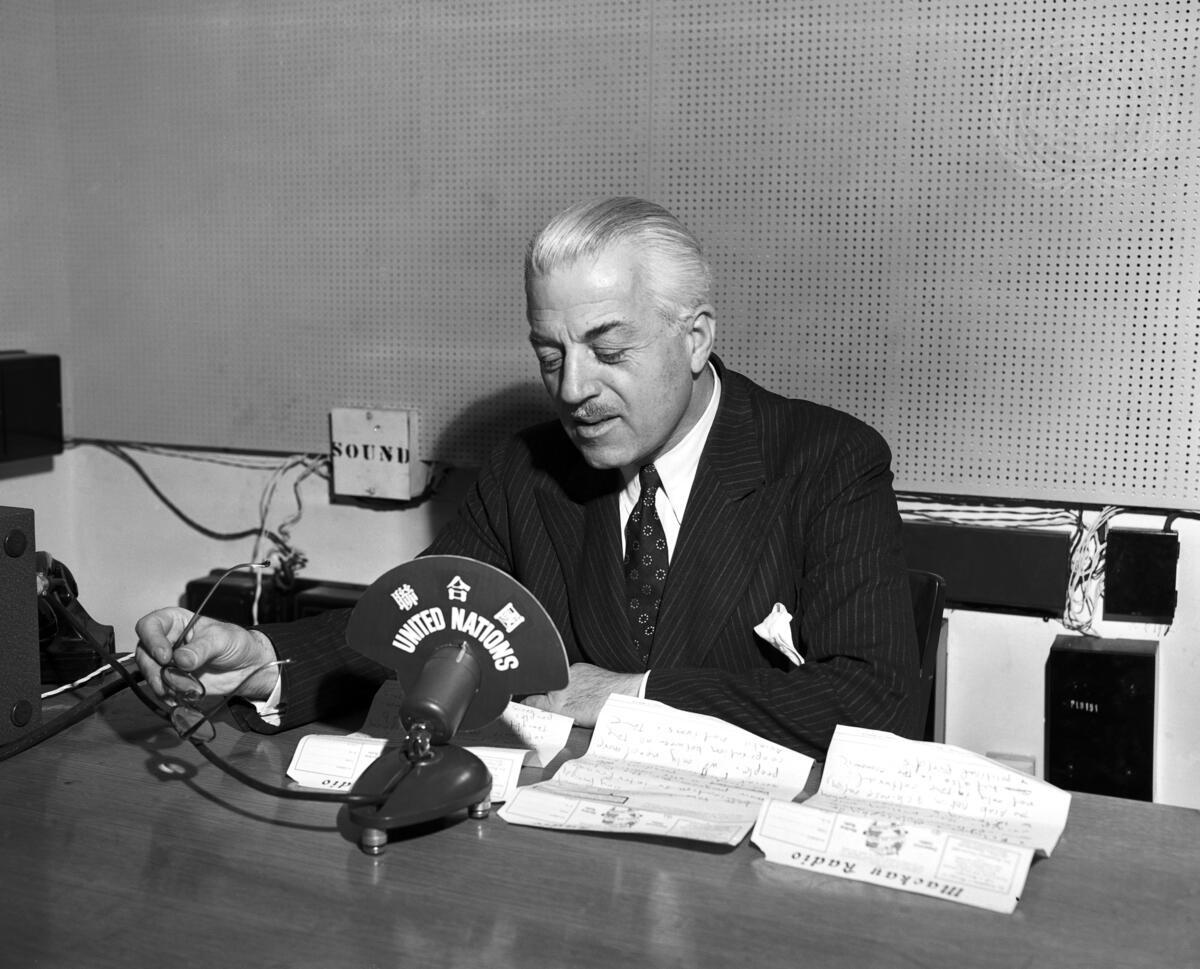
During the reign of Husni al-Za'im, Arslan held the position of permanent representative of Syria to the United Nations, then returned to the seat of the Ministry of Foreign Affairs. He resigned after strongly objecting to a Syrian law introduced by Asaad Kurani that lacked a foundation in Islamic Sharia! Following his objection, he was exiled to the Syrian embassy in Turkey. He remained there until the fall of Husni al-Za'im in a second military coup.
Arslan then returned to Beirut and remained there, suffering from several heart attacks before his death in 1954.
Despite Prince Adel Arslan's participation in revolutions and politics, he was close to the world of literature and poetry. He wrote for the press, expressing his views through his poetry and patriotic behavior, and he wrote valuable diaries in which he presented contemporary events from the point of view of a politician, a citizen, and a neutral observer. Thus, along with his poetry, they formed a valuable historical summary of the era in which he lived.