
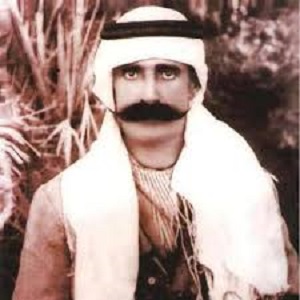
Muhammad Pasha Izz al-Din al-Halabi was a great mujahid who played an important role in the history of Jabal al-Arab. He represented Greater Syria in the Chamber of Deputies of the Ottoman Empire, served as a military judge, participated in the Great Syrian Revolt as one of its leaders, and was appointed Prosecutor General and Director General of the Mountain's Justice Department.
The heroic mujahid Muhammad Pasha Izz al-Din was born in the village of Lahitha in 1889. He received his higher legal and military education in "Istanbul, Turkey," graduated from its Military College, and was fluent in Turkish and French, in addition to his mastery of Arabic.
Al-Halabi received several high honors throughout his military and civilian life. He led many revolutionary national movements and, in his youth, joined the Arab Independence Party, whose prominent members included President "Shukri al-Quwatli" and the late Prince "Adil Arslan."
He began his professional life as an honorary aide-de-camp with the rank of Captain to Sultan "Mehmed V," then transferred to the General Staff department. He was promoted to the rank of "Lieutenant Colonel" and was entrusted with the command of the "Douma" reserve battalion in 1911.
When he witnessed the aggressive acts and injustices committed by the Turks against Arabs across Syria, and the hanging of several national notables—namely "Tuqan al-Atrash, Yahya Amer, Mazid Amer, Muhammad al-Qal'ani, Hamad al-Mughawish, and Abu Hilal Hazzah Izz al-Din," the uncle of the mujahid "Muhammad Izz al-Din"—in the "Marjeh Square in Damascus" in March 1911, a major dispute arose between him and the Turkish Minister of Defense, leading him to resign from his military post in 1912, strongly rejecting these hostile stances.
He represented Greater Syria in the Chamber of Deputies in Istanbul in 1915. In 1917, he was appointed a military investigative judge, serving as a model of the righteous judge and fair governor. He was then promoted to a district governor (Qaimaqam) in 1918 during the Faisal era, where he oversaw the districts of "Amranieh, Rashaya, Hasbaya, Zabadani, and Izra." He was later entrusted with the governorship (Mutasarrifate) of "Daraa" from November 20, 1920, until February 1921. During the Faisal era, in addition to his duties, he was assigned command of the military region in "Zabadani" and participated in the famous battle of "Maysalun" under the leadership of the then-Syrian Minister of Defense, the hero "Yusuf al-Azma," who was martyred in that battle.
In 1923, he was appointed Prosecutor General and Director General of the Justice Department for the Jabal al-Druze. He began making secret contacts with loyal Syrian figures until the start of the Great Syrian Revolt in 1925, when the leader of the revolution, the late "Sultan Pasha al-Atrash," entrusted him with leading the battles of Al-Ghuta and Al-Lajah.
Al-Halabi led the battle of "Al-Lajah," during which he was seriously wounded in the shoulder, as well as the battles of "Lahitha," "Majadil," "Samid," "Tel al-Khalidiyah" to the east, and "Al-Masmieh" in Hauran to the northwest, in addition to his participation in the battle of "Al-Musayfirah" in 1925, where he lost his horse and was one of its primary planners.
He also led the second battle of Al-Zor on November 17, 1925, in the Ghuta of Damascus, where he held positions with the mujahideen on the road to "Jaramana," pursuing the enemy with fire and sword until they reached the gates of "Damascus." He commanded the battle of "Hammura" in the "Ghuta of Damascus" on December 17, 1925, the battle of "Jobar and Maliha" in 1925, the battle of "Yalda," the battle of "Zawiyat al-Hamra" near "Darayya," and the battles of "Ma'dhanat al-Shahm, Al-Midan, Al-Bawaba, Arbeen, Harasta, Jisr Toura, Shabaa, and Jobar" in early 1926. At the end of these, a remarkable incident occurred where Hassan al-Kharrat could not contain himself and stepped forward to kiss the mustache of Muhammad Izz al-Din al-Halabi in admiration of his heroism; Al-Kharrat admitted he had not fought in the battle and had given his rifle to one of the mujahideen because his eyesight no longer allowed him to aim. He also led the battles of the second half of 1926, most notably: the battles of "Barzeh, Douma, Aqraba, Yalda, and Darayya."
After the revolution ceased due to the major French mobilization of forces in the Mountain, the shortage of ammunition, and the blockage of transit through neighboring countries, Al-Halabi moved with the General Commander of the Great Syrian Revolt, "Sultan Pasha al-Atrash," and a number of mujahideen to "Al-Azraq" in "Jordan," and from there to "Al-Nabk and Wadi al-Sarhan in the Kingdom of Saudi Arabia." He was sentenced to death in absentia and spent twelve years in exile in the desert with his fellow mujahideen. During this time, he visited "Egypt, Hejaz, and Iraq," where he received great hospitality and honor from officials. He returned to "Hejaz" in 1932 at the request of King "Abdulaziz Al Saud" and began contacting various Syrian leaders to inform them of the conditions of the mujahideen. He remained with them until 1937, when an amnesty was issued by the French colonizers, and they returned to the homeland. He was elected as a deputy for the "Shahba" district in 1939.
He was retired in 1944 at his own request. In 1945, he contributed significantly to the cancellation of the financial and administrative independence of the Mountain to reintegrate it into the mother country of Syria, and he led popular liberation movements that history has immortalized, until his death in March 1958, and he was buried in the city of "As-Suwayda."
At the memorial service for Al-Halabi, attended by many social and political figures from inside and outside the country, the late Sultan Pasha al-Atrash addressed the army commander at the time, "Afif al-Bizri," saying: "O Afif, honor the mujahid Abu Tawfiq Muhammad Izz al-Din because he deserves honor and recognition, for today I have lost my right arm."
Thereupon, the commander of the First Army stepped forward, drew his sword, and bowed before the coffin in respect and appreciation of his struggle.
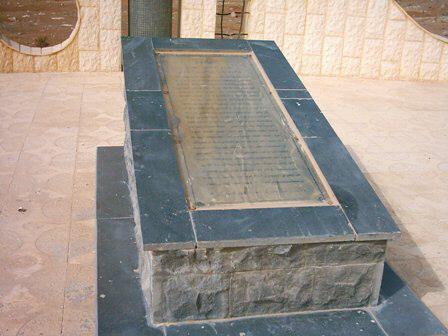
In 2006, the remains of the great mujahid were transferred to his hometown of "Lahitha," where the director "Hassan Izz al-Din" erected a memorial for him, on which was written: "Nations that forget their history are doomed to die." The names of the martyrs of his village and his companions in the struggle were inscribed on a brass plaque, and the memorial was inaugurated on May 11, 2006, in a major official and popular ceremony.