
Professor of Postgraduate Studies at the Lebanese University, Faculty of Law and Political and Administrative Sciences, Dr. Lid Safi, writes in Al-Anbaa newspaper1. :
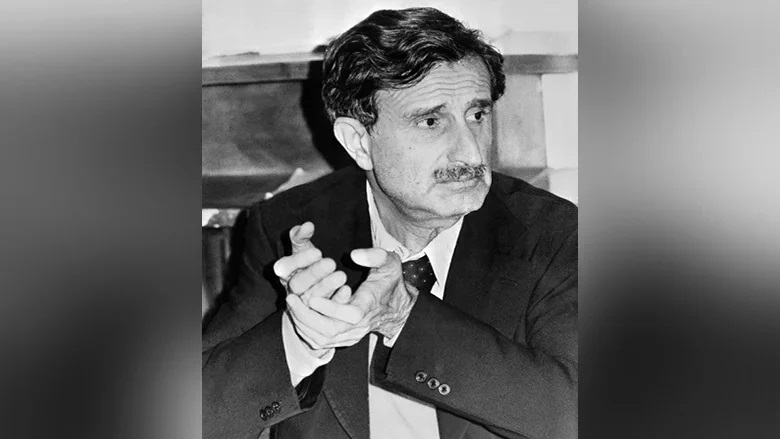
The Lebanese experience, with all its ups and downs, has taught us that when rational logic prevails, the door to settlements opens, and stability and calm spread. When intolerance and lack of realism dominate, chaos prevails and stability collapses. Learning from past experiences and drawing lessons are traits of rational and realistic people. How much Lebanon needs, at this difficult stage, such a quality of officials at all levels. The problem is that some, regardless of their rank in the hierarchy of responsibilities, do not want to learn from the experiences we have gone through, and continue at this stage of acute national crisis to fish in troubled waters and leap over historical facts. They also continue to run forward and propose projects that stir divisions and do not correspond to the reality the country is living. The simplistic approaches that some of these people take toward Kamal Jumblatt, the exceptional personality who was the most influential in the period following independence until the date of his martyrdom in 1977, only indicate the misery of Lebanese politics and the spread of political strabismus among them. This prevents an objective reading of the positions of this great man, starting from the era of the Emirate and the Mutasarrifate system, through Greater Lebanon, and reaching the Islamic-Christian partnership and the formula that emerged from the National Pact in 1943. As well as his positions on Lebanon’s identity and its role in the Arab-Israeli conflict. Continuing to deny the facts related to these issues, evading responsibilities, and inventing accusations to justify the failure to manage the country for more than five decades of that period, assumes the clarification of some of these facts, which recognizing remains essential to building a sustainable national partnership that does not fracture at any crossroads. So, how did Kamal Jumblatt understand Lebanon? What were the motives behind his position on the Islamic-Christian partnership formula in the First Republic? How did he understand Lebanon and its socio-political structure, and what did he hope for from this country?
Islamic-Christian Partnership
Some people today simplify dealing with this complex issue by saying that Jumblatt was resentful of the Sunni-Maronite duality in the state of Greater Lebanon because it replaced the Maronite-Druze partnership in the Emirate. In reality, simplification and intolerance met in this approach, which lacks the minimum of objectivity and credibility. It is an approach that reveals great ignorance in reading Kamal Jumblatt's position on the history of the Emirate and what the partnership resulted in, starting with the coup against Bashir Jumblatt, the fragmentation of his real estate, and his execution in Acre, reaching the tragic events that ended the era of the Emirate and opened the way in 1864 for the Mutasarrifate system, which was led by a Christian Mutasarrif from the subjects of the Ottoman Empire. Certainly, Kamal Jumblatt did not pine for this experience and the conflicts that emerged from it under the factors of international influences, social transformations, and policies aimed at controlling and reducing Druze influence. On the contrary, he confirmed on more than one occasion that one of the profound reasons for what happened in the First Republic goes back to the shift that turned the course of history at that stage. Jumblatt had long considered that the Mountain only knew stability during the era of the "Ma'an princes," as the body of the homeland and the state appeared for the first time in their Emirate.
Therefore, Jumblatt's position on the political formula that emerged from the understanding that took place between Bechara El Khoury and Riad Al Solh, which became known as the National Pact or the 1943 formula, is not linked to nostalgia for any previous partnership, nor to an objection to a duality that existed at that time. His position on the formula was based on the ambiguity it contained regarding Lebanon's identity and its Arab affiliation, which soon became one of the causes of the civil war, which gave great credibility to his position. Of course, the position on the formula was also against the backdrop of the system of privileges obtained at that time by the leaders of the Maronite sect, and the unfair base of Islamic representation, which also soon turned into a problem titled "Islamic participation" in government, as the Prime Minister at that time lacked the minimum constitutional powers.
It is clear that some people's memory is very short, to the point of forgetting the goals from which Kamal Jumblatt started in his political opposition, which began with his resignation from Riad Al Solh's government in 1947, less than a year after he took over the portfolio of Economy, Agriculture, and Social Affairs, against the backdrop of corruption and favoritism that prevailed during the era of Bechara El Khoury. Then his leadership of the "National Socialist Front," which cooperated with the opposition, most notably at that time the Najjadeh Party, the Lebanese Kataeb Party, and the Syrian Social Nationalist Party, where this coalition succeeded in forcing Bechara El Khoury to resign and opening the way toward the presidency of Camille Chamoun. Some people's memory is also weak when they forget the establishment of the "National Union Front," in which Kamal Jumblatt cooperated with Saeb Salam and Abdullah Al-Yafi in facing the foreign policy of Camille Chamoun, in which he placed Lebanon in the Western camp and tried to enter it into the Baghdad Pact. In addition to his refusal to carry out any reforms and the opposition's defeat in the 1957 elections, which led to the 1958 revolution, which ended with the election of Major General Fouad Chehab as President of the Republic, according to a settlement based on strengthening internal partnership and building a state of law and institutions, and Abdel Nasser's affirmation of Lebanon's sovereignty and independence, in exchange for not pursuing a Lebanese foreign policy that conflicts with Egypt's foreign orientations. Kamal Jumblatt's positions were not based on political grudges of this or that duality, but were the result of a bitter political experience in which "Political Maronism" monopolized the power of decision in the state and blocked the horizon for political and economic reform. Maronite leaders at that time also considered that the defeat of Abdel Nasser in 1967 constituted an opportunity to create a new balance of power in Lebanon that would establish its separation from its Arab surroundings. The impasse the country reached at that stage under the title of the problem of Islamic participation in government, the lack of social justice, the poor distribution of wealth, and the rise in the severity of economic and social inequality. This was accompanied by regional developments and entrenched local disagreements over the position on Lebanon's identity, the Israeli attacks, the "fence" of Saad Haddad, the Cairo Agreement, and the Palestinian presence, which opened the way toward the Two-Year War. Kamal Jumblatt became involved in confronting the Lebanese Front, which was based on Western and Israeli support. Jumblatt relied in this confrontation on help from the Palestinians, and this is a fact we do not deny. He also announced his reform program, the "National Movement" program, which mainly included the abolition of political sectarianism and moving toward administrative decentralization and an independent judiciary. It is worth mentioning that Kamal Jumblatt, who in 1976 looked at the risks of the Syrian entry and its threat to Lebanon's sovereignty and independence, tried hard to prevent the division of the army. He was also prepared to suspend the demand for abolishing political sectarianism from his reform program in exchange for the "Lebanese Front" declaring its rejection of the entry of Syrian forces. But unfortunately, the intransigence from the other side and its gamble on the outside world caused this settlement to fall, and Kamal Jumblatt was left alone to face the Syrian forces in Sofar and Bhamdoun. Ironically, Hafez al-Assad, who decided to assassinate Kamal Jumblatt and remove him from the political stage, said to Walid Jumblatt after the "Camp David" shifts and the Lebanese Front's turning against him, literally: "Your father was right."
How much we need those who should be aware of these facts to be aware of them. And if some do not have the courage to acknowledge them, at least not to leap over them, to protect civil peace, and not repeat what happened, protect civil peace, and fortify Lebanon, which is exposed today to existential risks.
The spirit of intolerance destroyed the country of rationalism
Since entering political life in the 1940s, Kamal Jumblatt realized the importance of political realism, and he is the first Lebanese politician to give "compromise" its rational and cognitive dimension when he said after the 1958 revolution: "Truth has taught me the beauty of compromise." His realism and the depth of his political thinking extended to his understanding of the circumstances of the birth of Greater Lebanon and the challenges of the diverse political-social structure in this new entity. His realism did not force him to appease the dilemmas he expected for this newborn, which in his opinion lacked national unity, true independence, and a unifying national doctrine that protects it and prevents its wings from threatening to secede from it. Despite his understanding of these dilemmas raised by Greater Lebanon, the role of the colonial scissors, the internal challenges resulting from the formula of privileges granted to a category of Lebanese, and the role of the French Mandate, which in his view lacked wisdom and reason, Jumblatt embarked in his interventions at the "Lebanese Symposium" to explain "Lebanon in its reality and its Arab aspiration," within a national and philosophical approach, which is still suitable today to be a basis for a future vision that places Lebanon in the ranks of advanced countries. If only they had read what he proposed in this approach, which was based on the facts of geography and history. And if only they would emerge from the scourge of intolerance and stop asking questions that indicate the act of remorse for the establishment of the "State of Greater Lebanon," and re-read the true and realistic Lebanon, the Lebanon that was destroyed by decades of rule that lacked responsibility and rationalism. Reading Lebanon, which Kamal Jumblatt saw in its essence as a meeting point for Christianity and Islam, and that the true significance of its message is a calm and peaceful nation among all nations... and a homeland whose destination is to be an exemplary state or not to be at all. Lebanon, in which the Lebanese form children of vital unity, the unity of economy, society, and the entanglement of the environment, before they are Christians, Sunnis, Druze, Shiites, and other sects.
Lebanon, in the view of Kamal Jumblatt, is equipped to play the role of sound rationalism in the Middle East, stripped of various currents of ignorance and primitive obsession. Lebanon, in his opinion, was found to be the country of rationalism, the Athens of this part of the East, and he called for not taking the risk of playing the role of "Sparta" because it is not our role in reality. According to Jumblatt, Lebanon also has a role to play in the Mediterranean basin, as a Mediterranean state that can do a lot in developing economic, political, and civilizational relations, and at least can be a carrier of civilization, as was his understanding and role in the ancient era.
This Lebanon that Kamal Jumblatt believed in in this way is in the charge of those who try to disavow the responsibilities for what the situation has reached, and throw accusations indiscriminately, and it is also in the charge of those who missed the opportunity and did not understand Kamal Jumblatt. This Lebanon is in the charge of those who believed that their salvation is by bringing in the outside, and in the charge of those who still persist in arrogance and do not want to understand the real reasons for the crises that are sweeping our country. Perhaps the summary of what Kamal Jumblatt wrote before his martyrdom puts a finger on the wound and defines the locations of what we have reached, as he wrote: "Lebanon is a country of the greatest cultural diversity. It could have been infinitely richer if it had recognized itself. It could have given the world a lesson, and been a homeland of reconciliation between cultures and a symbol necessary more than useful, because it is truly human. But we gave a new meaning to human coexistence, and we presented to modern society an example of a different community that is not just a crowd of individuals in the Western way, but a gathering of cultures, or call it a small League of Nations." The opinion of Kamal Jumblatt is that "the 'Lebanese formula' could have been ideal, had we accepted the blending and accepted solidarity in heart and soul within one nation human by heritage, meaning that we accepted diversity in unity, not multiplicity in it." And he asked: Is it possible to achieve this dream in today's world? Then he answered: "We can say that the modern state is a human structure, so it must be rethought. Lebanon's main sin is the spirit of intolerance that some parties carried and contributed to destroying the political-cultural formula with a pluralistic trend."
Kamal Jumblatt left us a great legacy in political thought, principles, and political practice. Walid Jumblatt has preserved this legacy and accumulated upon it a rich experience full of challenges and positions. An experience that led to positioning himself in the political site capable of talking to everyone and giving advice through dialogue to reach a settlement that leads to the election of a President of the Republic and restores order to the work of constitutional institutions. From this centrist site that Walid Jumblatt occupies, we adhere more than ever to the historical reconciliation that took place under the auspices of the late Patriarch Mar Nasrallah Boutros Sfeir, which was confirmed by Patriarch Mar Bechara Boutros Al-Rahi, and we call for the establishment of a national partnership that draws its principles from the diverse Lebanon within the unity imposed by the facts of history, geography, shared life, and common destiny. There is no alternative to the Taif formula, which can be developed if intentions are honest, and returning to the armistice agreement after stopping the Israeli aggression on Lebanon, implementing Resolution 1701, and restoring the state to the decision of peace and war. Economic and social prosperity can also be restored through a rescue plan that restores depositors' money and defines a new economic vision that allows Lebanon more openness and benefit from its multiple competitive advantages.