
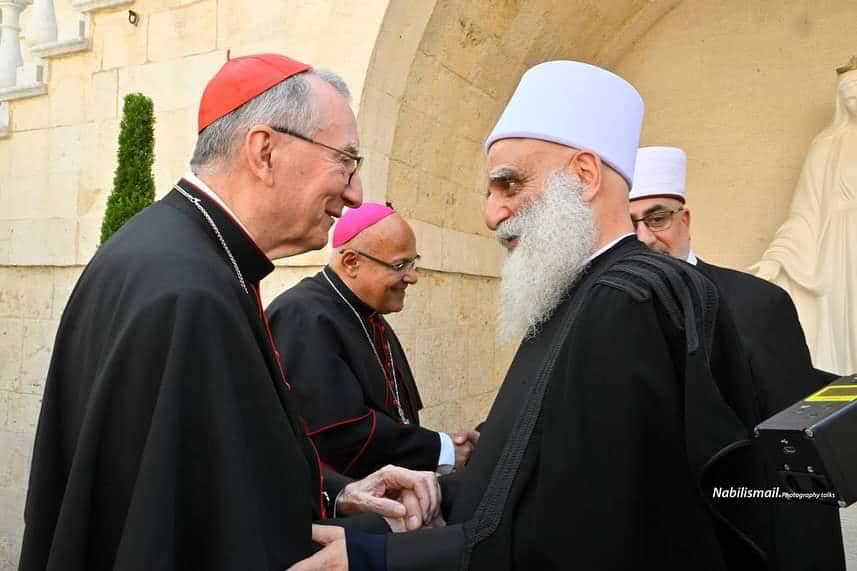
His Eminence the Sheikh Akl of the Druze Unitarian Community, Sheikh Dr. Sami Abi Al-Muna, accepted the invitation of His Beatitude Maronite Patriarch Cardinal Bechara Boutros al-Rahi and visited Bkerke on Tuesday afternoon to meet with Vatican Secretary of State Cardinal Pietro Parolin, with the participation of Grand Mufti of the Republic Sheikh Abdul Latif Deryan, Patriarchs Aram I (Armenian Orthodox), Youssef Absi (Melkite Greek Catholic), and Raphaël Minassian (Armenian Catholic), Metropolitan Elias Audi (Greek Orthodox), Sheikh Ali Qaddour (President of the Islamic Alawite Council), and representatives of most Christian communities, in addition to the leaders of Christian parties: Sleiman Frangieh (Marada Movement), Gebran Bassil (Free Patriotic Movement), Pierre Bou Assi (Lebanese Forces), and Nadim Gemayel (Kataeb Party), along with several Maronite bishops and fathers. His Eminence Sheikh Abi Al-Muna was accompanied by the Druze sectarian judge, Sheikh Ghandi Makarem.
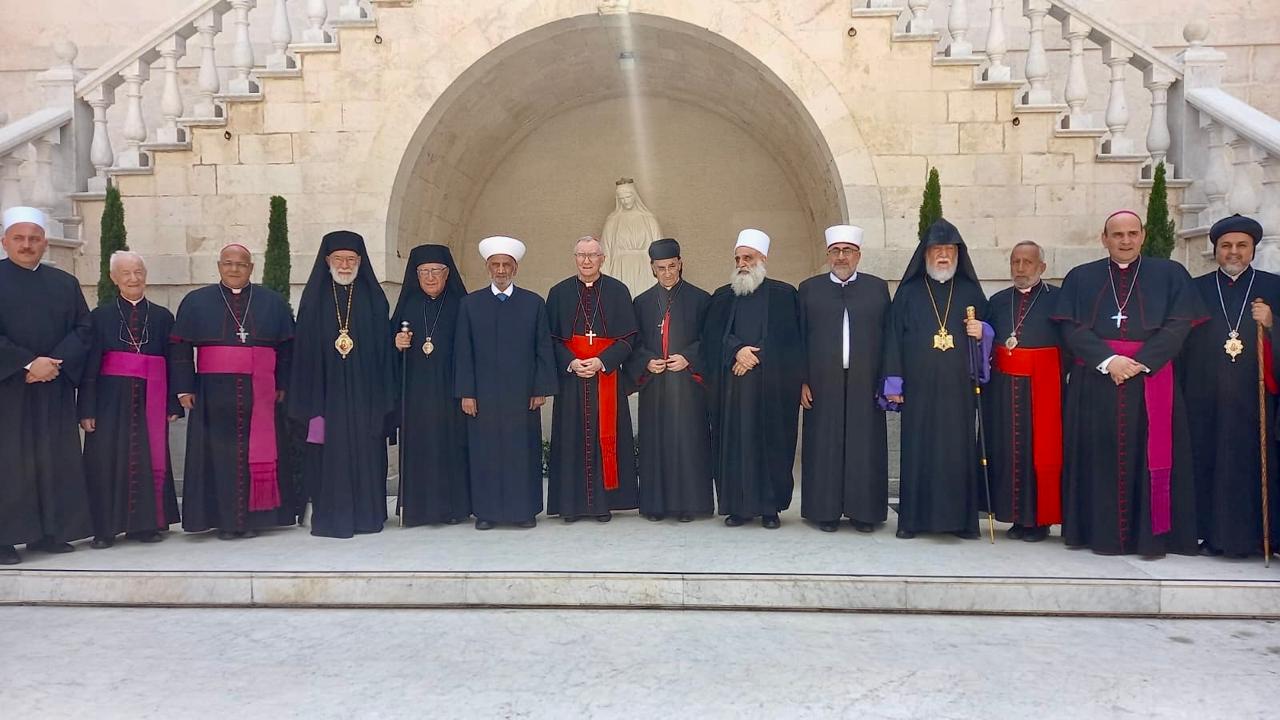
Sheikh Akl
Following welcoming remarks by Patriarch al-Rahi, Cardinal Parolin spoke, followed by Mufti Deryan, then Sheikh Abi Al-Muna, and several of those present.
In his speech, Sheikh Abi Al-Muna thanked His Beatitude the Patriarch for the invitation and welcomed the esteemed guest, emphasizing Lebanon's message by saying:
It is true that Lebanon is in danger, and all Lebanese are in danger… and the glaring truth is that Israel's aggressive existence poses the greatest threat to Lebanon… and facing this danger cannot be achieved through fragmentation, but through unity… Thinking of a partition formula does not solve the problem… Thinking of establishing a cohesive Christian bilateral alliance like the Shia bilateral alliance, alongside a Druze and a Sunni one, will not solve the problem… Forming a cohesive national unity, or a Christian-Muslim partnership so to speak, is what is most effective in confronting these challenges… Sectarian partition pairings, if established, will not eliminate the challenges facing Lebanon; from the Palestinian refugee issue, to the Syrian displacement, to intra-sectarian division, to Israeli ambitions regarding our country's resources, and other challenges…
It is our collective responsibility to remain convinced of Lebanon as a nation of message and diversity within unity, and to reinforce our confidence that, if united, we are capable of confronting them together… It is the responsibility of the international community to help us address these challenges, and the responsibility of the Arab community to support us in confronting them and in facing our country's destiny of being at the heart of the conflict… Lebanon therefore needs internal unity first, and Arab and international care…
No community will be safe from the danger of these challenges if it believes that its isolation will save it, for everyone is in the same boat, and we must work together in the spirit of ship passengers in order to survive… Unity is strength and division is weakness, and fragmenting what is already fragmented only increases our weakness… Lebanon is our responsibility and the responsibility of friendly nations and the entire world… It is an Islamic, Christian, and humanitarian responsibility, and the defeat of the concept of shared living, dialogue, understanding, and the language of reason and wisdom is the most dangerous threat to its existence; it is a threat to peace…
We must not despair over the existence of a single, unified Lebanon… We must not think of steering Lebanon away from its reality, its truth, and its noble spiritual, social, and humanitarian characteristics… Our unity is the guarantee of our future, and the sponsorship of peace-seeking nations is our source of reassurance; therefore, we hope the Vatican will assist Lebanon through its influential moral standing with decision-making states, and we are full of hope for the future if we unite.
The meeting concluded with a luncheon, after which both Mufti Deryan and Patriarch al-Rahi announced an agreement designating the upcoming Friday and Sunday as days of prayer and supplication to end the war in Gaza and southern Lebanon and to bring peace to the region and the world.
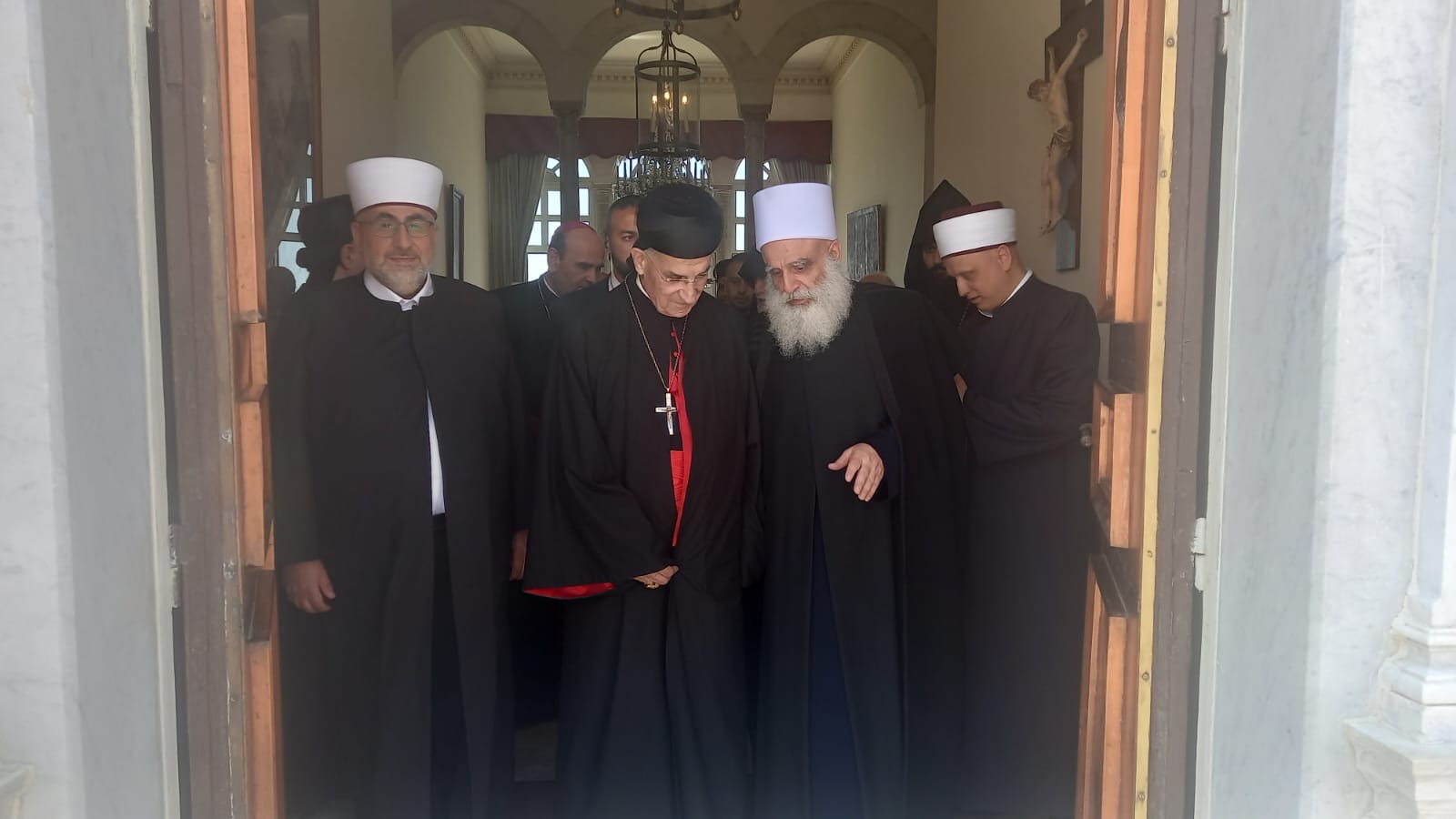
Phone Call with Al-Khatib
Following the meeting, His Eminence the Sheikh Akl held a telephone conversation with His Eminence the Vice President of the Supreme Islamic Shia Council, Allamah Sheikh Ali Al-Khatib, briefing him on the atmosphere of the Bkerke meeting and expressing the hope of strengthening communication among spiritual authorities to bolster national unity amid the challenges facing the country.