
Dr. Shawki Abou Latif wrote in 2017:
When you read the book “Paths of an Emigrant from Ain Ata to Brasília” by Brazilian author Amador de Arimatéa, translated into Arabic by Sheikh Nasser Farah Abou Hej, and reviewed and edited by Ms. Ibtissam Abdel Khaleq, you find that the passion to understand this civilizational formation of that Lebanese “emigrant persona”—as expressed by the great emigrant Mohammad Hassan Khodr—is the passion of a researcher seeking the secret of this Phoenician venturing, as the author envisions it, into the depths of the seas to build commercial kingdoms along the Mediterranean and Atlantic basins, reaching the New World. While the author restrains an indulgence in Orientalist fascination to infer the “Easterner’s” materialism—meaning his love of money, intertwined with his love of the unseen and his inclination toward narrow clannishness—he points with admiration to the message of peace carried by emigrants across their lands of diaspora, which is undoubtedly an urgent necessity amidst this fervor of civilizational conflict.
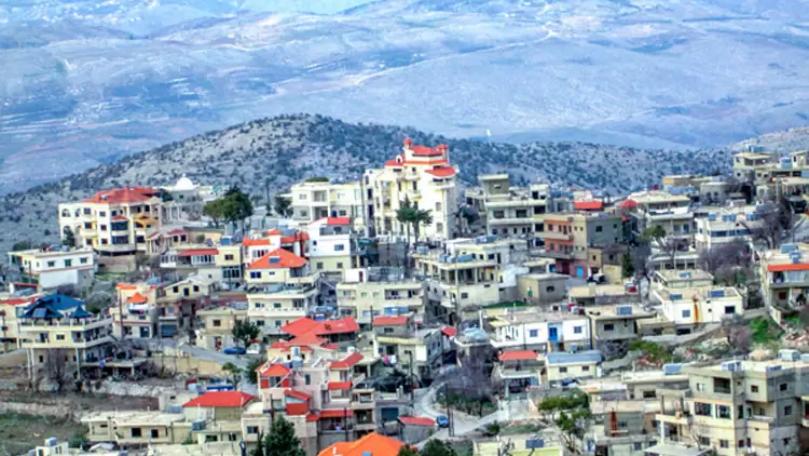
In truth, the “paths of an emigrant” are very clear paths: from Ain Ata, the village sheltered beneath Mount Hermon, to Brasília, the city bustling with beauty; from humble origins, as Hassan Khodr, son of the emigrant Mohammad Khodr, calls them, to the miraculous Brazilian capital, where his father was one of a handful of men—numbering no more than the fingers of two hands—who laid the foundational blocks for the rise of this city on desolate land. There, Abu Hassan erected his building amidst nothingness, as recounted in the book, or rather in the midst of an adventurous frenzy spearheaded by Brazilian President Juscelino Kubitschek de Oliveira.
Returning to humble beginnings, one must look back at the origins of the man who suffered destitution on those remote slopes far from the theaters of civilization. One day, the young boy’s eyes fell upon a human skull while he was helping a peasant plow the soil. The elderly peasant, well familiar with the earth, paid no mind to any human remains, for from dust it came and to dust it shall return. But the young boy took the skull unnoticed by the peasant and placed it in a rocky, earthen spot where its sanctity could not be easily violated, pledging to himself to preserve human remains—the remains of the ancestors who had succeeded one another upon this land, and the remains of those yet to come, if opportunity should permit in the future.
The paths from Ain Ata to Brasília were arduous and long, hindered by barriers and obstacles. But the return was swift in the man’s inner sense of time, for he had always gazed upon this soil and contemplated his roots across intermittent decades. Driven by a desire to lift misery from an ancient dignity bordering Hermon—for the village’s name stems from a divine spring (Ain), the spring of giving (Ata), a giving worthy of loyalty, the loyalty of an emigrant who carries venerable values to the “New World” and takes pride in belonging to a nation whose children do not steal; he is a son of nobility and truthfulness, a son of a nation of venerable heritage. Thus he seeks to return to see it in a new light. Remaining faithful to childhood memories playing in the soil, and faithful to memories of his twenties, Abu Hassan answers the call of chivalry to establish community clubs, starting from “Majdelbaana” to his birthplace in Ain Ata, where he built the club, the dispensary, the “municipal stadium,” and other developmental essentials. He also made his way to the village of “Rakhleh” in the Damascus countryside, neighboring “Deir el-Aachayer”—a village whose soil his feet had touched, farming and harvesting in the days of his youth. He returned to it as an honored guest, presented with an Arab sword by Sheikh Abu Hussein Mahmoud Abu Kheir, who robed him in a cloak of chivalry in accordance with the customs of Bani Maarouf, as a token of gratitude for his contribution to building the “village community center”.
Two years ago, one of Ain Ata’s distinguished sons, emigrant Salman Abdel Haq, hosted a banquet in his honor. During it, I observed the features of this humble, courteous man, who takes pride in his modest origins, is ever admiring of his people and their deeds, and is devoted to his enchanting homeland. How could he not be, when he is so deeply committed to coexistence in Lebanon the message? It was he who said at an international conference of Lebanese organizations held in Beirut in 1977, inaugurated at the time by Prime Minister Salim Hoss: How can a diaspora of more than five million people, between immigrants and descendants—a number exceeding the population of Lebanon itself—live for more than an entire century in complete peace and cordiality?! The culture of peace carried by emigrant Mohammad Khodr is the very same culture of humble origins in whose shade he was born and raised, and which blossomed in Brazil, where expansive horizons opened up to his creative energy. It is thus no surprise that his residence in the Brazilian capital turned into an Arab guesthouse for every mission, milestone, endeavor, or national and humanitarian celebration.
In this emigrant context, one must recall what the late great ambassador Fouad El-Turk penned when introducing the book of emigrant poet Luqman Abou Latif, “Inspired by Handala”. He noted how those emigrants embody a yearning for Lebanon, the homeland of message, to which they proudly belong, viewing it not as a geographical space, but as a spiritual domain, a nation of role and mission, and an oasis of truth, goodness, and beauty. On that basis, he called upon the United Nations to adopt it as an international headquarters for dialogue among religions, cultures, and ethnicities, for the good of all humanity.
Mohammad Khodr did not merely erect stores, factories, or towering edifices in Brasília; he also built an authentic Eastern Lebanese spirit that appears to the discerning eye as an embodiment of the latent power in good roots. The remaining surreal traces of those roots serve as an inspiration for every soul whose perception has been refined in beholding truth, revealing to its insight the processions of eternal light pouring forth at the pinnacle of liberation from the captivity of the ego inclined toward the lower tier of the human abode. For the yeast of good heritage still exudes its fragrance in the upper orbit of that ego, basking in a Hermonian night of destiny, translated through the character of Mohammad Khodr, who crossed into knowledge from simplicity and reached the New World through the port of peace, where he instinctively imbibed the stoicism of the land to which caravans of seekers of light arrived amid the fervor of wandering away from impending darkness and ruin.
The paths of an emigrant were written for Mohammad Khodr, but in truth, what was written for him were the paths of a returnee to Ain Ata—the spring of giving—to humanity, which is the mirror of existence wherein existence beholds its own faces.