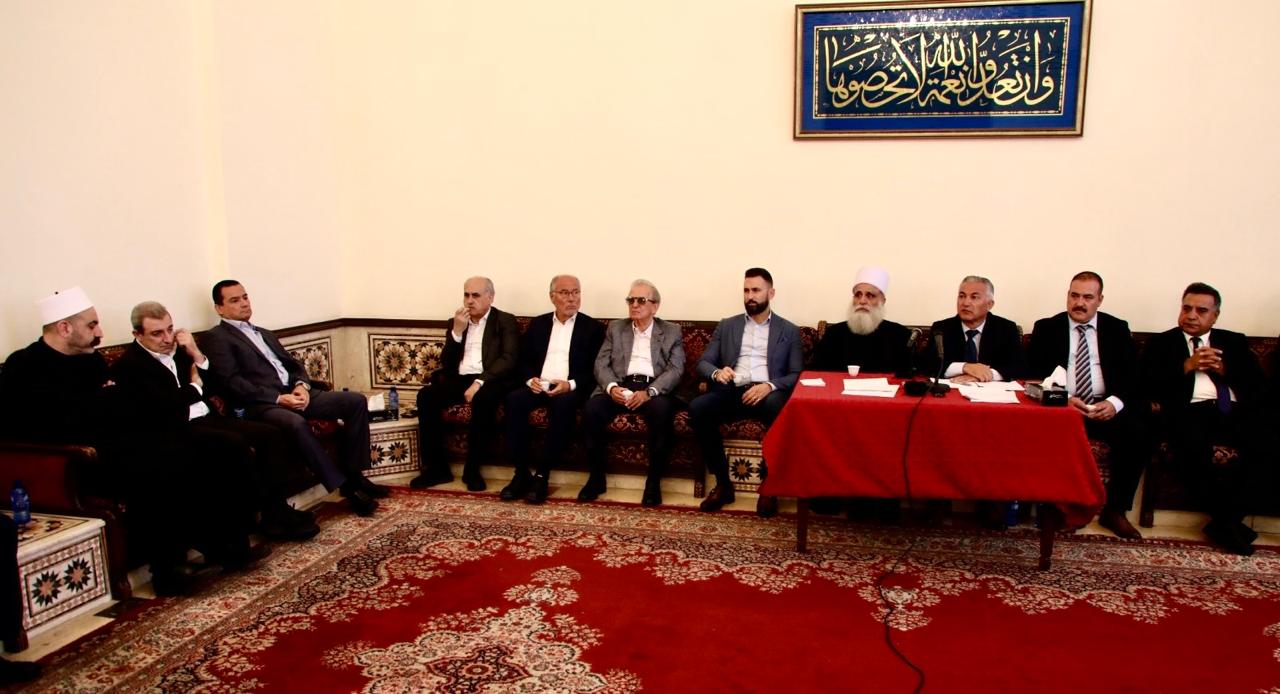

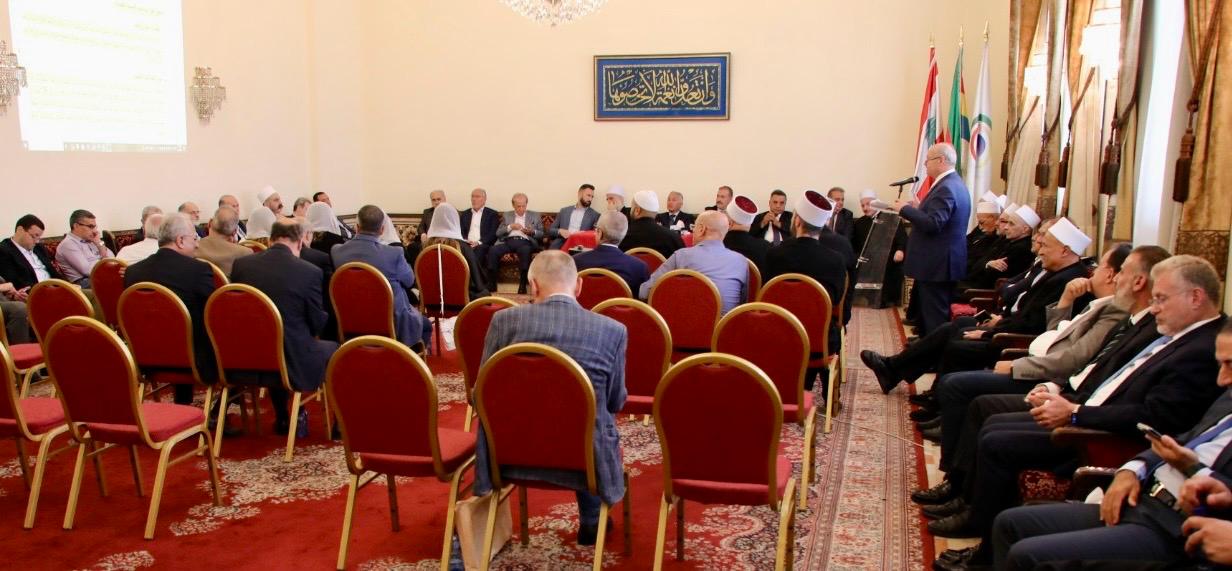
The General Assembly of the Druze Religious Council held its final meeting for the current council's term, which ends in early September, at the Druze Community House in Beirut, chaired by the head of the council, the Sheikh Akl of the Druze community, Dr. Sami Abi Al-Muna, and attended by the head of the Progressive Socialist Party, MP Taymour Jumblatt, Minister of Education and Higher Education Judge Abbas Al-Halabi, and MPs: Marwan Hamadeh, Hadi Abu Al-Hassan, Wael Abu Faour, and Faisal Al-Sayegh, along with committee heads and members, to discuss administrative issues and internal affairs related to the council's work.
The Council also addressed the developments and latest updates on the Lebanon and regional level. In this light, it issued a statement calling on the “international community to assume its responsibilities and exert maximum pressure on Israel for an immediate ceasefire in Gaza and southern Lebanon, to comply with relevant international resolutions, and to respect humanitarian charters.” The statement denounced the “destructive war, assassinations, and humanitarian atrocities committed by Israel,” and called for “ending its ongoing aggression and preventing the expansion of the war’s fever, in light of rising threats and responses that have crossed boundaries, threatening open-ended dangers.”
The statement emphasized the “importance of internal solidarity in facing the nation’s major challenges and for various political forces to exert all possible efforts at this critical, fateful moment, where priority must be given to preserving the nation, safeguarding the entity, and protecting the state and its institutions, particularly the security agencies, so they may perform their assigned tasks to provide a minimum level of stability, as it is the duty of all to rally around them and provide support.”
The statement addressed the people of the Mountain specifically, calling for “national solidarity and for embracing the people of the South and Dahiyeh as honored guests in homes and institutions under the national umbrella that unites us all. This is based on moral, human, and social solidarity values at all levels, and we reject any financial exploitation by apartment or house owners of those whom the war has forced to leave their homes involuntarily.”
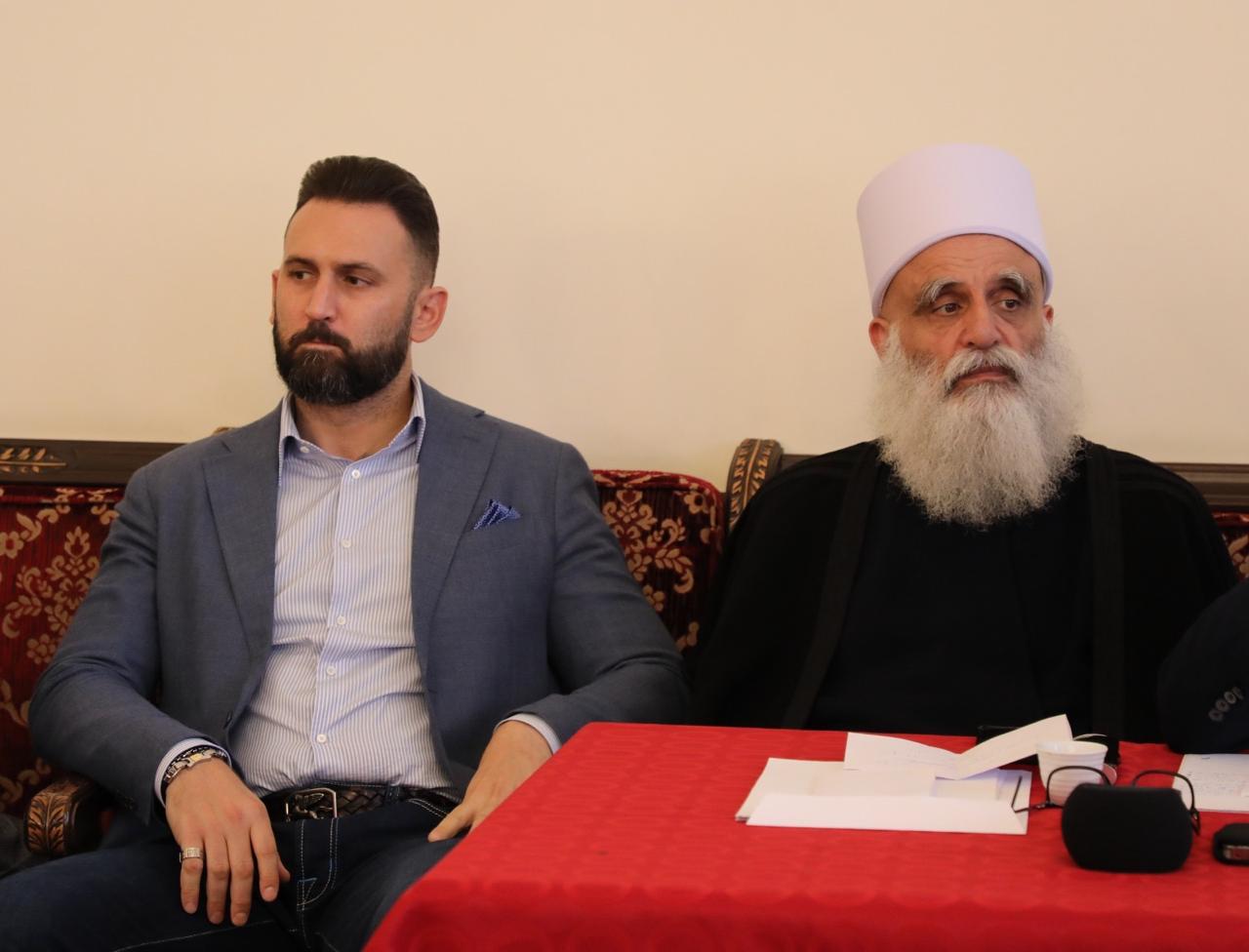
The Sheikh Akl
After opening the session, His Eminence Sheikh Abi Al-Muna delivered a speech, saying:
Praise be to God for His abundant blessings and favors; praise be to Him for what He has given and bestowed, and for what He has withheld and concealed; praise be to God for guidance, care, and providence...
Respected members of the Druze Religious Council,
I greet you with love and appreciation as the term of your esteemed council nears its end. Dear brothers and sisters, I thank you for your sacrifice and cooperation over the course of six years, which began in early September 2018 and ends at the beginning of next September. Three years and some months were under the chairmanship of His Eminence Sheikh Naim Hassan, may this council be blessed, and two years and nine months under our chairmanship. This experience was destined to take place amid difficult social, economic, national, and regional changes and challenges.
Despite all the obstructive and exceptional circumstances, we emphasize the importance of this experience and the sacred duty that calls upon us to serve our community and our country through the council’s role and the tasks assigned to it as a General Assembly, an administrative body, effective committees, and as members representing their various sectors. This broad and comprehensive role—spanning social, religious, cultural, and diaspora fields, in addition to the general national arena—requires precise and transparent administrative and financial monitoring. It also demands attention to endowment affairs—preserving, maintaining, and investing them—to be the richest source for supporting the council’s projects and committees, and to cover the majority of the religious, cultural, health, educational, and social needs of our families and children, as well as to advance and fortify our society in the face of challenges.
Your esteemed council has the right to hold us accountable or to excuse us for what we have done or failed to do. However, in any case, we have exerted the effort we could and preserved the institution despite everything, supported by wise, steadfast, and generous leadership represented by the Leader Walid Bey Jumblatt and his colleagues. Our work is embraced by the widest segment of our venerable Sheikhs and loyal members of our community—if not all of them—and our path is accompanied by distinguished national relations with our brothers in all sects across the nation.
From this position and this place, we have held meetings and taken stances on pivotal milestones, including those related to the situation of our brothers in Syria who are rising for their dignity and the attainment of their rights, affirming their attachment to their one, unified nation. Among them also are those related to confronting the ongoing Israeli aggression in occupied Palestine and the situation of our brotherly Muwahhidun (Druze) there; we have repeatedly called on them to hold onto their spiritual and national identity, and to commit, alongside their Palestinian brothers, to their absolute right to sovereignty over their land and to live in safety and stability, while rejecting policies of Judaization and attempts to sever them from their historical heritage and their Arab-Islamic society.
From this position and this place, we launched ideas and initiatives for the advancement of the community and contributing to the nation's progress. Some committees have achieved tangible results, which we hope the coming Religious Council will work to complete and follow up on:
First, issues related to endowment investments—not only in renting out some properties, as was achieved with the Maani School in Beirut, for which the Endowments Committee is to be thanked for reaching an agreement that restores the school’s historical luster and achieves relatively acceptable income over fifteen years—but also in creating industrial, agricultural, and environmental development projects on endowment lands, in partnership with the private sector and supporting organizations.
Second, in the field of social affairs, the Social Committee has accomplished much in healthcare and care through the "Sanad" social solidarity program, which needs to be developed, institutionalized, and supported, as well as through the Healthcare and Family Center in Aley and the services it provides, whose network is expanding day by day—something recommended for replication in other regions.
Third, in the field of religious affairs, as achieved through the Religious Committee: the studied progress in the work of the University College in Abey, which is celebrating the graduation of its second class in a few days—a college we hope to develop and expand its scope and horizons—and the expansion of opening centers for Unitarian culture under our sponsorship in more than one town, to serve as a starting point for our sons and daughters to learn about their Unitarian and Islamic identity.
Likewise, in the field of cultural affairs, even if this field was limited as it is not among the priorities in such circumstances, the Cultural Committee succeeded in holding some distinguished activities and planned for others, hoping for follow-up by the next council.
Also, in the diaspora field, which needs a broad and focused action plan given its vast circle. This year, through the efforts of its head and members, the committee succeeded in holding a proper honoring ceremony for a group of benevolent expatriate members of the community to serve as models for others in the task of supporting community institutions and contributing to embracing its families.
While the Administrative Committee was forced to deal with the travel of its head for more than two years, it continued its study of administrative needs—which were always hindered by the state's freeze on hiring and contracting—and completed its activity in some vital projects, such as the "Ruwwad Al-Jabal" project for training in some simple professions and industries, which resulted in holding the Beirut Exhibition for Rural Products at the UNESCO Palace in cooperation with the Social Committee. We sponsored this exhibition alongside the Ministers of Culture and Economy, hoping it will be an annual event for our people in the Mountain and Wadi Al-Taym to showcase their talents and market their products, which requires the formation of a specialized committee.
Likewise, in the field of financial affairs, which is the subject of today’s session: it has received close attention and follow-up, acknowledged by its head and members, regarding the supervision of annual budgets, monitoring them, managing liquidity, mitigating risks, and spending according to available financial solvency, amid the atmosphere of financial turmoil in fluctuating exchange rates during recent years.
I am a witness to the efforts exerted by the Legal Committee, which is preoccupied with handling many cases and following up on matters related to endowments and various legal consultations. I am also a witness to the efforts of the Secretariat and its meticulous organization of work and files, and the efforts of the Treasury and the precision displayed by its loyal treasurer, which was appreciated by external audit firms.
It is true that the circumstances surrounding our work are difficult and complex, whether related to the state and the insufficient budgets to run our work and enable us to develop it; or regarding the failure to fill official vacancies, which number over twenty in the staff of the Sheikh Akl office and the General Directorate of the Religious Council; or regarding our own internal capabilities to cover our budgets from endowment funds or donations, which are very limited in light of the failure to establish a charitable development fund that gathers capable elites from the community; or regarding the oscillating reality of the country, which hinders the establishment of institutions and the activation of their roles. We have been cultivating this idea and are seeking to achieve it, whether through creating an investment institution for endowments, a care institution for family protection, or a cultural institution to enhance Unitarian culture and preserve heritage, among other things we aspire to and are striving for.
Since governance is about rotation and continuity, and with the preparations for electing a new Religious Council and the emergence of new faces—while thanking those who worked, founded, and sacrificed in the current council—our hope is strengthened to complete what we began and to achieve what we could not. We hope that those members not returning will be a support for our new council and a help to us in our tasks, for we are all one family; our concern is one, our goal is one, and our dignity is one and indivisible.
With you, Walid Bey, Taymour Bey, Mr. Minister, honorable MPs, Your Eminence, honorable Sheikhs, dear brothers and sisters, with you we look forward to a new Religious Council in less than three weeks, which we hope will include a new and renewed elite of people with competence, sincerity, and drive. I am confident that for many who will leave and make way for new members, membership was fitting for them, and the continuity of the experience is enriched by them. However, public responsibility involves rotation, and the transfer of power is a natural matter and not exclusive to anyone, even if they succeeded in their work. For those who wish for more, or those we wish for more, they have our prayers for success, and we have their renewed pledge, determination, and diligent work. Society always expects us to provide the best, and we are determined to do so, and prepared to exert effort and strive to raise the status of the council and the institution’s progress, in cooperation with political leadership and community figures, in the face of challenges and difficult circumstances, on more than one level, to solidify our spiritual, national, and cultural identity, to strengthen our cohesion—residents and expatriates alike—to activate our national presence and partnership with everyone with love, competence, and openness, and to reaffirm our role and mission that we inherited from our forefathers, from which we will not deviate.
The Sheikh Akl added: We meet today amid major developments and turning points being witnessed by the region, as a result of the continued aggression on Palestine and southern Lebanon, and in the shadow of war atmospheres that dominate over all other urgent necessities that require containing the situation and averting the worst by defusing the war, which we have previously warned repeatedly about the danger of expanding. In this context, the path of Palestine, for us, was only baptized with national struggles and pure blood, first and foremost that of the martyr Kamal Jumblatt, who drew the landmarks of that path which we affirm continuing upon, as Mr. Walid Bey Jumblatt said yesterday. From here, we sent greetings to our brothers, the members of the noble Druze community in the Galilee, Golan, and Majdal Shams, affirming our Arab roots and commitment to the same approach and constants.” He continued: “By the way, we also address our children here in the Mountain and other regions to reaffirm again those authentic Druze values in embracing the people of the South and Dahiyeh, necessitated by the war and the harsh conditions that forced them to abandon their homes... We welcome them as guests and open our homes and hearts to them. In this framework, we also salute all efforts working to achieve social and human solidarity, especially the guidance recommended by Mr. Taymour Bey Jumblatt recently.” He concluded: “We look forward with you with great hope to a final ceasefire and an end to the war, and we pray to God Almighty to inspire those in positions of decision-making to look toward achieving the sought-after peace, which is the absolute humanitarian goal, away from the fever of the flames of war. Peace be upon you and God's mercy and blessings.”
Then, issues related to the work of the committees were reviewed at various levels.