
In a massive, inclusive national and Druze gathering that brought together national and Druze figures from the Golan, Palestine, and Lebanon to reject the Israeli occupation and its daily massacres in Palestine, Southern Lebanon, and the region, and to affirm the Arab Druze's adherence to their Arab identity in the face of the usurping entity and those who tamper with this identity, Democratic Gathering bloc member MP Wael Abou Faour affirmed that President Walid Jumblatt is the guarantor of the Arab-Islamic identity of the Unitarian Druze sect from Palestine to Syria to Lebanon. He considered that the true compass lies in Lebanon, and the true compass resides with Walid Jumblatt, Taymour Jumblatt, and in Moukhtara regarding this Arab and Islamic affiliation for the Druze of Syria, the Golan, Palestine, and everywhere. He pointed out that the Druze are not a minority in this land—neither a sectarian, denominational, ethnic, nor racial minority—but rather part of the Arab-Islamic majority in these countries.
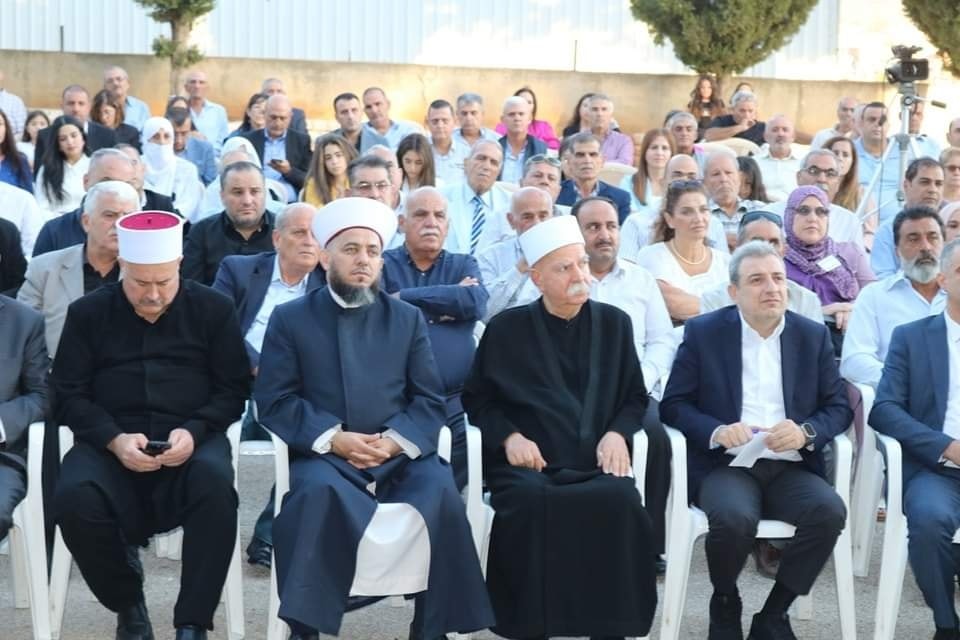
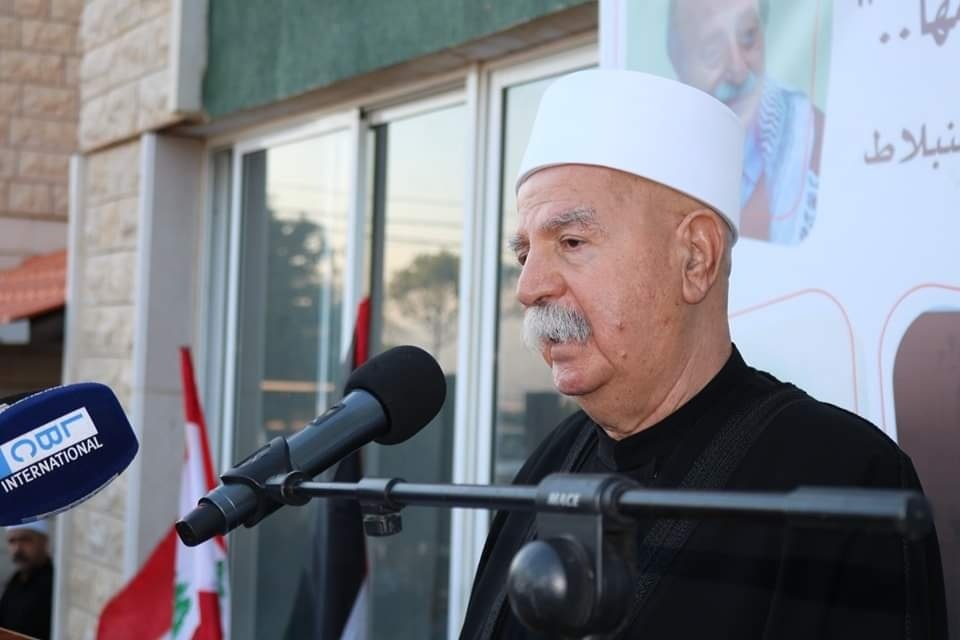
MP Abou Faour's remarks came during his representation of President Walid Jumblatt, who sponsored the book signing ceremony for "Samih al-Qasim: A Historical Crossroads and Symbolism of 'No'" by journalist and writer Hassan Bahmad, in honor of the great Arab poet Samih al-Qasim on the tenth anniversary of his passing. The event was a comprehensive national Druze gathering between the Golan, Palestine, and Lebanon, held at the invitation of the Cultural and Social Council of Western Bekaa and Rashaya and the Progressive House, at the Al-Irfan Tawhidia School in Dahr Al-Ahmar, in the presence of a wide national assembly.

Attending the tribute and signing ceremony were member of the Druze Madhhab Council Sheikh Farid Abu Ibrahim, representing the Sheikh al-Aql of the Unitarian Druze sect, Dr. Sami Abi Al-Muna; Rashaya Mufti Sheikh Dr. Wafiq Hijazi; a representative of the Mufti of Zahle and the Bekaa, Sheikh Dr. Ali Al-Ghazawi; Sheikh Hassan Asaad, representing MP Dr. Qabalan Qabalan; advisor to President Saad Hariri for religious affairs, Sheikh Ali Al-Janani; Father Ibrahim Saad and Father Ibrahim Karam; former MP Mahmoud Abu Hamdan; Dr. Tarek Bahmad, representing former MP Faisal Al-Daoud; Rashaya District Commissioner Nabil Al-Masri; President of the Al-Irfan Tawhidia Foundation Sheikh Nazih Rafeh; members of the Druze Madhhab Council; Vice President of the Lebanese Development Forum, Mr. Wehbe Abou Faour; President of the Cultural and Social Council, lawyer and poet Saleh Al-Dasouqi; Head of the Rashaya District Medical Department Dr. Samer Harb; Head of the Bekaa branch of the Civil Servants Cooperative, Mr. Nazih Hammoud; Agent of the Southern Bekaa Interior of the Progressive Socialist Party, Aref Abu Mansour; Head of the Rashaya Department of the Lebanese Democratic Party, Jamal Barqashi; Rashaya Civil Registry official Mr. Muhammad Al-Qadiri; President of the Jabal Al-Sheikh Municipalities Union, Geries Al-Haddad; President of the Hasbaya Municipalities Union, Sami Al-Safadi; writer Dr. Tawfiq Bahmad; lawyer George Abboud; unionist Akram Arabi; Head of the Hasbaya and Rashaya National Social Security Fund office, Dr. Fadi Abu Samsam; as well as cultural, educational, union, and medical figures, mayors, mukhtars, and attendees from the villages of Western Bekaa, Rashaya, and the residents of Dahr Al-Ahmar.
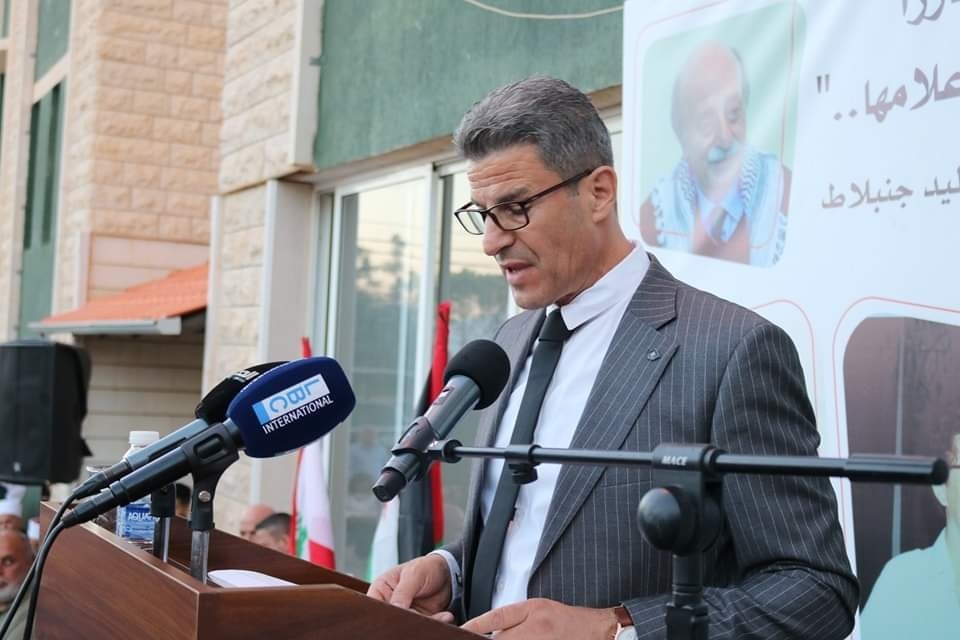
The ceremony was presented by journalist Dr. Yasser Ghazi, who said: "Welcome to the realms of Irfan (knowledge/gnosis). From the heart of Wadi al-Taim, we look out with you upon the land of the epic saga, open to the dream of a nation. We check on the conditions of the steadfast and the sweat of the resisters; despite the holocaust, we will continue to smell the fragrance of Palestine. Back there, behind the dust of battle, heroes established with their blood the rules of engagement with the occupier, inspired by the oath of Samih al-Qasim."
He continued: "Ever since the Palestinians were afflicted by the Nakba in '48 and despair prevailed in the fifties, and after the hands of the resistance fighters were tied, the pen-wielders took up the banner of struggle and resistance through poetry and novels, after the lamentations and general mourning chants had filled the Palestinian space. The term 'poets of the occupied land' was not known until after the occupation consolidated its foothold. Poets emerged such as Badr Shakir al-Sayyab, Khalil Hawi, Abdel Sabour, and others, but resistance poetry did not mature until after the total defeat of '67. The challenge was before the masters of the word, foremost among them Samih al-Qasim. This challenge was through waging the battle against the preaching of surrender and reviving the rifle through the resistance poem at a time when the belief prevailed that the homeland of the revolution had died. This was the hardest and most difficult mission in the existential war of this struggling people, who found themselves facing two choices: either to become strangers forever in their homeland, or for the others to become strangers in a homeland that was never theirs and never will be."
Rafeh
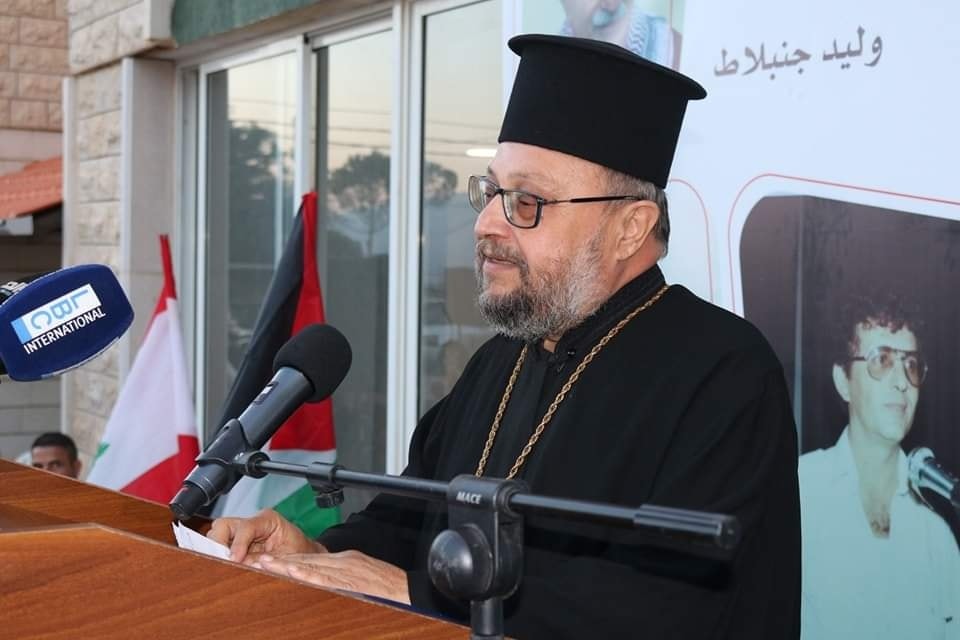
President of the Al-Irfan Tawhidia Foundation, Sheikh Nazih Rafeh, said in his speech: "We meet today to honor an Arab poet on the tenth anniversary of his passing; a poet who, at all times, remains a refined manifesto for the true revolutionary. He was one of the symbols of the Palestinian revolution through his thought, his pen, and his stances that defended freedom, dignity, and humanity. He was a son of the land of Palestine and a son of the Druze sect who embodied in his person the history of every honorable unitarian who held fast to his land, his roots, and his history, defending his Arab and Islamic identity. A unitarian who integrates into the environment without dissolving, carrying the banner of the human cause, the banner of Palestine for which the teacher Kamal Jumblatt was martyred for its victory and pride; Palestine, which was entrusted to us by the great Arab knight, the prince of expression Shakib Arslan; Palestine, in whose lands the honorable master Sheikh Abu Yousef Amin Tarif lived and preserved there the Arab-Islamic identity of the Unitarian Druze. Palestine, whose displacement of its people was rejected by the Arab leader Sultan Pasha al-Atrash."
Bahmad
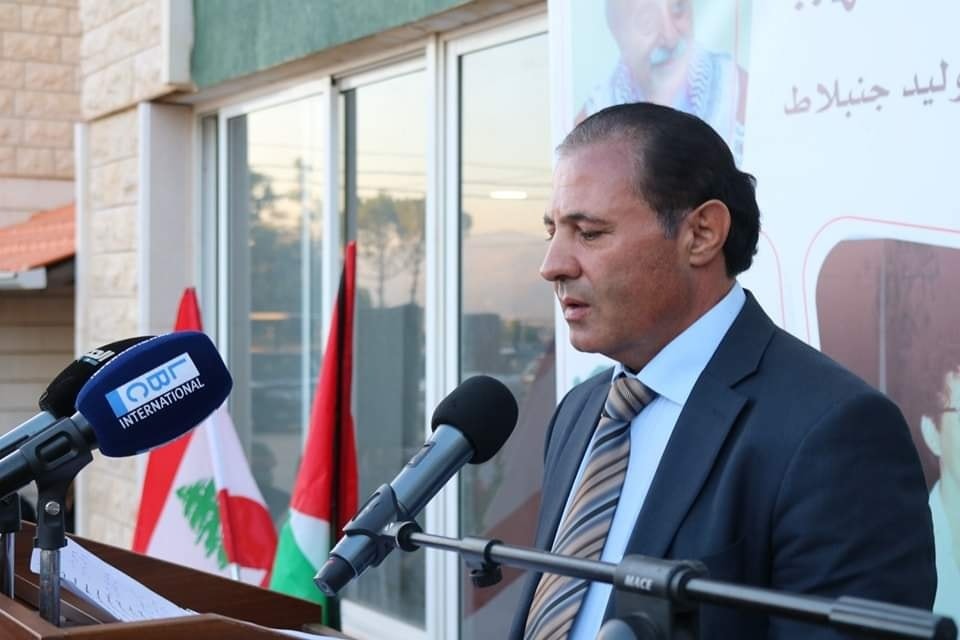
The book's author, journalist Hassan Bahmad, said in his speech: "My book, which we are celebrating the release of in this comprehensive national celebration, sheds light on this exceptional Arab stature. In it, we learn about Samih al-Qasim's resistance to the usurping occupation... about his philosophy and his humanity. We research his poems and his poetic school. We talk about a poet who defended the Palestinian national identity until his last breath, in front of an enemy that practiced terrorism and massacres. We talk about the symbol of cultural struggle and the poet of Arabism, about his Arab and global presence, and the thundering voice in all his poems... about a poet who was the pulse of the street and the living conscience of the Arab human being. He drew for history an orbit and pride for generations, as a distinct sign of the spirit, pulse, and scent of Palestine."
This was followed by recorded speeches from the militant Said Naffaa on behalf of the people of the occupied Palestinian interior, Mr. Watan Samih al-Qasim, and Mr. Thaer Abu Saleh on behalf of the people of the occupied Syrian Golan.
Then Father Ibrahim Saad spoke, saying: "How much we need what you wrote, Hassan Bahmad; do we read what you wrote or do we read Samih?"
Samih al-Qasim lived the poem with his head held high despite the blows to the head, and he lived death with his head held high despite the blows of death to his head.
He added: "This great man Samih, who at the age of thirteen tried to protect the homes of Christians from occupation and savagery—today, Samih, we learn from you the philosophy of resistance. What does resistance mean? Does it mean passivity, relaxation, accepting what is dictated to us, or does it mean 'No'? That 'No' which became your identity in your youth, middle age, illness, poem, song, and your view of humanity."
"O Samih, today you are the one speaking through us, not we. We are trying to understand you while we speak, and you are preaching to us with your silence now, and you are the eternal speaker. If you had lived longer, there would be no words left to say after what you have said. Why did you say it and to whom? You speak to us about the homeland, and you named your son 'Watan' (Homeland). Do you know why you named your son Watan? To keep the homeland on your lips night and day: Watan, Watan, Watan. We are all children of the homeland, except for you, the father of the homeland, because the father is the one who cares, the one who is concerned, the one who sacrifices, the one who dies so that the son may grow and build. And you did this with your homeland as a father, not as a son."
"Congratulations to you in the place where you are, and congratulations to us that we lived in the time of Samih al-Qasim, because we learned some dignity, some pride, and a lot of rebellion. Perhaps this rebellion will bear fruit in us that comforts you where you are. Live on, Samih."
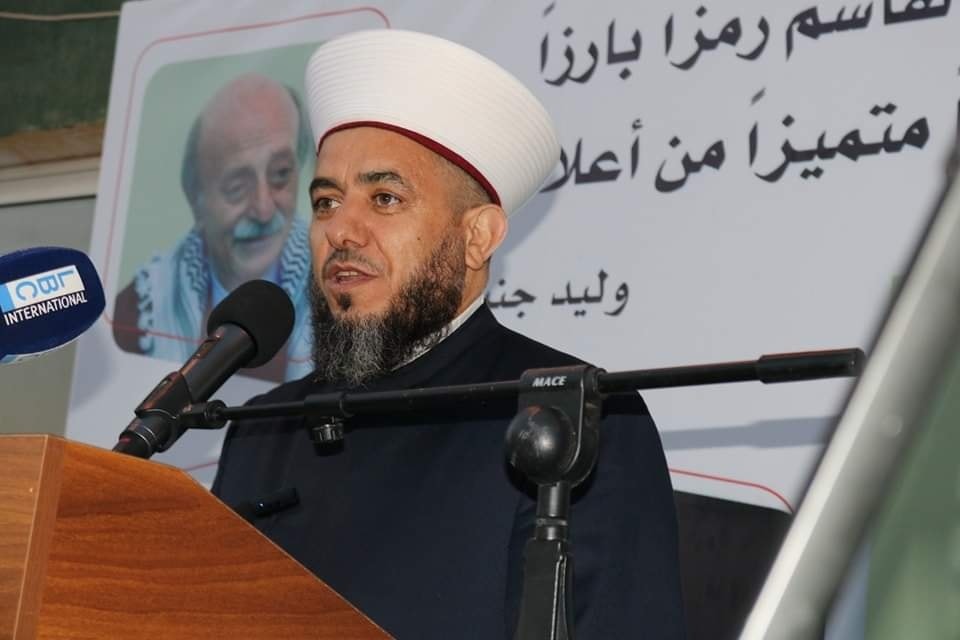
Rashaya Mufti, Dr. Wafiq Muhammad Hijazi, said in his speech: "Truly, this meeting is one of fragrance. It is fragrant because it speaks of Palestine, and it becomes even more radiant that we are gathered for the sake of Palestine, for the poet of Palestine, and for the 'No' he said in response to the Zionists attacking the land of Palestine. This meeting becomes even more fragrant and radiant because it speaks of a land perfumed with the blood of martyrs who ascended to the heights of heaven because they would not accept giving up a grain of the soil of Palestine, even if it meant the annihilation of Palestine. Because Palestine, even if it is a limited land in space, every free person in the world is a son of Palestine."
"One of us might be saddened at some point that he could not offer anything to Palestine, but with a word spoken in defense of Palestine, he has fulfilled part of his duty towards it. Therefore, it is said that the blade of the tongue is more dangerous than the muzzle of a weapon, and wounds from a spear may heal, but wounds from the tongue do not."
"If one of us cannot do anything but speak words defending Palestine, Gaza, and Jerusalem—this blessed land—if he cannot defend it with the muzzle of his weapon, at least he should defend it with the muzzle of his tongue, for silence regarding the truth makes one a 'dumb devil.' And as they say, if one is not silent about falsehood, at least he should be a speaker of the truth. Whoever believes in God and the Last Day, let him speak good or be silent."
Al-Dasouqi
The ceremony included a poem by the President of the Cultural and Social Council of Western Bekaa and Rashaya, the Arab poet Saleh Al-Dasouqi.
Young Amir Fadel Shubat, who won among the top ten in the Arab Reading Challenge, presented a passage from the poem "March Forward" by poet Samih al-Qasim.
Abou Faour
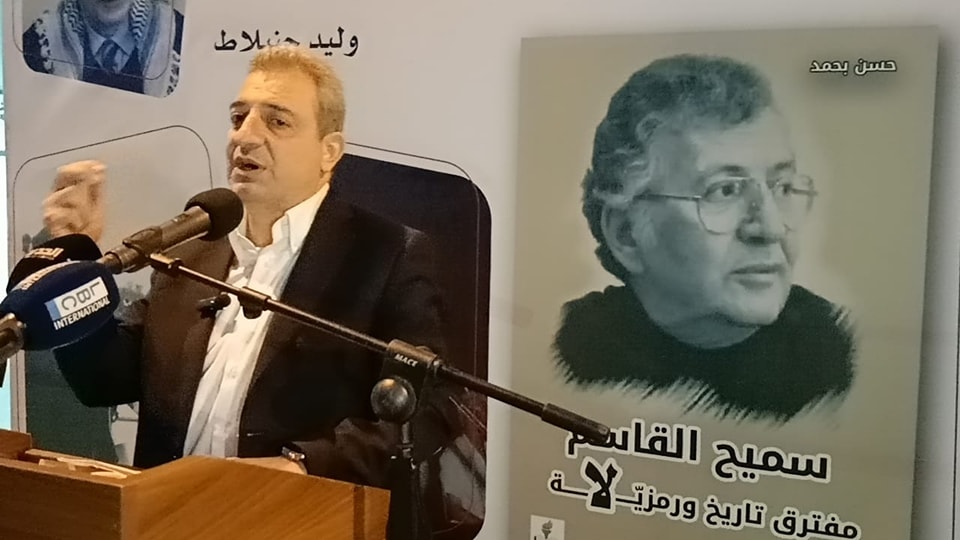
MP Abou Faour spoke on behalf of the ceremony's sponsor, President Walid Jumblatt, saying: "Greetings to our comrade and friend Hassan Bahmad for his knowledge and work, and greater greetings for the sincerity and clarity of his affiliation—something worthy of note. Greetings to his person and his origins, his town, and his noble, sacrificing, courageous, and committed family, resolute in their affiliation to the school of Kamal Jumblatt and to this path led and being led today by Walid Jumblatt and Taymour Jumblatt."
He continued: "We wanted this meeting to transcend a mere book signing to this national scene we stand in today. This scene in our national book represents this national presence and these national spectrums. We are one in our national book; we differ and we distinguish ourselves, but if our opinions differ, that does not negate the unity of our patriotism. In our national book, there is no room for accusations of treason or political excommunication, and there is no room for one of us to address another with whom he differs in opinion using the language of treason or exclusion from patriotism. Even in the most sacred causes, in the cause of Palestine, we may differ; however, this difference does not mean it is the right of anyone from this side or that to reproach another for his affiliation or patriotism. We are all children of this nation and we all care for it."
Abou Faour added: "We also wanted in this meeting to invoke Samih al-Qasim on his anniversary, whom I call the 'Lute of Palestine,' and to invoke the idea of resistance, which we see today in Palestine and the West Bank. We wanted to invoke the idea of 'survival,' and Samih al-Qasim represents the idea of survival. Perhaps many of the Palestinian people were not allowed to experience this idea of survival as a result of the massacres and atrocities committed by Zionist gangs. But Samih al-Qasim remained on his land along with a large number of the Palestinian people, and they represented the idea of survival that some did not understand at the time—which some criticized in Samih al-Qasim and others, and which some extremists criticized, considering that they were serving the Palestinian cause. They pelted the people of the occupied Palestinian interior, claiming they had accepted the Israeli identity and that they had stayed under occupation, while the truth is that they stood fast under occupation. When Samih al-Qasim was told that some media outlets criticize him for singing for resistance while accepting Israeli citizenship, his response was: 'If I were forced to choose between branding the Star of David on my forehead or on the back of my neck, and leaving my town of Rama, I would have chosen the brand over leaving my town.'"
Abou Faour continued: "This survival that Samih al-Qasim and many people of occupied Palestine represented has become a real dilemma today for the Israeli occupation, which looks around today and sees more than 1.2 million Arabs—equivalent to 22 percent of the Israeli electorate—who are Arabs adhering to their Arab identity."
He added: "We wanted this inclusive meeting to hear these voices: the militant Thaer Abu Saleh from the occupied Syrian Golan, the militant Said Naffaa from the Palestinian interior occupied since 1948, and Watan Muhammad Samih al-Qasim—as Samih named him 'Watan Muhammad' to indicate his affiliation. We wanted to hear these voices to invoke the true, historical personality of the Arab-Islamic Druze presence in this region."
He added: "Samih al-Qasim is the true, legitimate, and natural representative of the Palestinian Druze personality that remained under occupation with all its affiliation, identity, and commitment to the Palestinian cause, contrary to some other figures who claim to speak on behalf of the Arab Druze in Palestine, while they do not represent the truth of their heritage, history, affiliation, or identity; rather, they represent the reality of the collaboration of some with the Zionist establishment."
He continued: "The Druze—and I say this in the name of Walid Jumblatt: We are not a minority in this land. We are not a sectarian, denominational, ethnic, or racial minority; we are part of the Arab-Islamic majority in these countries. We win if it wins, we lose if it loses, we rejoice if it rejoices, we weep if it weeps, we remain if it remains, and we vanish if it vanishes. We are the grandchildren of Sultan Pasha al-Atrash, Kamal Jumblatt, Shakib Arslan, and Walid Jumblatt. This is our identity, and this is our affiliation and our choice."
Abou Faour added: "We hear some who say today that there are peculiarities for the members of the Unitarian Druze sect in Syria, the Golan, or Palestine. We respect peculiarities, but no one who claims a peculiarity has the right to falsify history or tamper with identity. We are Arabs, Arabs, Arabs. Greetings to the Druze of the occupied Syrian Golan who, with Walid Jumblatt, thwarted the attempt at strife incited by Israel the day the child martyrs fell in Majdal Shams. Greetings to the national figures in occupied Palestine in 1948 who answered the call of Walid Jumblatt from Khalwat al-Bayada in 2001, when he called on the Druze of Palestine to reject conscription into the Israeli occupation army and to adhere to the Arab-Islamic identity. Greetings to Said Naffaa and his comrades, and to the late Sheikh Farhoud Farhoud, and to all the militants in occupied Palestine who grasp and hold fast to the embers of their Arab-Islamic identity."
Abou Faour stated: "Walid Jumblatt is the guardian of this Arab-Islamic identity, and Walid Jumblatt—and after him Taymour Jumblatt—is the guarantor of this Arab-Islamic identity in the face of everyone who wants to tamper with it." He continued: "At the beginning of the establishment of the Israeli occupation state, there was the illusion of 'Israelization,' the illusion of an Israeli identity, and this illusion has collapsed. It collapsed first for the people of the Golan since the establishment of the occupation, and it also collapsed for the people of occupied Palestine since 1948. The Zionist establishment itself is the one that shattered the illusion of Israelization when it passed the Nationality Law, the project of Israel as a state for the Jews. So what nationality or affiliation are these people talking about? Does the Arab living in occupied Palestine have the minimum components of identity? Unfortunately, he does not. And if these people have interests and affiliations, the true compass is in Lebanon, and the true compass is with Walid Jumblatt, Taymour Jumblatt, and in Moukhtara regarding this Arab and Islamic affiliation for the Druze of Syria, the Golan, Palestine, and everywhere."
Abou Faour concluded: "Greetings to the Golan, occupied Palestine, Gaza, and the West Bank, which today endure what they endure of Israeli attacks. Greetings to this Arab national audience that has always stood by Walid Jumblatt and Taymour Jumblatt in this difficult stage, in which we deserve to raise again the banner of affiliation to this nation, and which deserves for us to return the discussion to its correct location and not listen to some opinions which, whether out of good or bad faith, align with Israeli propaganda that the Druze are a minority. But as I said, the Druze are not a minority; they are part of this majority."
In conclusion, the President of the Cultural Council of Western Bekaa and Rashaya district and unionist Akram Arabi presented a commemorative shield to the author on behalf of the council, and the Progressive Socialist Party in Dahr Al-Ahmar presented a commemorative shield to MP Abou Faour.
Journalist Hassan Bahmad dedicated his book to all attendees after signing it.