

From the sidewalks of expatriation in Venezuela to the corridors of decision-making in ‘Taif’.. How did one man succeed in building an economic empire and a nation that refuses to be broken?”
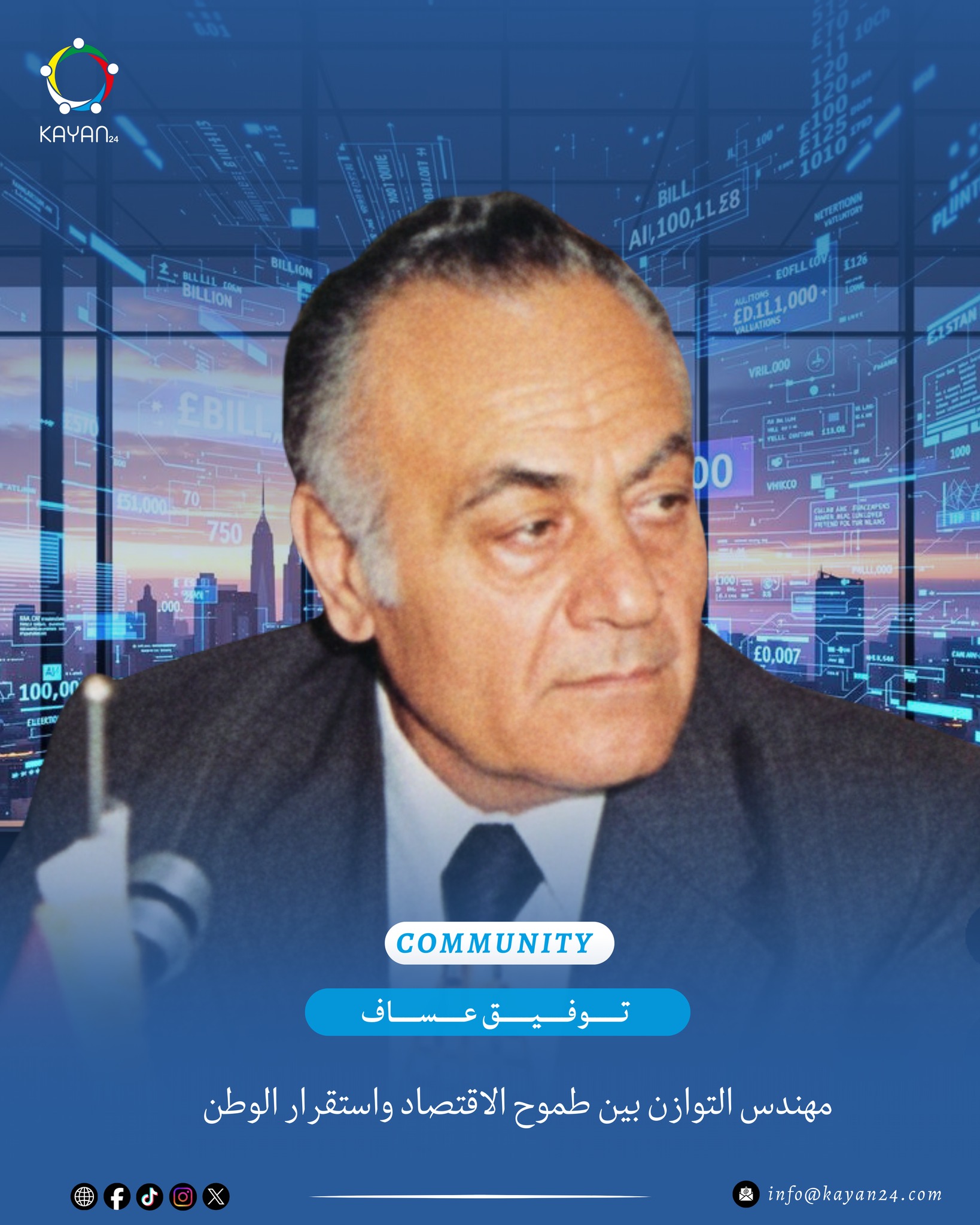
Tawfiq Assaf was not merely a name on the list of Lebanese businessmen; rather, he was a unique phenomenon who combined the shrewdness of a merchant with the wisdom of a politician. He was the man who transformed the emigrant dream into a solid institutional reality, leaving an indelible mark on the modern history of Lebanon, whether in the banking and industrial sectors or in the halls of politics and legislation.
Assaf's journey began with a spirit of adventure, setting off as a young man for Venezuela. There, experience shaped him, and he returned to Beirut in the early 1950s to ignite the spark of an industrial renaissance. He was not content with merely importing goods; instead, he brought global consumer culture to Lebanon, becoming the godfather of “Pepsi-Cola” in the region and the founder of “The Modern Company,” which became a renowned commercial landmark.
In 1956, Assaf laid the foundation stone for “Bank of Beirut and the Arab Countries” (BBAC). The goal was not merely a profit-driven financial institution; rather, he envisioned it as a bridge of communication and a partner in development. Thanks to his vision, the bank managed to withstand the harshest crises Lebanon endured, grounded in the philosophy of “care” and “trust” that Tawfiq Assaf instilled at the core of banking operations.
Tawfiq Assaf entered parliament in 1972 representing Aley, quickly emerging as a voice of reason and moderation. During his tenure as Minister of Industry and Oil, he devised strategies aimed at transforming Lebanon into a regional industrial hub.
Yet the most prominent milestone in his political career was his pivotal role in the Taif Agreement. As a member of the “Committee of Seventeen,” Assaf quietly and steadily contributed to drafting the terms of the National Accord Document, believing that economic stability could only be achieved through political stability and under the umbrella of legitimate institutions.
Assaf was known as the “man of institutions” within his community and across the nation as a whole. Thanks to his efforts, the “Druze Community House” was established as an inclusive landmark, and throughout his life he continued to support cultural and educational initiatives, believing that investing in people is the true profit.
Tawfiq Assaf passed away in 1996, leaving behind a school of “business diplomacy.” He proved that a true businessman is one who carries the concerns of his homeland in his briefcase, and that success is not measured by the wealth we amass, but by the impact we leave behind to serve future generations.