

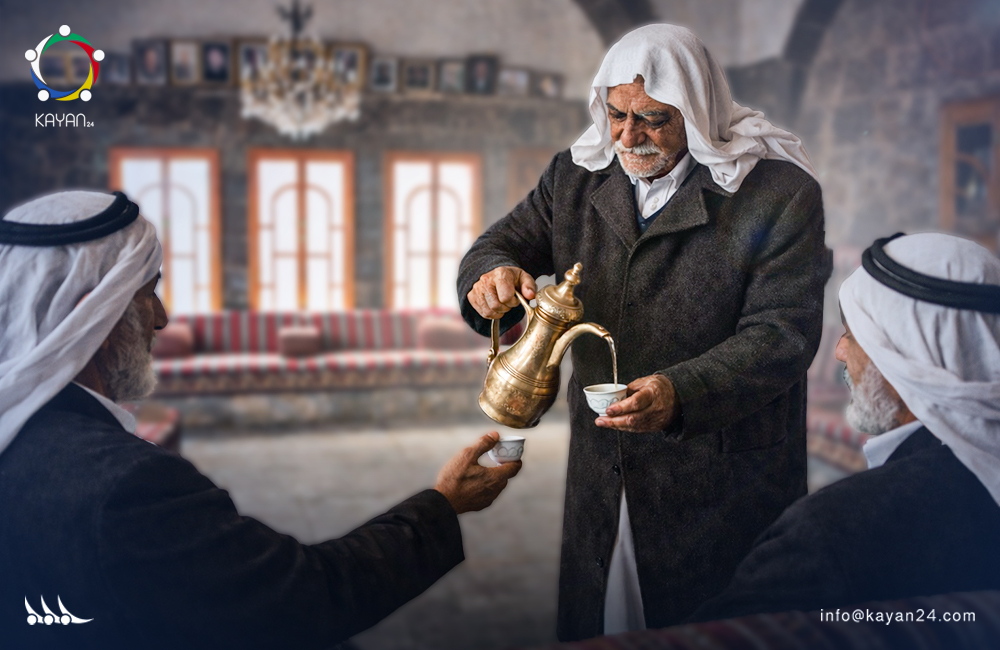
Arabic bitter coffee in the Mountain is considered an authentic tradition symbolizing genuine Arabic hospitality and generosity.
Bitter coffee represents one of the fundamentals of hospitality and honoring guests, tied to the authentic, deep-rooted customs and traditions of the Mountain.
It is also a hallmark of the madhafah (guesthouse), served on various occasions, whether in times of joy or sorrow, during holidays, and beyond.
Preparing bitter coffee requires tools that include "al-Majriyah" or "al-Jirab," which is the pouch in which coffee beans are stored, and "al-Mihmasah," a thick iron pan with a handle ranging between 50 and 60 cm in length.
It is accompanied by the mihmasah handle, shaped like a long spoon used to stir the coffee beans while roasting, and "al-Mubarradah," a thick wooden vessel in which roasted coffee is placed to cool.
There is also "al-Jurn," a hollowed block of wood into which the roasted coffee is placed to be pounded with "al-Mihbaj," a thick wooden stick roughly an arm's length used to crush the coffee beans.
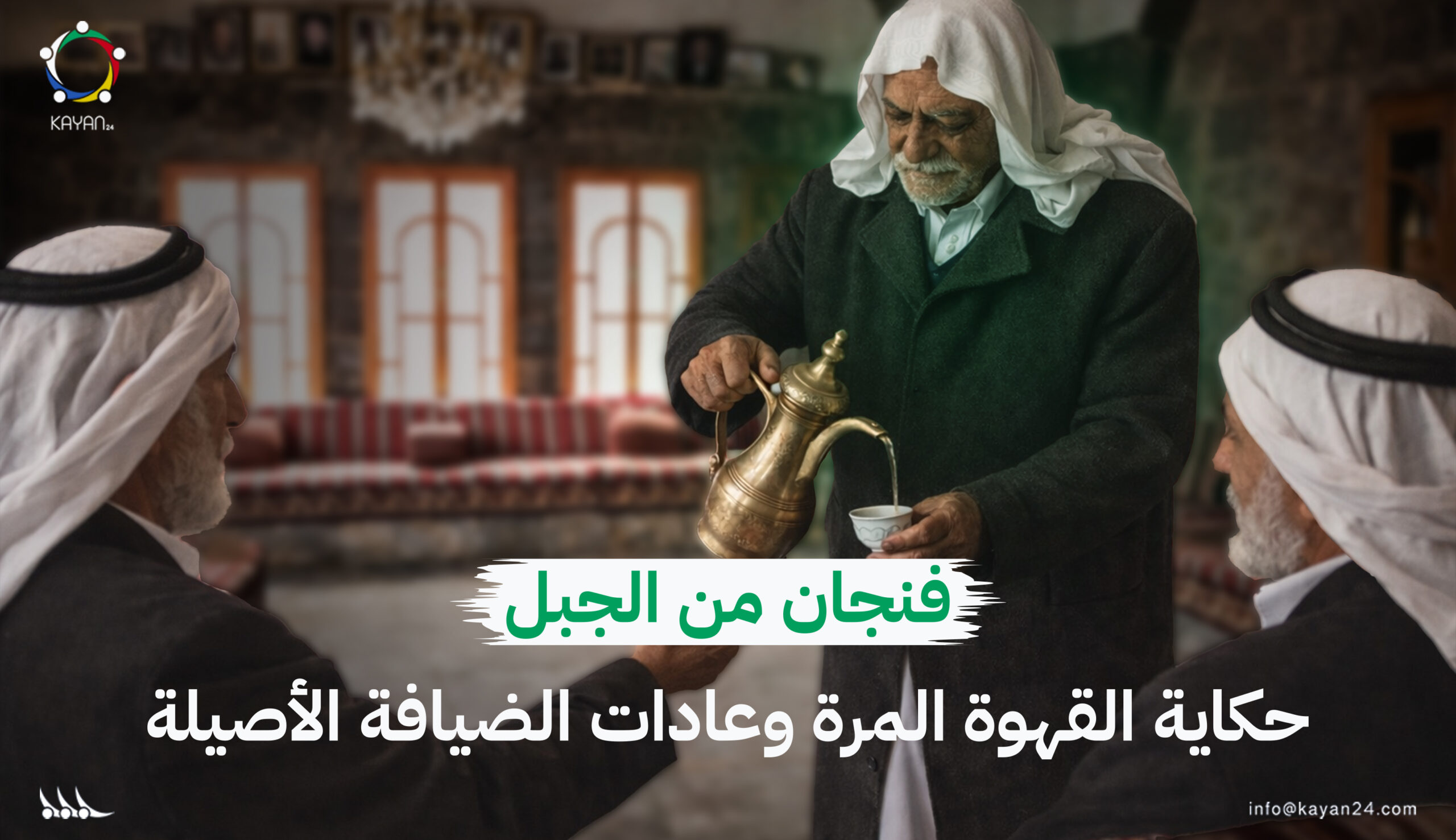
Among the most vital coffee-making utensils are the ma'amil or dallahs (traditional pots) needed for its preparation, crafted from yellow bronze brass or porcelain. These include the brewing dallah, the boiling dallah, the straining dallah, and finally the pouring pot (al-mighlah) from which coffee is poured for guests.
According to the etiquette of drinking bitter coffee, the host begins serving guests starting with a person chosen either for having traveled from afar, for their seniority in age, or out of respect for their social standing or knowledge, after which service continues systematically from right to left.
A cup may not be served to a guest by anyone other than the host; nor may a cup be passed from the person it was offered to to someone else without their permission. If the host of the madhafah breaks the cup after someone drinks from it, this is considered a gesture of praise, affection, and a request for aid.
Each cup served to a guest bears a name carrying specific meanings and symbolism, typically three in total: the first is "Finjan al-Hayf," sipped by the host himself; the second is "Finjan al-Dayf," the first cup served to the guest; and the third is "Finjan al-Kayf," whose drinker is described as a true connoisseur accustomed to enjoying bitter coffee.
Many residents of Jabal al-Arab, particularly in the governorate's countryside, take care to brew and replenish it every morning before undertaking any work, welcoming guests so their homes remain vibrant and hospitable, as it is regarded as the very first duty owed to visitors.
Throughout the history of Jabal al-Arab, bitter coffee has been associated with rich tales and traditions, having long served as a means to resolve disputes among people, cementing its status as an essential beverage surrounded by profound respect, customs, and heritage.