
In the presence of true researchers, words become both a testimony and a responsibility.
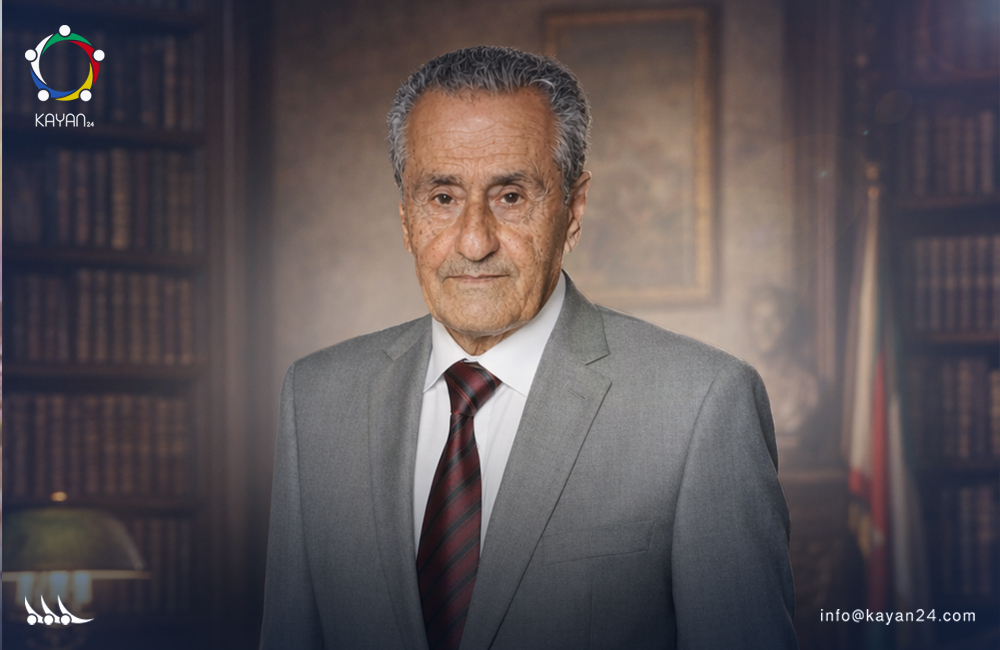
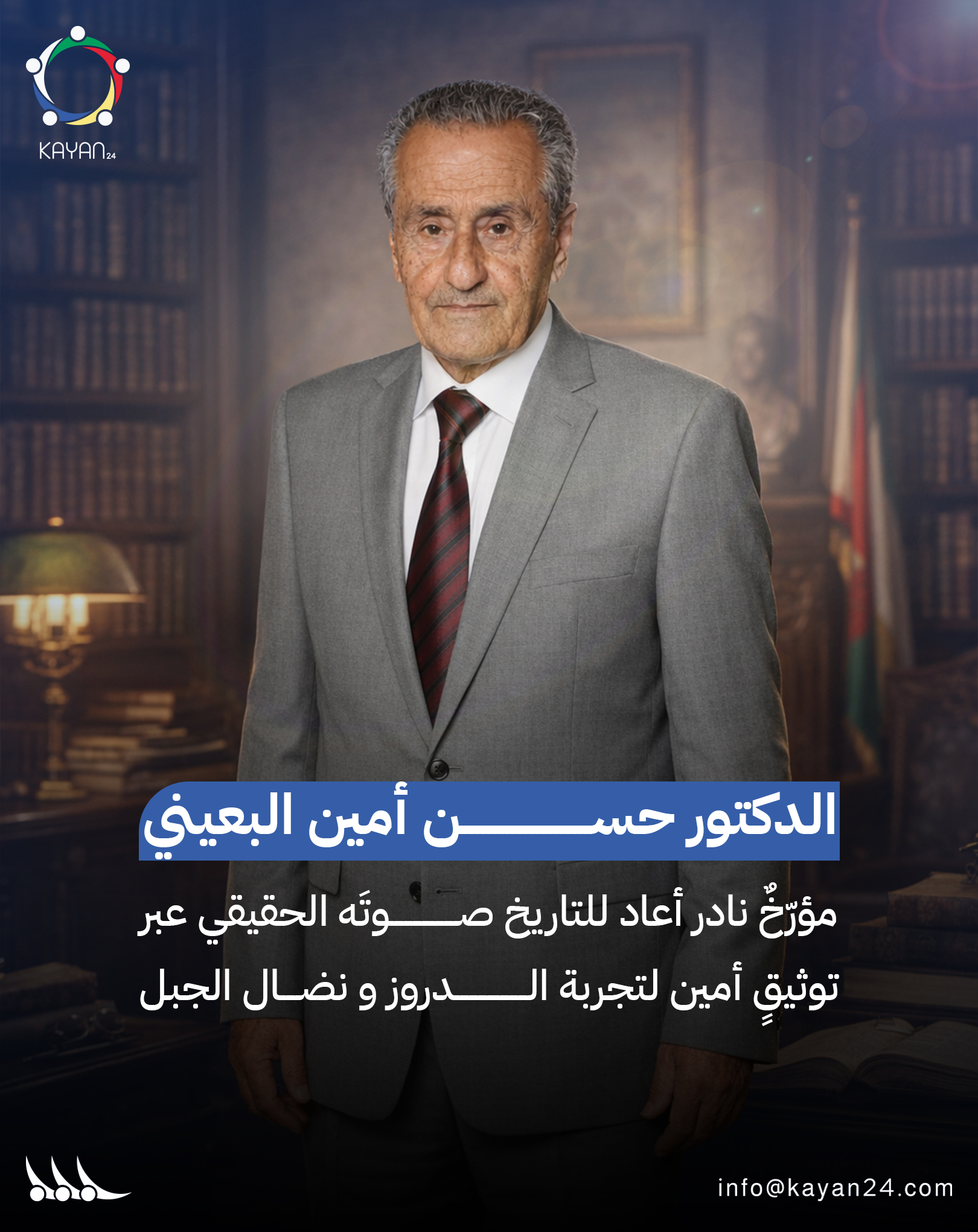
When we speak of Professor Dr. Hassan Amin Al-Baaini, we are before a man who did not merely read history; he delved into its roots, touched the pulse of its people, and redrew the features of an entire era with the objectivity of a researcher and the conscience of a historian.
A creative and distinguished researcher, he deserves honor at all times, for he carried the burden of scientific documentation before documentation became a necessity, and he wrote for history before he wrote for the people.
Hassan Amin Al-Baaini, the university professor and PhD in History, loyal to the history of the Druze, especially the Druze of the Mountain, was a pioneer in writing comprehensive, objective academic history. In his Master's thesis for the Lebanese University in 1975, he documented all aspects of social, economic, and political life for the society of the Mountain in his book.
Fifty years ago, as a young postgraduate student, he undertook the hardship of research travel, visiting the cities and villages of the Mountain and interviewing the descendants of the early settlers in the Jabal al-Druze, as it was then called—those whose ancestors revived the dead land of the Mountain after Timur Lenk's invasion of the Levant in 1403.
Al-Baaini also interviewed the remaining heroic rebels who fought the French with swords, axes, hatchets, and rifles, defeating armies armed with machine guns, artillery, tanks, aircraft, and wireless communications.
He interviewed Sultan Pasha al-Atrash (the Father of Revolutions), as well as prominent rebel leaders, documenting the history of the jihad of the Bani Ma'ruf in the face of Ottoman tyranny, and their routing of the armies of Muhammad Ali Pasha and his son Ibrahim, because their governor, Sharif Pasha, insulted the dignity of their Sheikh, and because their Arnaut policies did not align with the interests of the Levant society.
Our doctor also documented the events of all the Druze battles against the Ottomans and the French, starting with Sultan Pasha's first revolt in 1922—the day they arrested his guest, the Lebanese-Arab rebel Adham Khanjar al-Sa'bi, in al-Qurayya—through the Great Syrian Revolt of 1925–1927, and the subsequent Syrian and Lebanese struggle until France recognized the independence of Syria and Lebanon.
From As-Suwayda, Engineer Thaer Mansour al-Atrash, grandson of Sultan Pasha, initiated a speech honoring Dr. Al-Baaini, in which he said:
“Dr. Hassan Amin Al-Baaini deserves our appreciation, honoring, and respect for everything he has authored... As for what he wrote about Sultan Pasha, he summarized with it the entire history of the region and the history of its national liberation, highlighting the jihadi role of the Bani Ma'ruf in Syria and Lebanon in preserving the independence of their country and their rejection of the artificial sectarian ministate. All that documentation of the jihad was an inspiration to the artists who designed the panorama at the Sultan Pasha monument in his hometown of Al-Qurayya... Dr. Al-Baaini's books and research are a beacon for future researchers to follow, as they shed light on the role of an authentic segment of Arab society in the Levant that contributed to preserving the Arabism of the country.”
As for his affection toward the Druze, it is governed by logic and the spirit of scientific research; he demonstrated the national character of the Great Syrian Revolt, which originated from the Druze to become a general national movement.
Thus, Dr. Hassan Amin Al-Baaini remains one of those who
do not just write history, but preserve people's memory and dignity, restoring the true voice to events far from falsification and emotionalism.