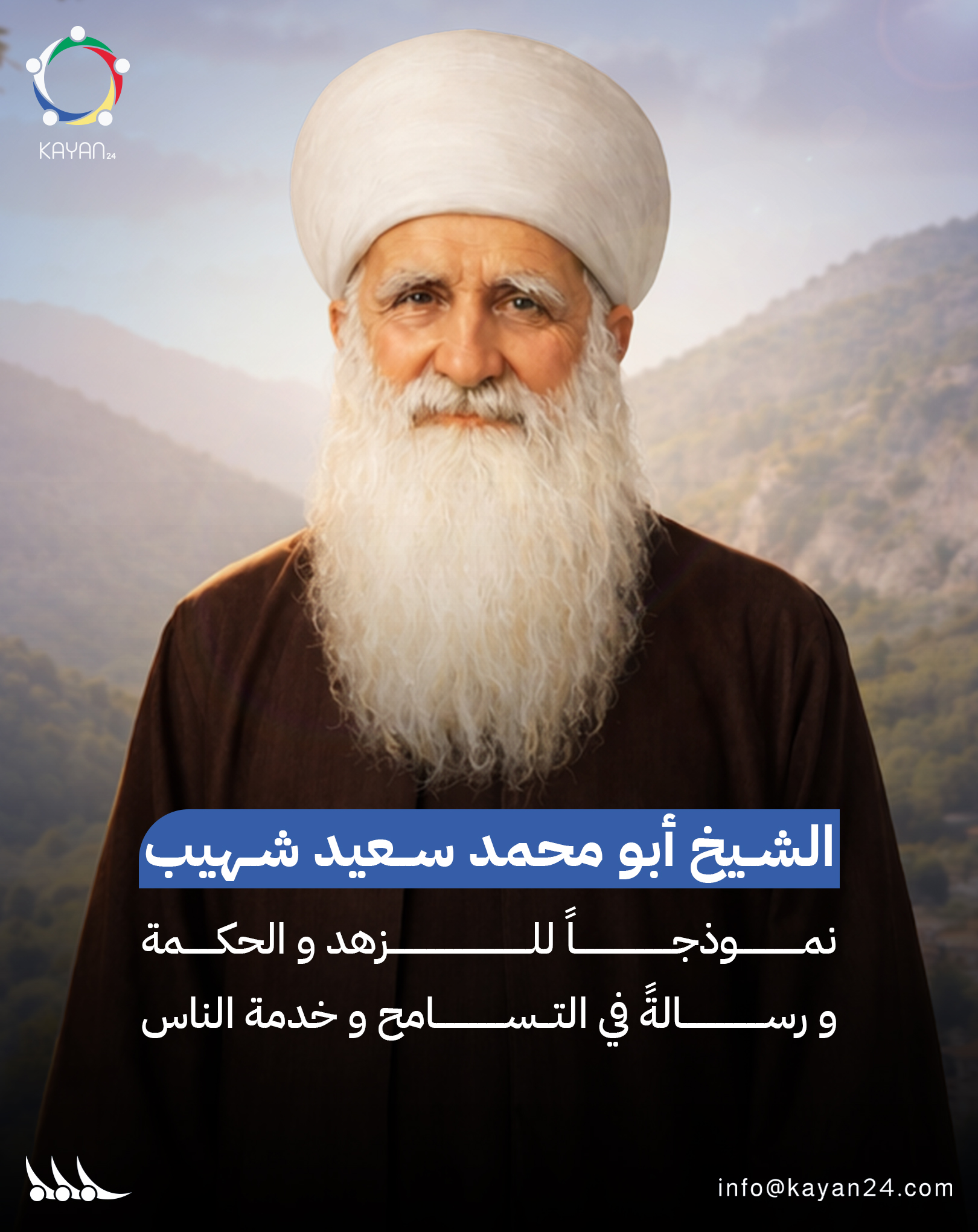

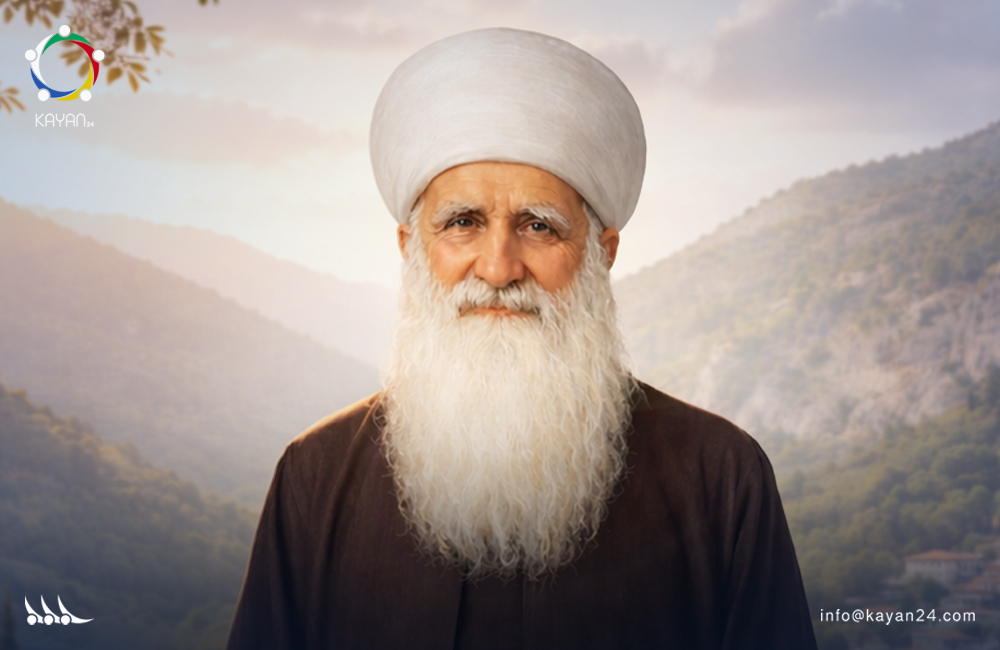
Sheikh Abu Muhammad Said Shuhaib was born in 1866 in the city of Aley, Mount Lebanon, leaving behind a luminous chapter of piety and wisdom in the memory of the first half of the twentieth century. He was not merely a clergyman, but a role model of devotion and integrity, possessing a moral and spiritual presence that left its mark on his surroundings and his contemporaries.
His ambitions in his youth led him to Brazil, where he spent four years gaining extensive experience in administration and a deeper understanding of the outside world. However, his longing for his roots brought him back to his homeland, settling in his birthplace, "Aley".
Sheikh Abu Muhammad chose to dedicate himself to religious service and Unitarian affairs, adopting the Holy Book as the constitution for his life, through which he organized the relationship between man and his Creator, and between man and his fellow man. Among the sheikhs, he was known as "Abu Aqlain" (the father of two minds), in reference to his possession of a temporal, social mind with which he managed people's affairs well, and a religious, spiritual mind with which he sought enlightenment in guidance and instruction. For this reason, the brothers would turn to him to resolve social problems due to his well-known wisdom and sound judgment.
The Sheikh was known for his wisdom, which has been passed down through generations, and he used to repeat:
"A good man must be like a sugarcane; no matter how much it is pressed, it remains sweet in taste."
He always called for tolerance, reconciliation between people, and the preservation of bonds of brotherhood, making him a reference in wisdom and the refinement of souls.
In 1943, Sheikh Abu Muhammad Said Shuhaib passed away after a life full of humility and purity of character, leaving behind a moral and spiritual legacy that has remained present in the memory of his people and his town.