
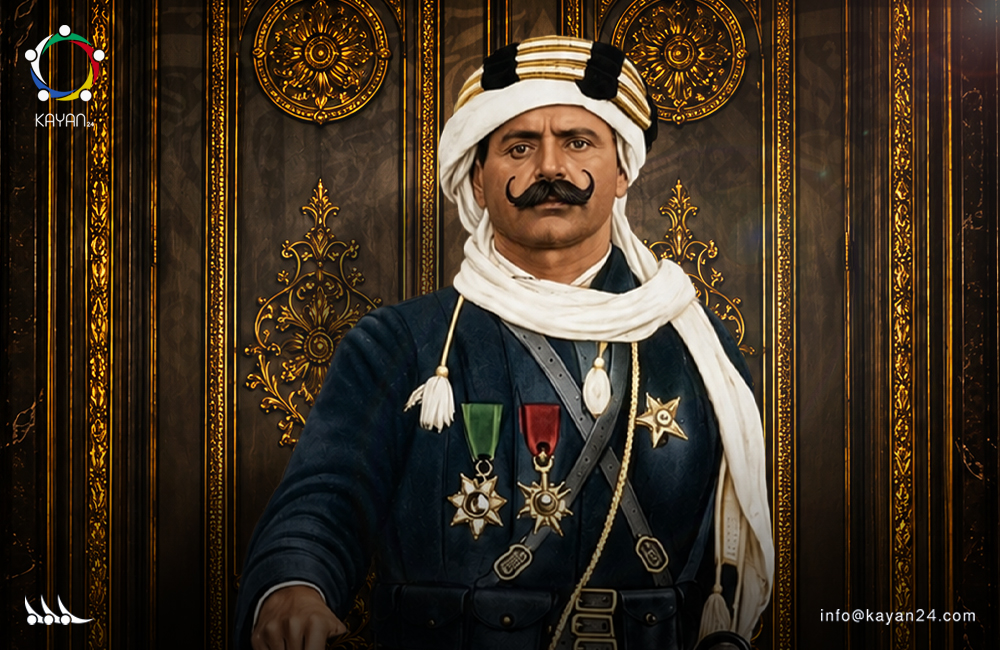
In the memory of the Golan, the names of men do not pass by fleetingly. Some become pillars that support an entire history and redefine the meaning of dignity when the earth shakes beneath people's feet. Among those names, mentioned only with reverence, stands the Mujahid As'ad Abu Saleh, leader of the Bil'an region revolution, a son of Majdal Shams who was born in 1879 to an ancient family whose roots trace back to Lebanon. The family was forced to leave in the 1860s following a conflict with the Shihab emirs, settling in the Golan alongside families who had come from various Syrian and Lebanese regions. There, the family established its social, political, and economic status since the Ottoman era. One of its most prominent figures was the late Sheikh Kanj Abu Saleh (died in 1937), one of the leaders who refused to register the region's youth in the Ottoman army, for which he was arrested and exiled to Arwad Island, and later arrested by French authorities at the beginning of the revolution in the Golan.
Memory recounts an incident still retold whenever the name of As'ad Kanj Abu Saleh is mentioned: when his son was martyred in the revolution, the father stood tall and said: "It is the martyrdom of my son, not my brother." And when asked with astonishment, "How can you say that when he is your son?" he replied that the martyrdom of his son would not stop the revolution, whereas the martyrdom of his brother—its leader—might change its course. Those words were not merely a response, but an explicit declaration that the revolution was greater than blood and kinship, and that dignity is measured not by lineage, but by one's stances.
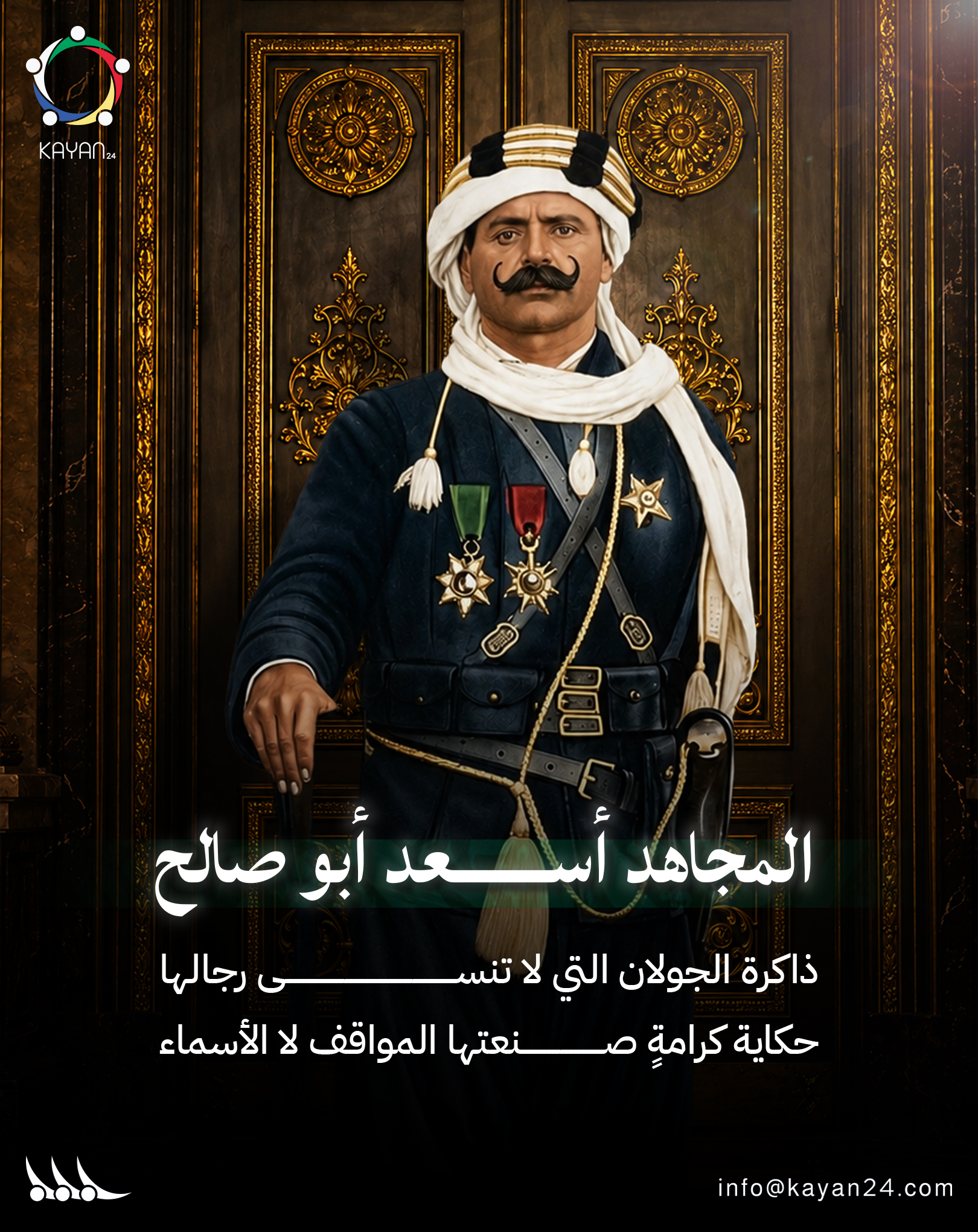
Among the scenes recorded by history regarding the people of the Golan is that General Gouraud sent vast sums of money to the region and its leadership from the Kanj family—Sheikh As'ad Kanj Abu Saleh and his brother Sheikh Kanj—in exchange for not opposing the French forces and assisting them in controlling the south of the country. However, As'ad Kanj and his brother flatly refused, and called upon the sheikhs and leaders of the region to a meeting at the religious council in Majdal Shams, where As'ad delivered his words that remain etched in memory: "It is a disgrace for us if history records that we dealt with French colonialism and stood by as spectators to their occupation." The money was returned to King Faisal, King of Syria, who was stunned by what he heard and saw, telling the messenger from the Golan: "You honorable men deserve double these sums from King Faisal's treasury." The Arabs' pride in the position of the region's people reached such a point that the King issued a decree appointing As'ad Kanj as a captain in the Syrian Army.
Thus, As'ad Kanj Abu Saleh does not appear as merely a name in the record of revolutions, but as a witness to a time when men measured their value by how they protected their land, not by what they owned. His stances, his refusal, and his words that continue to echo in the memory of the Golan are not just a story to be told… but a standard to measure by. For whoever wishes to understand the meaning of honor, let them read the biography of these men who left history no choice but to bow in respect.