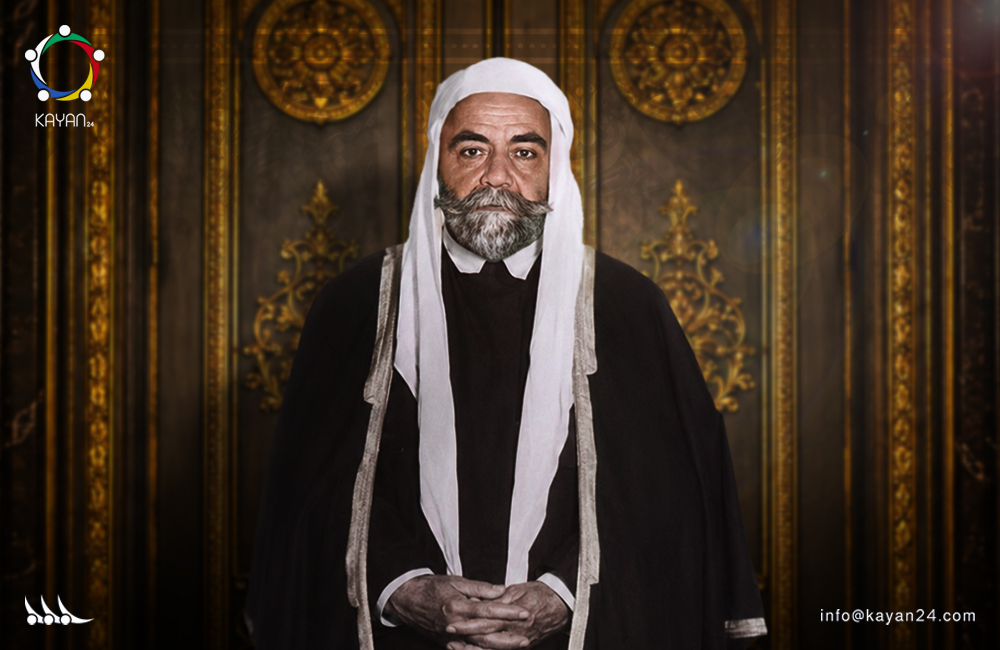

The national memory is rich with prominent figures who dedicated their lives to the freedom and independence of their homeland, writing with their blood and steadfast stances pages of glory immortalized by generations. At the forefront of these illustrious personalities stands the name of the great leader and fighter Hussein Murshid, who represented a towering figure and a foundational pillar of the Great Syrian Revolt. Born in the city of As-Suwayda, he received his education in its state and community schools, before fate decreed that he would grow up an orphan following the martyrdom of his father, Youssef, in one of the battles against the Ottomans. This early beginning instilled in him a spirit of defiance and resilience that drove him to engage early on in national endeavors by participating in repelling the Ottoman campaign led by Sami Pasha al-Farouqi against Jabal al-Druze in 1910, which concluded with the rout of the campaign in the Battle of al-Kafr. He subsequently joined the Young Arab Society (al-Fatat), contributing to planning the expulsion of the Ottoman colonizer. With the outbreak of the Great Arab Revolt in 1918, he joined the expedition heading to Aqaba to meet Prince Faisal bin al-Hussein, becoming one of the vanguard of valiant horsemen who entered the capital, Damascus, before the arrival of the Hashemite army, raising the Arab flag over the government headquarters on May 30, 1918, under the leadership of the Commander-in-Chief Sultan Pasha al-Atrash.
His struggle did not stop there; he was among the first to take the oath of armed struggle in a clandestine meeting held at the home of the fighter Muhammad Abd al-Din in As-Suwayda, attended by fifty-five rebels, renewing his oath of allegiance to the revolution's principles in 1923. He became renowned for his unyielding stances, which made him a thorn in the side of the French authorities as he rejected all temptations and inducements aimed at winning him over. This prompted the French to consider him one of their fiercest enemies and place him under tight surveillance, which eventually led to his arrest by the French military governor, Morel, for ten days. During his detention, he was forced into hard labor, breaking stones and paving roads barefoot and bareheaded, subjected to daily floggings, and forced to sleep in a coal depot. Yet he endured with patience and resolve, remaining proud and unbroken. Then came July 7, 1925, during a popular demonstration brutally suppressed by French forces; he drew his pistol and opened fire on the deputy military governor, Morel, who fled with his soldiers. This heroic act became known as the first bullet that sparked the Great Syrian Revolt. In response, French authorities issued a death sentence against him and an order to demolish his home. However, the determination of the armed populace surrounding the site to protect him forced the occupation forces to withdraw the demolition order and replace it with exile. Historians, particularly historian Adham al-Jundi, have attested to the prominent role played by Hussein Murshid on the battlefields as an intrepid, peerless knight who took part in the battles of the Mountain: al-Kafr, al-Mazraa, al-Adliya, al-Musaifra, and the battles of As-Suwayda, in addition to fighting fiercely in the Damascus Ghouta, including Babbila, Jobar, Irbin, Iqlim al-Ballan, and the battles of al-Lajat.
Following the intensification of the fighting, he displaced alongside the leader of the revolution, Sultan Pasha al-Atrash, and a group of fighters to Azraq in Jordan, and then to Wadi al-Sirhan and al-Haditha in the Kingdom of Saudi Arabia, enduring the severity of hunger, thirst, and the agony of exile. He served as a member of the relief aid committee and the Desert Conference in 1929 before returning to the homeland in late May 1937 following the declaration of a general amnesty, only to find his home demolished and his property confiscated, just like his comrades. With tireless activity, he initiated work within coordination committees to eliminate legal obstacles and facilitate the return of the fighters to their homes. His storied journey extended from the rifle and battlefields into political and parliamentary action, fiercely defending his people’s causes. He earned substantial public trust, won election to the National Assembly, and then served as a member of parliament. He was one of the pillars of the National Bloc and a founder of the National Commission in the Mountain, actively participating in resisting French aggression during the events of March 1945, and standing as one of the most prominent voices calling for the abolition of administrative privileges and the reintegration of the Mountain into the motherland. Furthermore, he took part in the popular movement of 1947 and took up arms again in 1954 in opposition to the rule of Adib al-Shishakli.
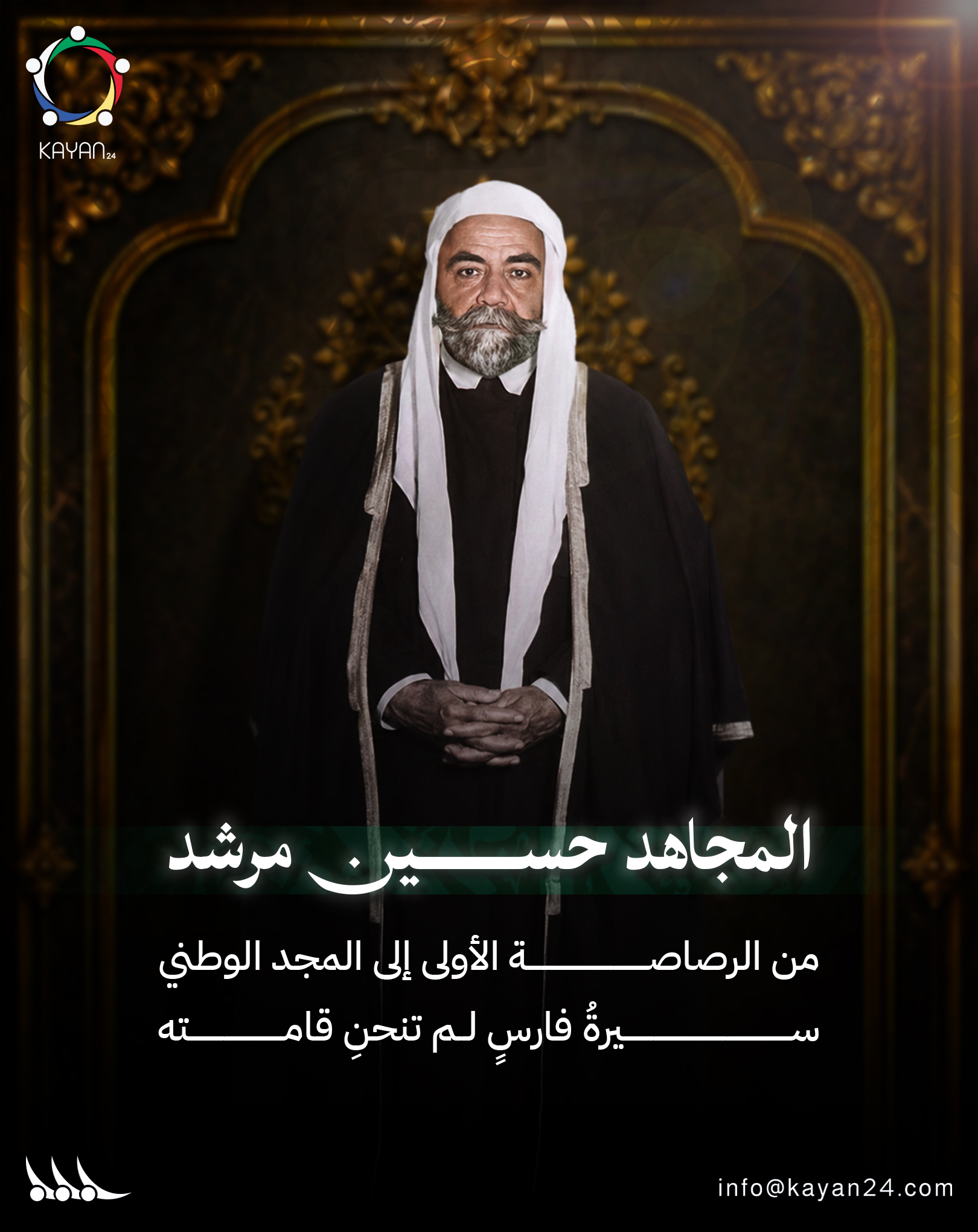
He made great sacrifices, notably when his heroic son Fahd fell martyr on the altar of freedom and independence during the 1948 Palestine War in the Battle of al-Khan. He also represented Jabal al-Arab at the 1953 Homs Conference of National Forces and joined the National Union in As-Suwayda in 1960 during the United Arab Republic. His path of service continued until the train of life came to a halt on April 3, 1968, when the great knight and fighter Hussein Murshid stepped down, returning his pure soul to its Creator after a life filled with struggle, sincerity, and devotion to the homeland. His body was laid to rest in the city of As-Suwayda, which embraced him with deep reverence and respect. In recognition of his fragrant legacy and immortal heroism, a middle school facing his former home—which had been demolished by the French occupation—was named after him. His memory was also immortalized with an artistic statue carved from basalt stone by the sculptor Fouad Naeem, ensuring that Hussein Murshid remains an eternal symbol of dignity and patriotism.
The Freedom Fighter Hussein Murshid