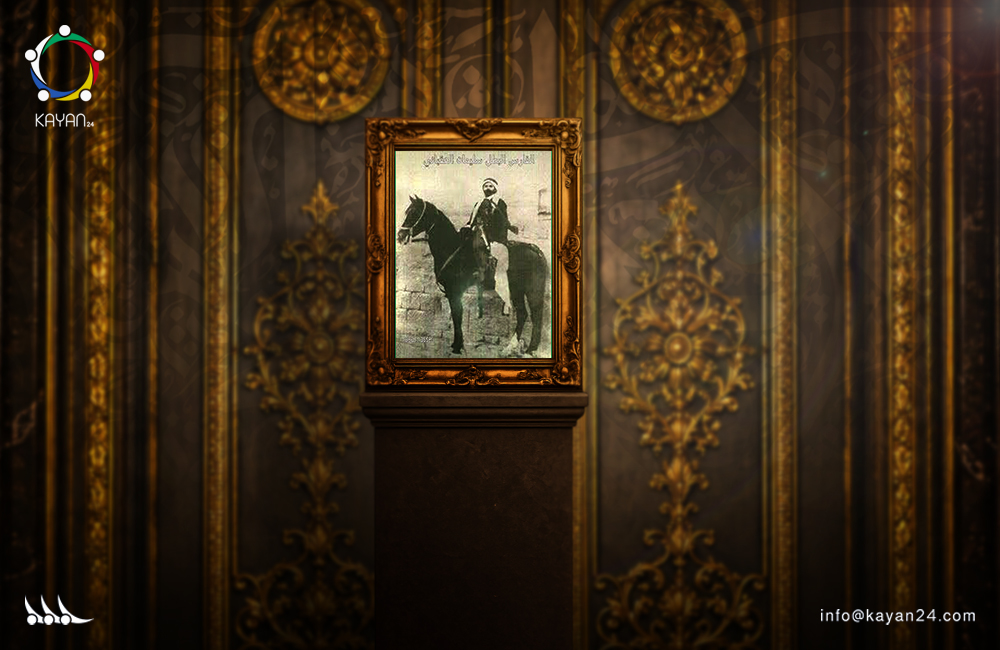

In the memory of nations reside the biographies of heroes who forged epics of pride with their blood and deeds that time cannot erase. At the forefront of these immortal men shines the name of the heroic martyr Suleiman al-Oqbani: the knight who combined the purity of a peasant’s hand, authentic generosity, and the courage of a warrior whose sword strikes astonished the mightiest armies. Al-Oqbani's life story was not merely the tale of an armed rebel, but a living embodiment of chivalry and a resolute will as unyielding as the mountain oaks, ensuring that his heroism in the Battle of Al-Mazra'a in 1925 remains a historic feat held high with pride and dignity.
Suleiman al-Oqbani was forty-five years old when the Great Syrian Revolt was declared in 1925, earning his living by plowing and farming his land, and spending generously on his guests and visitors. His character, morals, and life trajectory were exceptionally rare, led by generosity and selflessness, in addition to horsemanship, bravery, chivalry, and gallantry.
When the Battle of Al-Mazra'a took place on August 1, 1925—considered one of the greatest battles of the Great Syrian Revolt against the French colonizers under the leadership of Sultan Pasha al-Atrash—fierce combat raged between the fighters and the colonial army. In this battle, the revolutionaries routed the heavily armed and equipped expedition of French General Michaud. The revolutionaries achieved victory over the colonizers using personal firearms, swords, sticks, and axes, powered by faith, solid determination, and unmatched valor and bravery beneath the banners of glory. Some overturned tanks on the roadsides and seized weapons, while others plugged the barrels of artillery with their turbans. The land of Al-Mazra'a witnessed extraordinary acts of heroism, among the most powerful and shining ever recorded in the history of the Arab struggle.
In the memoirs of Dr. Abd al-Rahman Shahbandar, political spokesperson of the Great Syrian Revolt, it was recorded: “No battle like this has occurred since Al-Waqidi documented the Arab conquests. Among those who stood out, triumphed in this epic, and surpassed all peers was Suleiman al-Oqbani of Al-Mazra'a. He would charge out ahead of the fighters, brandish his sword, and shout: ‘Witness! Witness! Recite! Recite!’, then storm toward the colonizers, striking one with his sword in a blow that often severed his neck or split him in two.” In this manner, he killed eighteen soldiers.
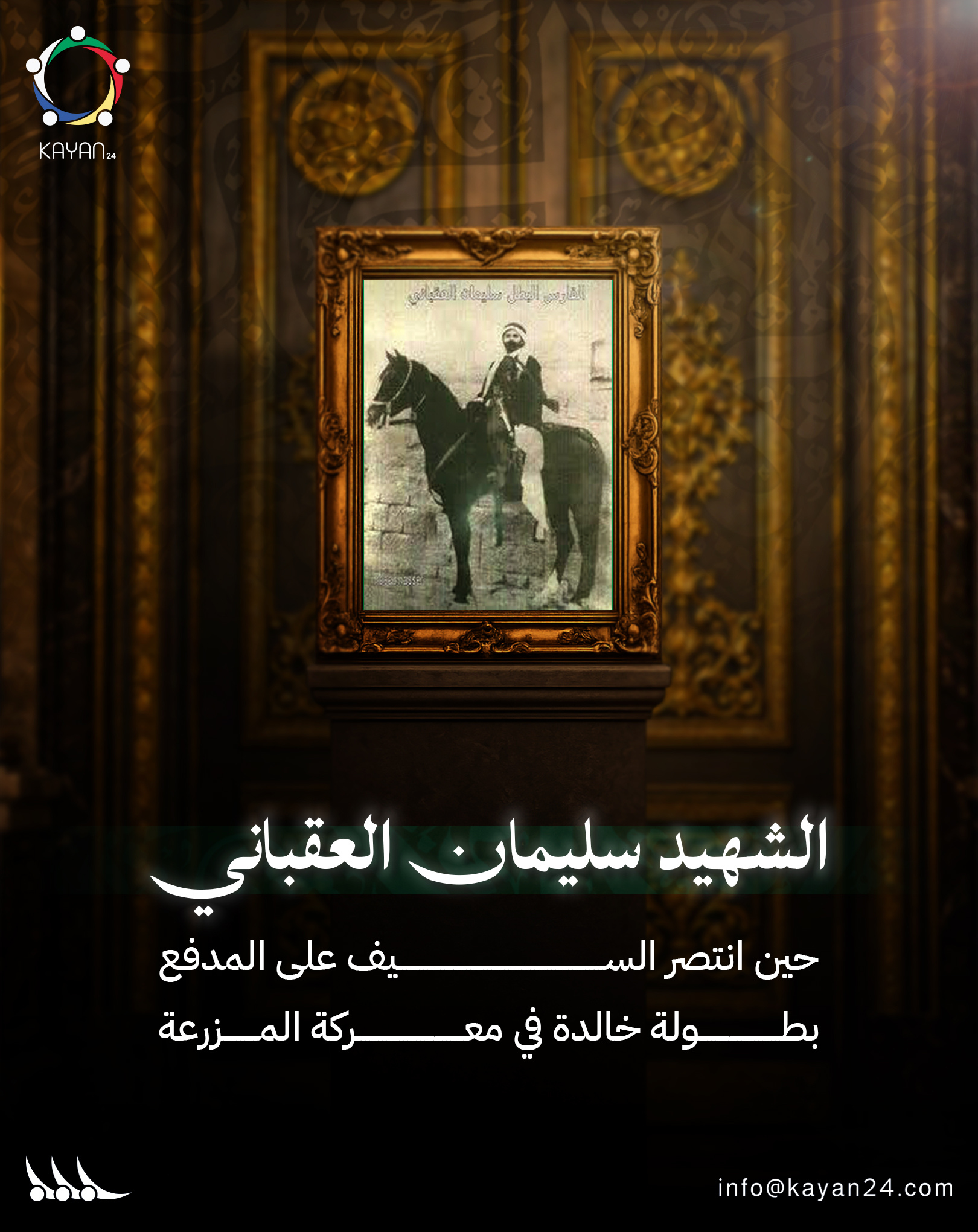
In this famous battle, France recovered the bodies of several French soldiers who had fallen at the hands of the hero Suleiman al-Oqbani to examine in France the sheer force of the sword strike that cleaved a French soldier in two. France initially suspected that the rebels possessed an advanced weapon, until learning later that the renowned swordsman Suleiman al-Oqbani was the one behind those strikes.
During the final hour of the day's fighting, as he pursued fleeing soldiers far from the battlefield, he was struck by a treacherous bullet that martyred him. To commemorate his heroism and martyrdom, a monument was erected over his tomb in his hometown of Al-Mazra'a to stand as an enduring symbol of courage. As the poet Salameh Obeid stated in his book The Syrian Revolution: “The victory of Al-Mazra'a was the most prominent military triumph in the modern history of Syria; we find no day more deserving of pride and immortality than the day of Al-Mazra'a, nor any calamity that troubled the beds of colonialism as deeply as that defeat.”
The Heroic Martyr Suleiman al-Oqbani