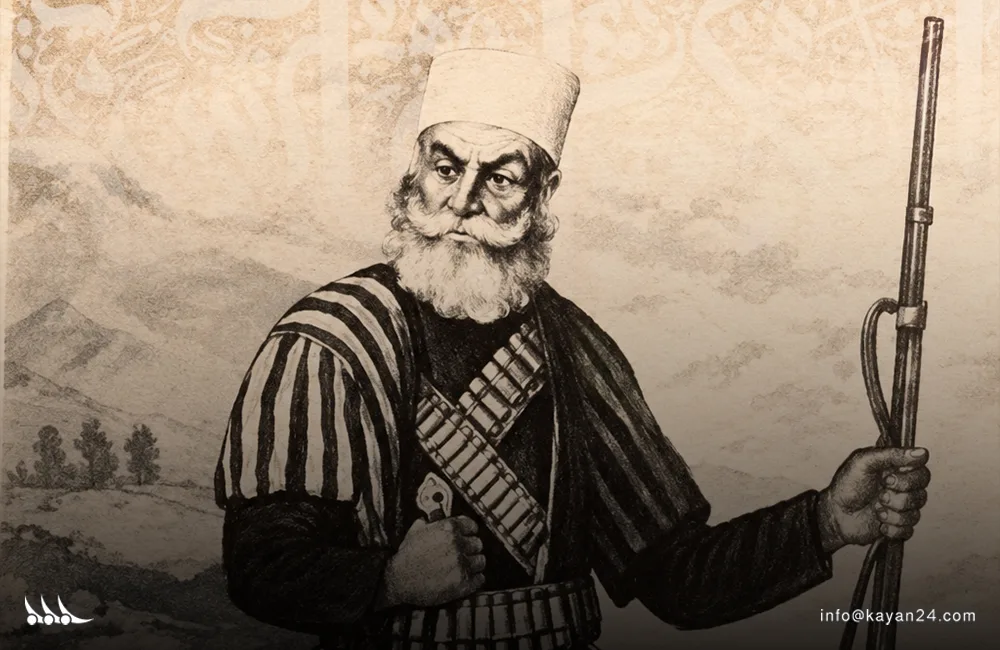


When the insult of a man turns into a spark of confrontation and a mountain becomes an arena for facing a regular army, one of the most prominent pages of the history of the Druze in the nineteenth century begins.
The episode dates back to 1837, when Sheikh Yahya al-Hamdan, the Sheikh of the Druze of Hauran, rejected a request to conscript young men from the mountain into the army of Ibrahim Pasha, emphasizing the region's need for its sons to protect its land and people. The dispute escalated after Sharif Pasha, the Governor of Damascus, slapped al-Hamdan, and the incident became the spark that ignited the refusal of conscription and the surrender of weapons, followed by a meeting in As-Suwayda and a decision to confront.
With the escalation of the confrontations, the fighters sought refuge in the rugged terrain of Al-Lajat, where they fought fierce battles against the Egyptian campaigns, the most prominent of which was the Battle of Dama in February 1838, in which the Egyptian forces suffered heavy losses and were forced to retreat.
Thus, the episode recalls a moment in history where Al-Lajat was not just rugged land, but a decisive factor in the course of the battle. The story of al-Hamdan, Al-Lajat, and Dama remains a testament to a phase in which the refusal of conscription and weapons was linked to a military confrontation whose effects extended to the mountain and the region.