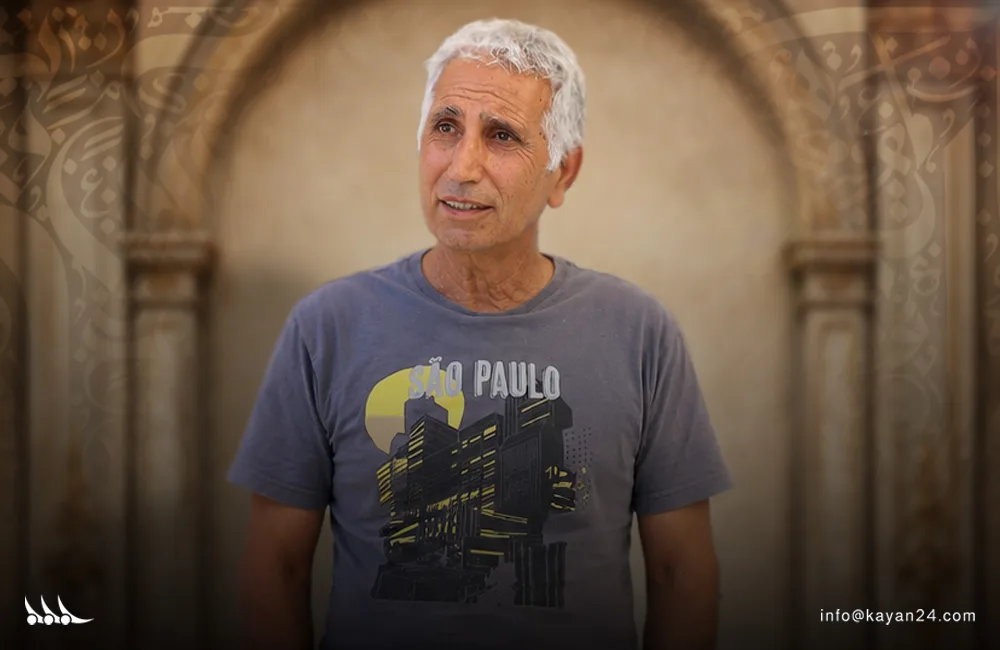


“From the Known to the Apparent”… A journey into the history of the Levant and the roots of families
In its first episode, the program “From the Known to the Apparent” opens a window onto the history of the Levant, in an attempt to understand the roots of the societies that lived on this land, and to trace the paths of the formation of families and religious and social identities over the centuries, far from assumptions and undocumented narratives.
The episode begins with the history of the region as a space where civilizations, cultures, and beliefs interacted, from Ebla and Ugarit to the Phoenician cities and Damascus, passing through the historical stages that witnessed the spread of Christianity and the flourishing of Islamic civilization. From this cultural heritage, it moves to a question closer to people's lives: What do we really know about the origins of our families, and how were their current affiliations formed?
The episode highlights the importance of distinguishing between family lineage and religious affiliation, asserting that similarity in family names is not enough to prove a common origin, just as differences in sects do not necessarily mean different lineages. In this context, it addresses the history of the Unitarian Druze, the emergence of the Unitarian Dawah (call) at the beginning of the eleventh century AD, and the demographic shifts and migrations that contributed to the formation of Druze communities in various regions of the Levant, up to the Mountain of the Arabs.
The history of coexistence between different religious and sectarian groups is not absent from the episode, as the stories of villages, cities, markets, and families intersect to reveal a side of the shared life created by centuries of neighborliness and social and cultural exchange, including the cooperation and communication it held, as well as the conflicts and transformations it witnessed.
The program places the historical document at the heart of its cognitive journey, by turning to court records, civil registries, Ottoman documents, books of biographies, genealogies, and local manuscripts, in an effort to compare inherited narratives with available sources, and to distinguish between proven facts and issues that still need research.
“From the Known to the Apparent” is not an attempt to favor one group’s narrative over another, or to prove historical precedence of one sect over others, but rather an invitation to read the history of the Levant objectively, to understand the roots of the diversity that distinguished it, and to discover the connections and transformations that shaped its societies over time.
For between what we have inherited of tales and what documents can reveal, the journey begins in search of a history not created by assumptions, but guided by evidence.