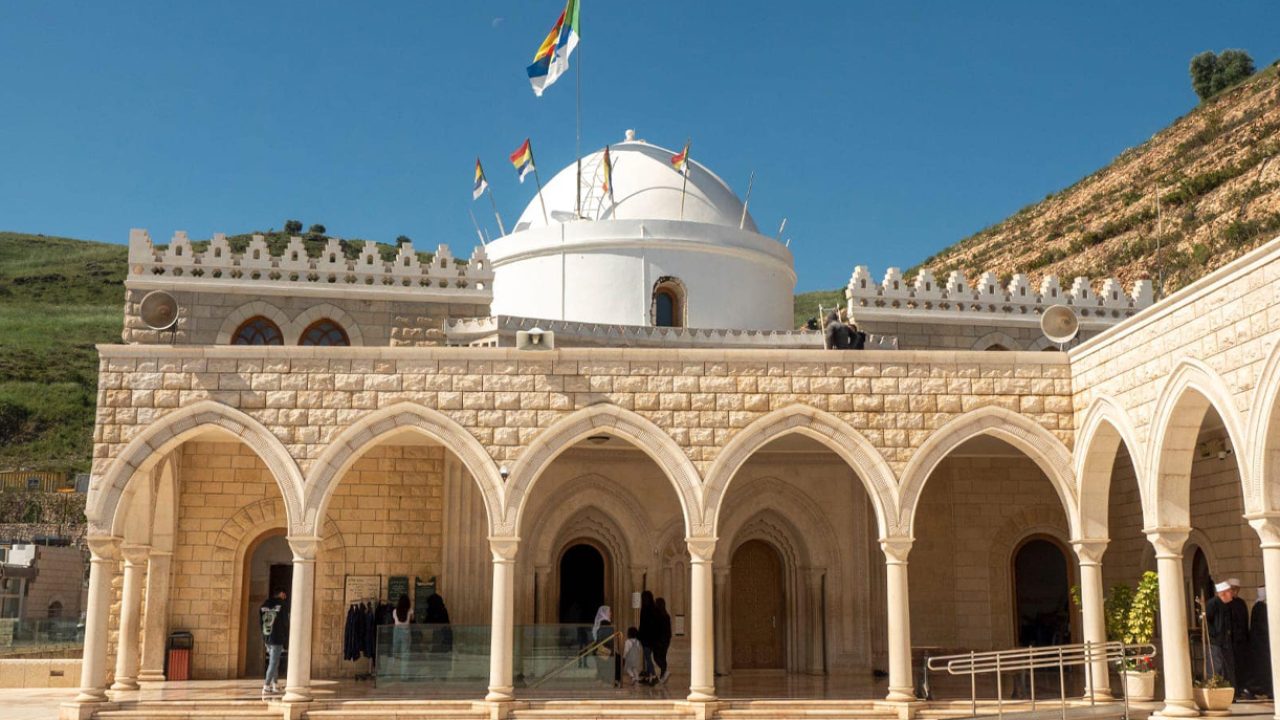


In southern Lebanon, specifically in the Hasbaya district, Khalwat al-Bayada al-Sharifa stands tall as one of the most ancient spiritual edifices for the Druze monotheists, a place that embodies the meanings of asceticism, piety, and detachment from the temptations of the world.
The story of this edifice dates back to the mid-seventeenth century, when Sheikh Saif al-Din Shu'aib founded a simple room made of white stone for worship and meditation, which transformed over time into a spiritual complex where the people of Tawhid gather from various regions.
Al-Bayada carries two meanings in its name: the whiteness of its limestone rocks and the purity of the hearts that seek it in pursuit of knowledge and spiritual clarity.
As for its deeper secret, it lies in a lifestyle based on hard work and lawful earning, and a distancing from donations and temptations, as the Sheikhs strive to secure their sustenance from the toil of their own hands, in an image that embodies humility, independence, and the purity of the inner soul.
Khalwat al-Bayada al-Sharifa is not just a place of worship, but a continuous message that the richness of the soul is the true richness, and that spiritual purity begins with a person's honesty with themselves, and with a lawful morsel earned through toil and dignity.