
Exclusive to “Kayan 24”
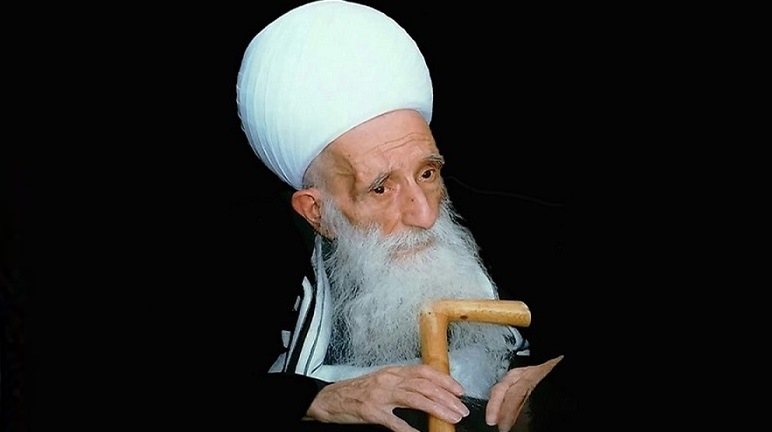
No face has flowed with heavenly light as the face of the Knower of God, the Saint of God, and the spiritual reference for the Unitarian Druze community, Sheikh Abu Hassan Aref Halawi, has flowed. And no faith has shone in a heart as it glowed in the heart of the one certain of God, the Master of the Island. If the piety of Gnosis and Monotheism is the fabric of that radiance, then this flow must have reached a sublime status, where the Knower becomes a Knower among the people of insight and faith, his certain knowledge paralleling his Gnostic path.
The venerable Sheikh and spiritual reference, Abu Hassan Aref Halawi, was a saint of God who inhabited the conscience and minds of the Unitarian Druze, and resided in their hearts for long decades. This extended to non-Druze as well, as he became a unifying religious, national, and faith-based symbol, and a spiritual safety valve. He was distinguished by his piety, devotion, wisdom, deep contemplation, asceticism, nobility, and spontaneity, to the extent that it was said there was something of God’s secrets within him, and his humble, simple home turned into a pilgrimage site for the Druze and a destination for those who believed in his Gnosis, piety, and Unitarian path.
The Turban of Authority (Al-Kawakalah)
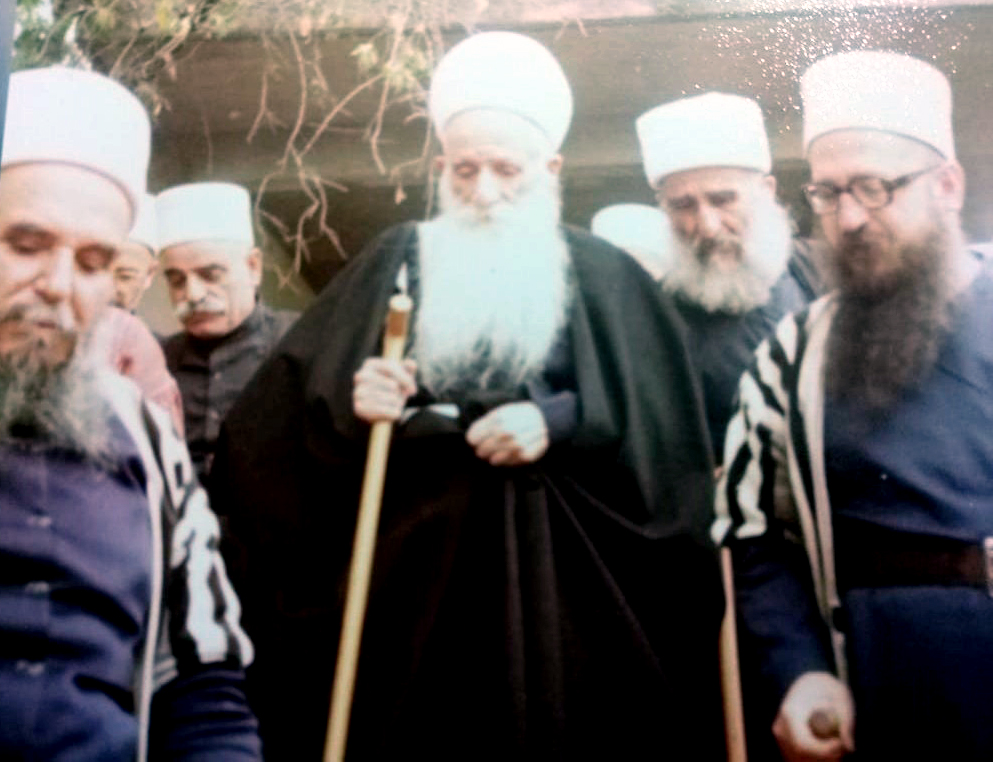
Sheikh Abu Hassan Aref Halawi was a Druze Sheikh of the people of Monotheism, born in 1899 in the Chouf town of Barouk, where he grew up and learned in the early stages of his life. He loved the land and worked in agriculture with his family, and learned the foundations of Arabic calligraphy to enhance his talent for beautiful writing. He was a lover of religion, yearning to know much about the doctrine of Monotheism and the heavenly books; he drank from books and from the great religious men in his village and region, listening to their conversations, lessons, and spiritual and religious chants. He memorized much, including the Noble Knowledge (al-Ma'lum al-Sharif), and was able to master religious sciences and the foundations of Monotheism, until he became a religious authority from the early 1930s, when he was crowned with the turban of authority (al-Kawakalah) at the age of thirty-five at the hands of the venerable Sheikh, the late Abu Hussein Mahmoud Faraj, known then as the proof of Monotheism, the spiritual father of the Unitarian Druze community, and one of the jurists of the doctrine and the righteous reference for settling most of the people's affairs.
Sheikh Abu Hassan Aref Halawi is considered one of the highest and most influential religious authorities among the Unitarian Druze community, whether in Lebanon, Syria, or Palestine. Among the most prominent things he did during the Lebanese Civil War was his call for the total unification of the religious and political institutions, and he placed a religious ban on any member of the Druze community who dealt or deals with the Israeli enemy, following the Israeli invasion in 1982.
Throughout his long journey and his long life of over a century, he lived through the Ottomans, the French Mandate, and most of the wars and events that passed over Lebanon, up to the American invasion of Iraq. He was always optimistic, calm, and composed, and he often brought reassurance to people's hearts in the most difficult stages and in times of war and bombardment, especially during the Israeli invasion of the Mountain.
The Knower of God
He listened a lot and spoke little, producing words of wisdom containing the experiences of years and the wisdom of life that deserve to be an inspiring lesson for life. However, he did not write them down in books or publications, but they remained on people's tongues and in their memories until Sheikh Sultan Al-Quntar came and collected what he had saved of news, documents, and scraps of paper with writings on them, and published a book entitled: "The Knower of God, Sheikh Abu Hassan Aref Halawi, his Biography." The proceeds of the book went to the "Ishraq School" in Matn, containing wisdom, sayings, and legacies that have always had a great impact on the path of those walking under the guidance of Monotheism.
The Siege of the Mountain
Among the verified stories that people have recounted for years after the siege of the Mountain is that during the Israeli invasion of Lebanon and the siege of the Mountain, Sheikh Abu Hassan Aref Halawi did not leave his home for more than a year, even though the town of Maasariti, where he was residing, was subjected to heavy shelling, with more than 600 shells falling on the town at the time. However, the surprise was that not a single person from the town was harmed, and they believe and are certain that the "blessing" of the Sheikh saved them. One day during the siege, an Israeli officer came to him asking to arrest one of the village's youths, but the Sheikh refused. The officer insisted and challenged him in a harsh tone, so Sheikh Aref Halawi sufficed by saying: "Go, may God not grant you success." As soon as the officer left him, his car overturned, and he was seriously injured. He recounted the story to his Israeli colleague, saying: "There is a Sheikh in Maasariti named Abu Hassan Aref, beware that he gets angry with you, or your fate will be like mine."
Pilgrimage Site of the Druze
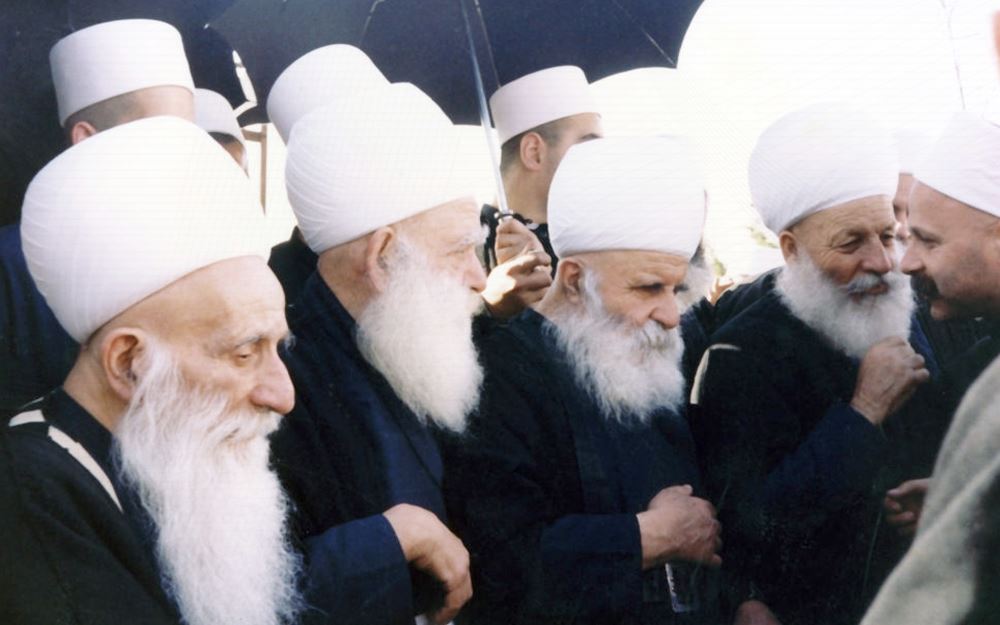
Sheikh Aref Halawi married Sitt Zahra without any prior relationship, and they did not have children. Sitt Zahra is the daughter of the late Sheikh Abu Hasib Asaad Al-Sayegh, a well-known reference personality of the Ma'roufi faith at that time. Sheikh Abu Hassan took his place and became an important pillar of Monotheism, and he transformed his residence in his uncle’s town, the father of his wife, in the village of Maasariti, into a religious headquarters and a reference for the members of the community, to the extent that the town of Maasariti became a pilgrimage site for clergy from various Lebanese regions, Syria, occupied Palestine, Jabal al-Arab, and Jordan, and a destination for leaders and commanders.
During the civil war, Sheikh Aref Halawi exerted great efforts to bury strife, promote unity, and reject division, fanaticism, and disputes, confronting the conspiracies that were being woven against Lebanon and its people. He devoted his life to worship and urging people to do good, love, tolerance, and spread virtue. He participated in their joys, sorrows, and social occasions without affectation or annoyance, living content and satisfied with the simplicity of a Knower and the character of someone confident. Many legacies and interesting stories closely related to the Druze society and the nature of the villages have been narrated about him, to the point that things containing miracles have happened and become the story of every home.
The venerable, pious, and religious Sheikh passed away to the mercy of his Creator in his town of Barouk on Wednesday, November 26, 2003. He surrendered his soul to its Creator and was buried in his house the following day in the presence of hundreds of thousands of mourners from various Lebanese regions, Syria, and some neighboring countries.
With his passing, the Unitarian Druze community lost one of its great spiritual references, but it gained, over a century, the path of a believing Sheikh who left a great legacy that the years have only made more radiant and necessary in this difficult time.
His room in his house in Barouk turned into a shrine that people visit to seek blessings.