

Kayan 24 Exclusive
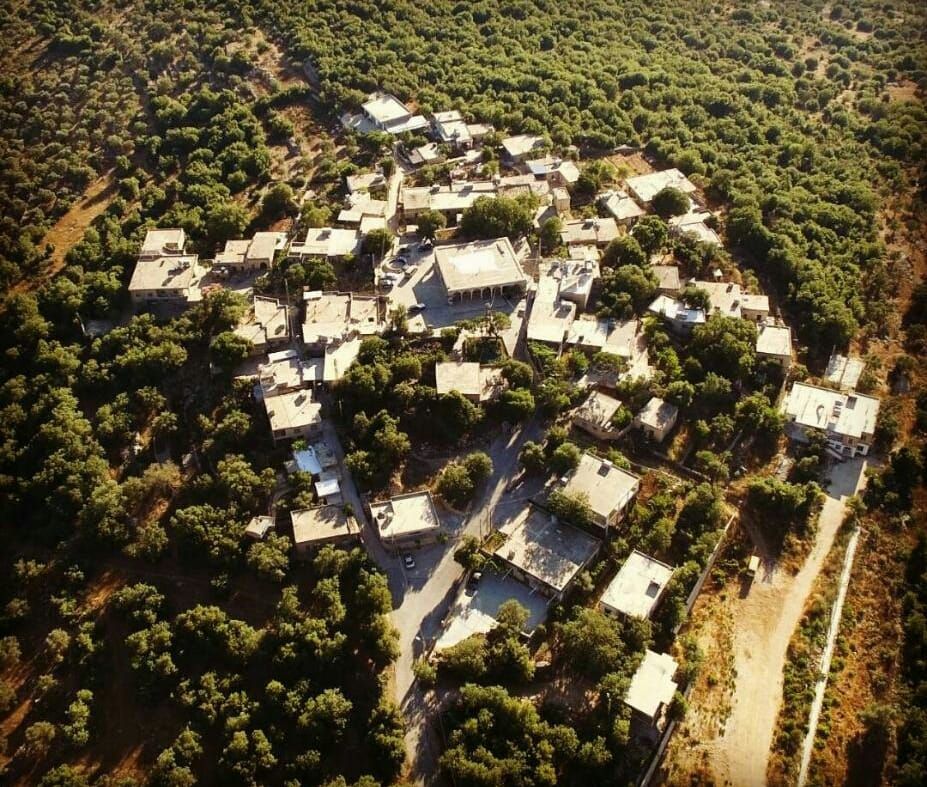
On a hill overflowing with light and splendor, in the midst of an elevated spot that boasts the beauty of a place unlike any other, where sound has the meaning of piety and faith, and the echo has the depth of reverence and purity, the Bayada Khalwats stand with their gentleness and crystalline celestial clarity at the southern end of the town of Hasbaya. Overlooking Mount Hermon, the peaks of Mount Sheikh—the patriarch of sacred mountains—and the mountains of the Upper Galilee in the lands of historical Palestine, they are surrounded by olive trees with their great symbolism, especially since the majority of the residents have relied on cultivating them for a long time. These Khalwats (hermitages), through the spiritual, religious, and faith-based values they contain, constitute the supreme reference for the Druze monotheistic community, not only in Lebanon, but also in Palestine, Syria, Jordan, and for Druze in most parts of the world. They are complemented and harmonized by a group of Khalwats in the villages of the district, dedicated to worship, prayer, obedience to God, and asceticism, serving as a meeting place for the sheikhs of Tawhid (monotheism), faith, white turbans, and senior sheikhs. However, they also embrace in their outer courtyards and inner shades the visits of believers—sheikhs and non-sheikhs alike, and families who seek them for blessings, reverence, and meditation.
Gnostic Elevation
The history of the Bayada Khalwats is linked to their first founder, the late Sheikh Saif al-Din Shuaib, more than 400 years ago. The late Sheikh Jamal al-Din al-Hamra continued the construction process after him, as the area of land ownership and development expanded in the vicinity of the Khalwats to accommodate the crowds of sheikhs and believers during religious occasions. Consequently, a presidential decree was issued in 2003, numbered 9525, prohibiting construction in the vicinity of the Khalwats within a radius of no less than one thousand meters.
The Bayada Khalwats are unique as a place for elevating the gnostic and monotheistic path to high ranks of certainty, which is reached by those in whom the light of Truth radiates, and the light of light derived from spiritual purity as they ascend towards Tawhid through an ascetic, meditative, and knowledge-based path.
The Bayada Khalwats receive believers—worshippers, ascetics, and devotees—with silence, humility, and diligence in practicing religious rites and in the path of elevation to acquire religious sciences and knowledge. The Bayada Khalwats play a major role in promoting religious culture, guidance, and counseling, while avoiding a missionary role, thus urging the spread of a culture of tolerance, love, moral values, virtues, enjoining good and forbidding evil, doing good deeds, helping the needy, and other moral values that the monotheist treasures as a pioneer.
Sheikh Fandi Jamal al-Din Shujaa points out that the Bayada Khalwats are a destination for visitors from various sects, denominations, and social, civil, and community institutions from all regions. They frequent them for the purpose of seeking blessings and learning about the customs, traditions, and methods followed, where moral and religious conduct and cognitive elevation are the basis of the activity in the Khalwats. Furthermore, prayer in the Khalwats is held on time and is attended only by members of the Druze community who have met specific conditions that qualify them to perform these obligations, which cannot and must not be neglected.
Regarding the relationship of the Bayada Khalwats to the law organizing endowments and the Druze religious judiciary in Lebanon, Sheikh Shujaa notes that since its issuance in 1962, this law excluded the Bayada Khalwats from its provisions. The relationship with the Mashayekh al-Aql (the supreme religious authority) is a moral one; historically and presently, it has had no material authority, and the matter is limited to a moral relationship governed by mutual respect and appreciation.
National Role
Historically, the sheikhs of the Bayada Khalwats have played a major role in strengthening national cohesion, harmony, and protecting civil peace, especially during the events that plagued Lebanon and the region. Sheikh Shujaa says that the sheikhs of the Bayada Khalwats consider civil peace, coexistence, and the Mountain Reconciliation—sponsored by the former Patriarch Nasrallah Sfeir and the head of the Democratic Gathering, MP Walid Jumblatt—to be fundamental tenets that should not be diminished or infringed upon, and are among the moral, national, social, and religious constants of the Druze monotheistic community.
The Bayada Khalwats had honorable positions in many national and Arab milestones; they stood against the Ottomans and rejected forced labor and compulsory service. Furthermore, sheikhs from the Bayada Khalwats participated in leading the Great Syrian Revolt against French colonialism. When the leader of the French campaign at the time, Colonel Clément-Grancourt, occupied the town of Hasbaya, he proceeded to demolish the Bayada Khalwats as an act of revenge.
During the Israeli occupation of Hasbaya and the South in the early eighties, the sheikhs of Hasbaya and Bayada confronted the occupation. Sheikh Shujaa was a pioneer in issuing his famous religious ban (haram) on anyone killed while serving with the Israelis or the army of the collaborator Antoine Lahad, declaring that their funeral prayer could not be performed. The people of Hasbaya and its region also embraced the Palestinian revolution since its inception, stood firm against Israeli aggression, and lost dozens of martyrs and wounded.
Modest Construction
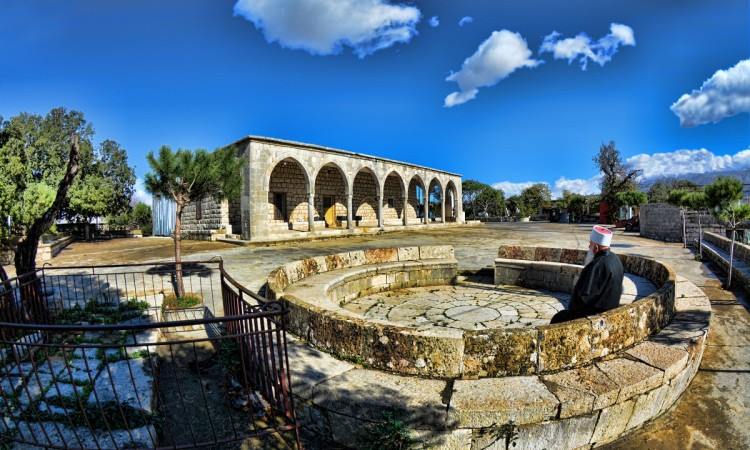
The current council of the Bayada Khalwats is a modest, square-shaped building of great simplicity, with an area of 700 square meters. It was built for the first time in the late seventeenth century, then renovated in the mid-nineteenth century. The largest part of it is a worship hall that can accommodate about 500 worshippers. It connects from the southwest side to a medium-sized hall dedicated to women's gathering during prayer, separated by a thick wall with small openings. Its surrounding porticos are shaded by Arab-style arches. As for its furnishings, they consist of carpets, rugs, and some woolen covers. The surrounding open spaces amount to about two thousand square meters. In the middle of its southern side is a circle of carved stone with a diameter exceeding ten meters, used for sitting and discussion at sunset. Some of the Khalwats in Bayada are hereditary to families, while others are dedicated to regions, such as the Jebel al-Arab Khalwats in Syria, the Palestine Khalwats, which were built over 170 years ago, and the Mount Lebanon Khalwats.