

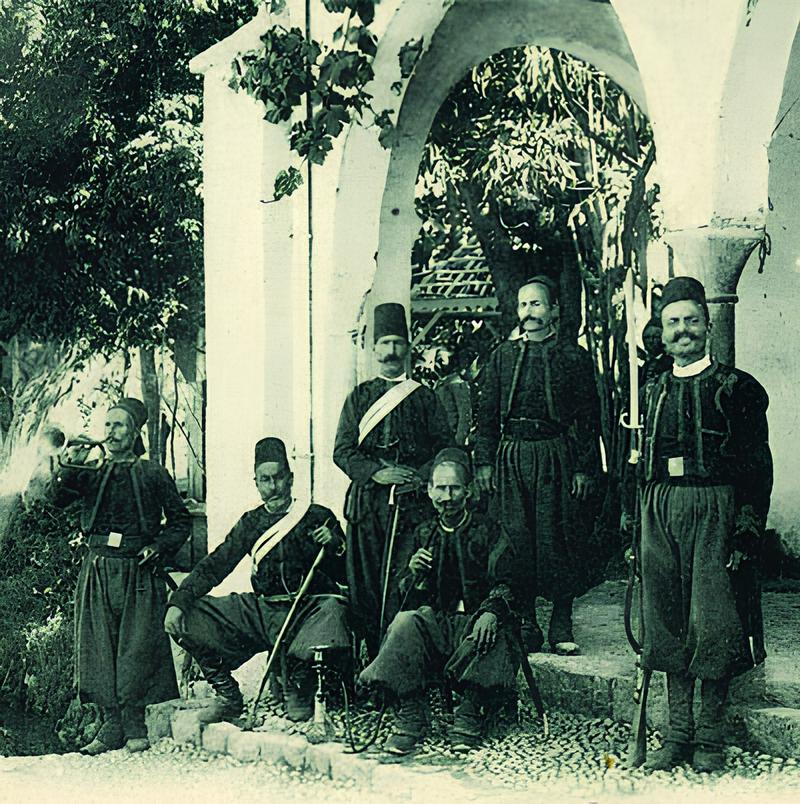
Sheikh Bashir Jumblatt (1775–1825 AD) was one of the senior Druze leaders in Lebanon and held an important status throughout the Middle East. Sheikh Bashir fought with sincerity and heroism for the Druze community during a period marked by sectarian turmoil and political conflicts across Lebanon, ultimately paying with his life in his struggle against his rival, the tyrant Prince Bashir Shihab II. Sheikh Bashir Jumblatt is remembered in history as one who struggled to preserve the foundations of the Druze presence and the future continuity of the community.
Biography of Sheikh Bashir
Sheikh Bashir Jumblatt was born in the village of Baadaran, in the Chouf Mountains of Lebanon. He was from the Jumblatt family, the middle son of the three sons of Sheikh Qasim Jumblatt, and the grandson of Sheikh Rabah Jumblatt. He stood out in his youth, becoming a leader of the Druze community in Mount Lebanon during the de facto rule of Prince Bashir Shihab II (1767–1850 AD). At the beginning of that period, friendly relations and understanding prevailed between the two Bashirs, as they cooperated several times and united to act against the Ottoman governor of Sidon, Ahmad Pasha al-Jazzar,
who was known for being a butcher and a tyrant. However, the relationship between them deteriorated after the death of al-Jazzar in 1804 AD, and severe disputes arose between the two Bashirs.
The disputes between the two princes reached their peak in the “Mukhtara” incident in 1825 AD, when Prince Bashir Shihab sent a large army, composed of his soldiers and thousands of Ottoman fighters, to occupy the areas under the control of Sheikh Bashir Jumblatt, looting Druze villages and confiscating the property of their inhabitants. In 1825 AD, Sheikh Bashir Jumblatt was executed by hanging in Acre, at only fifty years of age. Dignitaries of the Druze community from the village of Yarka, led by Sheikh Marzouq Saeed Maadi, moved the body of Sheikh Bashir Jumblatt to their village, held a large funeral for him, and buried him in the village's northern cemetery, next to the shrine of Sheikh Abu al-Saraya Ghanayem (R), who was one of the senior preachers in the region.
Timeline of Key Events in the Life of Sheikh Bashir Jumblatt:
- 1775 – Birth of Sheikh Bashir Jumblatt in the village of Baadaran.
- 1788 – Prince Bashir Shihab II takes command of the Mount Lebanon region and becomes an ally of Sheikh Bashir Jumblatt.
- 1791-1793 – Sheikh Bashir leads a rebellion against the Ottomans in Mount Lebanon, refusing to pay the exorbitant taxes imposed by the Ottoman governor of Sidon, Ahmad Pasha al-Jazzar.
- 1794-1796 – The governor of Sidon, al-Jazzar, captures Sheikh Bashir Jumblatt and his brothers and imprisons them in Acre.
- 1799 – French armies led by Napoleon Bonaparte besiege the city of Acre and attempt to occupy it, but the siege fails.
- 1804 – Death of Ahmad Pasha al-Jazzar and the emergence of a severe dispute between Sheikh Bashir Jumblatt and Prince Bashir Shihab II.
- 1807 – Prince Bashir Shihab II is officially appointed as an Ottoman governor in Mount Lebanon and imposes new taxes that burdened the Druze community.
- 1811 – Sheikh Bashir Jumblatt welcomes and cares for 400 Druze families after they were forced to displace from the Jebel al-A'la in Syria following persecution by local Ottoman authorities.
- 1822 – Prince Bashir Shihab II supports the governor of Sidon in an attempt to rebel against the Ottomans and control the city of Damascus, but the Ottoman Sultan triumphs in this battle and exiles Prince Bashir Shihab to Egypt.
- 1825 – The day of “Mukhtara”: Bashir Shihab and the Ottomans attack the strongholds of Sheikh Bashir Jumblatt, strip Druze villages and loot their wealth, and execute Sheikh Bashir at the age of 50.
Sheikh Bashir Jumblatt – Personality and Achievements
Sheikh Bashir dedicated most of his life to struggling for the Druze community in Lebanon and for all the people of Lebanon. In the history of the community, he is described as a powerful leader who possessed the qualifications and talents of leadership, fulfilling all the conditions of a leader. He was a tough military commander who led the Druze community in Lebanon during a perilous period under foreign and hostile rulers. Sheikh Bashir was criticized by some opponents and rivals, who claimed that he treated part of the Druze community with harshness and ferocity, which led to internal conflict between Druze families.
1. Sheikh Bashir's Leadership Qualifications
Sheikh Bashir Jumblatt was known for his courage throughout his life; he was a powerful and influential leader who reconciled extremism with moderation, and struggle with reconciliation. Thanks to these qualities, he was able to gather a large number of his community members and unite them, thereby strengthening his power against his enemies. In this way, he also made a major contribution to strengthening the virtue of “protecting the brothers.” Sheikh Bashir set his sights on the task of maintaining the strong position of the Druze community, but he was not always able to maintain unity within the community, as evidenced by the rivalries and disputes that erupted multiple times between many Druze families in Mount Lebanon.
When the governor of Sidon, Ahmad Pasha al-Jazzar, imposed exorbitant taxes on the residents of Lebanon, the sheikhs of the Druze community in Mount Lebanon met to find a way out of this predicament. Sheikh Bashir Jumblatt stood out among them; he was bold and courageous, and still a young man, when he cried out, “We will not accept these measures!” Sheikh Bashir received the support of all the Druze sheikhs, who recruited young men and declared their rebellion against the governor. The Druze forces were able to fortify themselves in Mount Lebanon and strike al-Jazzar's forces. Over time, al-Jazzar signed a truce with Sheikh Bashir and the rebels who were by his side. This event raised the status and stature of Sheikh Bashir among the people of Mount Lebanon, and he was given the title “Column of the Sky” due to his strength and prowess, and because he was a man of faith and belief who did not fear death. After the death of the Ottoman governor, al-Jazzar, in 1804 AD, Sheikh Bashir's position strengthened further, and he became one of the greatest leaders in Mount Lebanon and the head of the Druze community there.
Sheikh Bashir possessed strong political capacity and intuition. Whenever he initiated any plan of action, he would take into account all considerations and possibilities; he knew when to call a truce, when to stand his ground, when to take a firm stance, and when to prefer neutrality. Among the examples of these capabilities was the event that occurred when the French commander, Napoleon Bonaparte, attempted to occupy the region of Lebanon, which was then under the rule of the Ottoman Empire, which suffered from weakness and instability in 1799 AD. When Napoleon's armies arrived in the Galilee region, he imposed a siege on the city of Acre and demanded the recruitment of the residents of Lebanon, including the Druze, into his ranks. However, Sheikh Bashir maintained his neutral stance with his moderate style, preventing the Druze from being dragged into the conflict, and was able to maintain the sensitive balance of power in Mount Lebanon, even after Napoleon's withdrawal from the region.
2. Sheikh Bashir Jumblatt; A Druze Unitarian Figure
Sheikh Bashir believed in the necessity of preserving the Druze Unitarian faith and the beliefs, traditions, and customs of the Druze. To ensure a high status for them as a religious community in Lebanon, he had to confront foreign powers and hostile leaders throughout his years of leadership, all in addition to internal strife within the community.
Despite all this, and in addition to being occupied with his high leadership position and his interest in political, administrative, and civil matters, Sheikh Bashir decided to immerse himself in the Unitarian faith and join the ranks of the clergy officially, becoming a Sheikh in 1814.
Sheikh Bashir strove toward achieving the freedom of the Druze in worship and prayer under Ottoman authority, and he struggled to stabilize them in their lands in Mount Lebanon and the neighboring regions. Because of his status, he was given the title “Column of the Sky.” This title indicates that Sheikh Bashir was a symbol of pride and honor for the Druze, and that he was always ready to fight for the principles and values of the community.
The following event demonstrates Sheikh Bashir's adherence to the virtue of “protecting the brothers” and his implementation of it: In 1811, he received with a wide heart and welcoming spirit more than 400 Druze families who were forced to flee from the Jebel al-A'la in Aleppo, Syria, and seek refuge in Mount Lebanon. Those families suffered from the persecution and injustice of the Ottoman governor until their lives became unbearable. Sheikh Bashir, with the support of Prince Bashir Shihab, absorbed them into Mount Lebanon, secured refuge and protection for them, and then settled them in the region and met all their demands.
3. Helping the Needy
From his youth, Sheikh Bashir was known for his morals and values; he believed in good neighborliness and helping the poor and weak, in accordance with the teachings of the Druze faith. During his years of leadership of the Druze community, Sheikh Bashir insisted on looking after the simple and the general public; he did not distinguish between landowners, wealthy families, and the Druze farmers who worked the land. Many times, he provided aid to the poor and needy who staggered under the burden of exorbitant taxes. For example, during the days of the Ottoman governor al-Jazzar, Sheikh Bashir, who was well-off, provided grants and donations to his Druze brothers, and he often paid taxes on their behalf himself. Sheikh Bashir supported Prince Bashir Shihab with his wealth before they became rivals, and provided his family with financial assistance when needed to pay the taxes imposed on them.
4. Religious Tolerance
Sheikh Bashir Jumblatt persisted in treating followers of other religions living among the Druze with religious tolerance, especially Christians and Muslims, and was keen to preserve the religious rituals of all sects, for which he was met with respect by everyone. For example, he received a certificate of appreciation from the Pope, the spiritual head of the Christians in the Mukhtara village, in the Chouf Mountains. From there, Sheikh Bashir Jumblatt led the Druze. Maronites and Catholics in Rome, for his support of the Maronite community in building monasteries in Lebanon. Sheikh Bashir showed the same treatment to the Muslim citizens living alongside the Druze in Lebanon. For instance, in 1814, he helped build a mosque in the village of Mukhtara, his birthplace; furthermore, he ensured that the Muslim citizens living nearby were able to perform the duty of fasting in the month of Ramadan freely. These actions express the respect that the Druze showed to Muslim citizens and the relationship between the two communities.
Excerpted from the Unitarian Heritage