

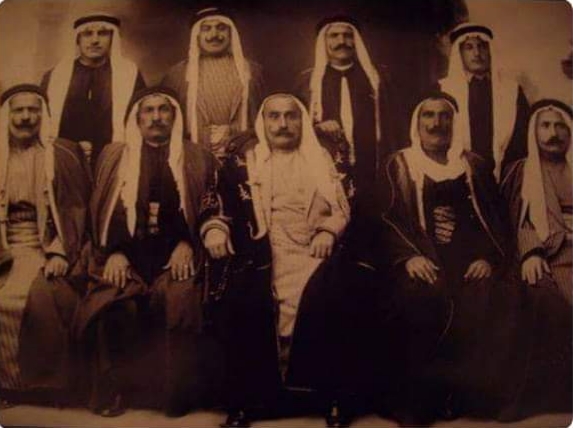
The life of Nasib Salim al-Daoud was characterized by nationalistic stances expressed at several junctures. He hailed from an ancient Druze family that lived in the town of Halwa in the Rashaya district, on the borders of Syria.
Born in 1880, Nasib al-Daoud practiced politics early on, criticizing the Ottoman authority for many of its practices, for which he was arrested, brought before the Martial Council in Damascus, and imprisoned before being released after three months.
During the French Mandate era, Nasib al-Daoud aligned himself with the Great Syrian Revolt and rebelled against the French Mandate. He led a group of revolutionaries from his village and neighboring villages, as his home served as a headquarters for some of the leaders of the Great Syrian Revolt. Many operations against the French were launched from his house, the most intense of which was the Battle of Halwa.
He was elected as a deputy in the Lebanese Parliament for the Bekaa-Rashaya district in the 1937 and 1943 sessions. He was elected as a member of the Committee on Public Works, Health, and Public Relief, as well as the Committee on Trade and Agriculture. He played a prominent role in the battle for Lebanon's independence, secured communication between the revolutionaries of Rashaya and the revolutionaries of Bchamoun, and participated in amending the Constitution.