
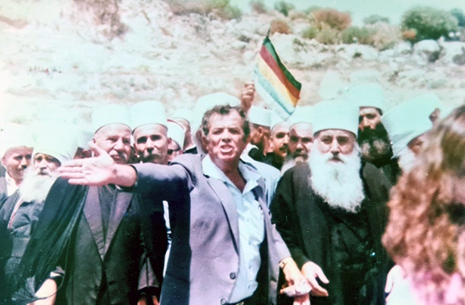
Considered one of the most prominent families of Hasbaya, though perhaps not the largest, its role has been significant. Its members played a noble part in many difficult situations and defining moments, especially during the Israeli occupation, as they did not yield to its conditions or attempts to disconnect a people's history and distort their struggles.
The Shuja family resides in the southern town of Hasbaya, the historic capital of Wadi al-Taym. This noble lineage belongs to the Druze Unitarian community, which has contributed throughout its history to glorifying it and showcasing its civilized face. Thus, they possess a great legacy represented by the conduct of religious figures who transcended the boundaries of the sect into a space of asceticism and monotheism, which elevated their status and spread their reputation, in addition to the major role they played through their distinguished presence in the Khalwat al-Bayada, the destination for the wise, the enlightened, and the seekers of knowledge from the Druze Unitarian community. "Sada al-Balad" had an interesting conversation with Sheikh Fendi Shuja about the family's history, particularly during the period when his late father, Sheikh Abu Fendi Jamal al-Din Shuja, was the most sound-minded and the most pious Sheikh in al-Bayada. Their conversion to the Druze faith occurred in the Aleppo region before they descended to Wadi al-Taym.
Their old house was the highest in Hasbaya at the time, and they owned three large wells for drinking water, enough for the horses and the household. Their properties included Marj al-Khiam and the land of Al-Hawli, extending as far as Sahmar in the Western Bekaa. However, the uprising they led against the Turks, and their killing of the Marjeyoun Kaymakam (district governor) nicknamed "Al-Hanash," prompted the Sultanate, by order of the Vali of Damascus, to confiscate their lands.
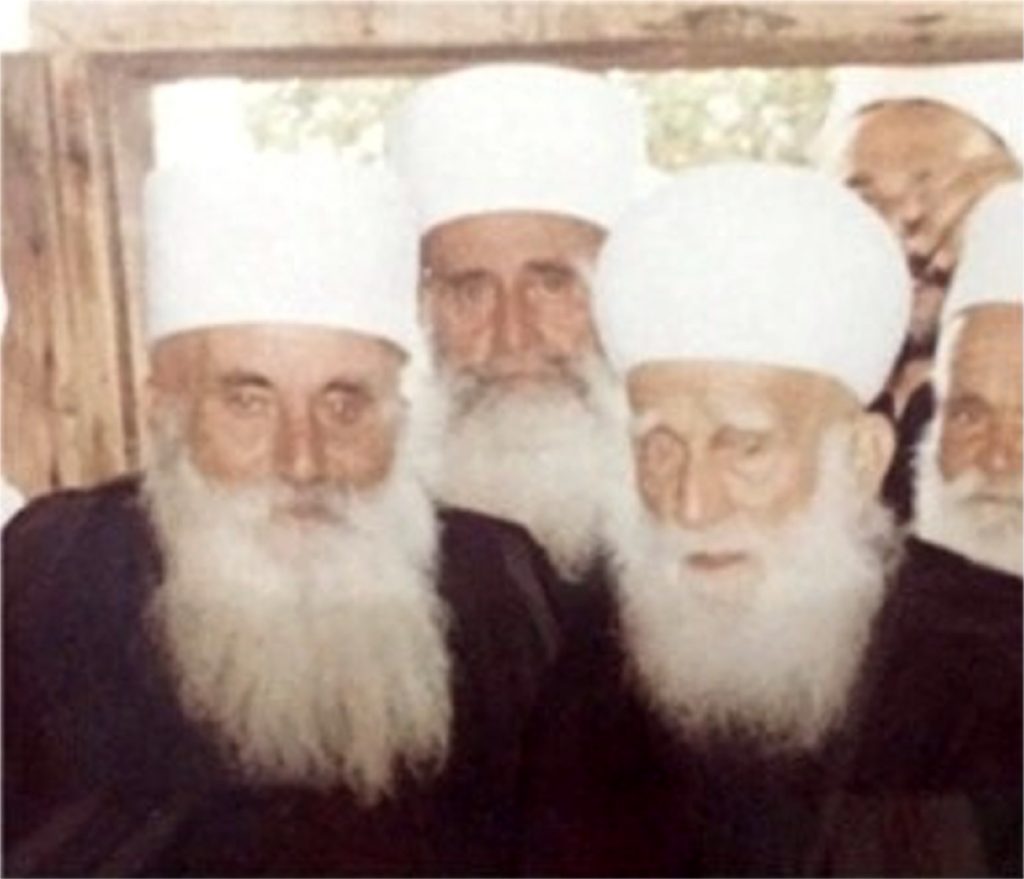
The Shuja family traces its lineage back to the highest Arab ancestry, the "Al-Hashim" family, and includes many religious figures. Seven of them were buried in the Khalwat al-Bayada due to their high merit among the religious community, a fact that carries special symbolism.
Among the most prominent was Sheikh Ali Shuja, who, along with Sheikh Abbas Numan Qais, was one of the Sheikhs of al-Bayada, embodying affections and the loftiest rituals combined with purity of intention and sincere affection toward this helpless person who boasts of your love, prides himself on your friendship, and relies for the success of his affairs on your righteous prayers. He considers the presence of such righteous and pious people as you a secure guarantee for averting harm from the country and drawing the blessings of the Creator's generosity and mercy upon the people. May God extend your lives, and may we benefit from you and your pure companions among the righteous Sheikhs of al-Bayada and the devout ascetics who are beacons of emulation and sources of guidance. I hope you will accept my greetings, accompanied by respect for you and all your noble companions, and never deny us your satisfaction and prayers.”
This message is nothing but a testament to the Sheikh's stature and position. This indicates that there is a secret in the relationship between the Shuja family and the Khalwat al-Bayada, which are various religious assemblies and hermitages surrounding the Grand Council. The oldest is considered to be the hermitage of Sheikh Abu Ali Hussein Shuja, whose ownership today, as mentioned by the historian Ghaleb Saliqa, belongs to the heirs of the late Sheikh Abu Hassan Wahba al-Aisami.
The Most Prominent Figure
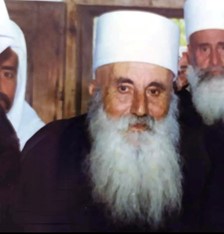
The most prominent figure in the history of this family was His Eminence Sheikh Jamal al-Din Shuja (1907-1991), known as the "Possessor of Two Intellects" due to the knowledge and wisdom he attained. His memory never faded; even in his final days, he could recite about a thousand verses of poetry.
In 1925, he participated in the Great Revolt against the French at the Tel al-Dhahab site at the entrance of the Hasbani, along with a number of Mujahideen, when he was only seventeen years old. In 1934, his father, Sheikh Fendi Shuja, passed away. Jamal al-Din had been a student under him, gaining the sciences of wisdom at the Khalwat al-Bayada, and thus he took charge of the region's affairs with his intellect and wisdom.
He faced the great challenge during the 1948 Palestinian Nakba alongside Sheikh Abdullah Abu Kheir and Sheikh Amin Tarif, as he played a major role in the steadfastness of the Druze of Palestine on their land. At that time, he sent word to them through the Kaymakam of Acre, saying: “The entry is in our hands, but the return is not in our hands; stand firm on your land.” His stance was consistently Arabist, and he maintained a relationship of friendship and mutual affection with Kamal Jumblatt, who once told him, “You are the wisest in the sect, and if your opinion were one thing and everyone else's was contrary, I would choose your opinion.”
He was keen on coexistence. During the Civil War that devastated Lebanon, the Wadi al-Taym region bears witness to his efforts, as he forbade strife between families in the region and prohibited aggression against anyone. He was dedicated to protecting the fabric that made the region a model to be emulated. A Christian resident of the town, named "Fares Abu Barim," tells how the Sheikh stood by them after learning that the reason for the lack of a priest in their parish was a lack of resources; he did not hesitate for a moment to pay from his own money and livelihood to honor the people of his town.
He had solid relationships with Arab and nationalist figures, most notably Abdel Halim Ghalib, Egypt's ambassador during the era of the union, and Imam Musa al-Sadr.