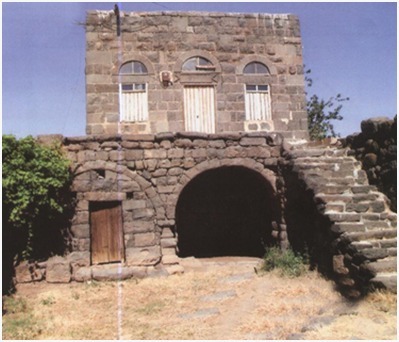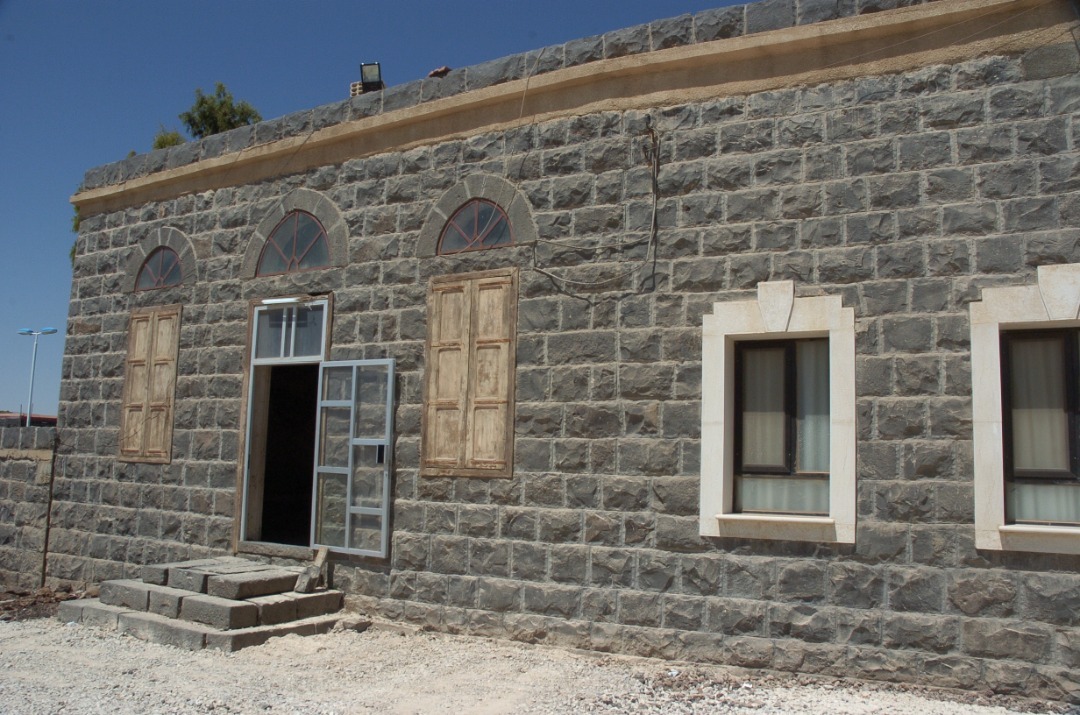

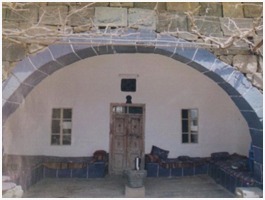
The Madafa is an authentic inherited tradition in Jabal al-Arab that has played a crucial role in the social, political, and cultural life of the people of the mountain. It has enshrined Arab values inherited from ancestors, such as courage, generosity, aiding the distressed, honoring guests, protecting neighbors, upholding covenants, and keeping promises, in addition to its role in public life and social and cultural occasions. It has been both a witness to and a venue for important historical events.
Despite the development that has occurred in society in recent decades, the Madafa remains an essential part of the housing system, especially in rural areas, while major families in cities have endeavored to establish a Madafa for each of them, and its role has continued in social and cultural life and public affairs.
Some ancient Madafas have been linked to major historical events, such as the famous Madafa of Khalil al-Jarmaqani in the town of Arman, which witnessed the crushing of the first Ottoman battalion, leading to numerous battles, the most important of which was the Battle of Kharab Arman, in which the mountain rebels crushed the campaign of Mamdouh Pasha in 1896 AD. Also, the Madafa of Sheikh Waked Zahreddine in Al-Surah al-Kabirah, where the banners of the mountain were raised to protect the guest of the mountain, Emir of Ha'il Sultan al-Rashid, who was pursued by the Wali of Damascus and wanted by customary law for the Sublime Porte, in the year 1906, and the Madafa of Sheikh Abu Ali Mustafa al-Atrash, who hosted him for three months until his safe return to his country.
The Madafa of the poet and fighter Madha al-Maghwash in Khalkhalah received leaders of the Arab Renaissance such as the martyr Abdul Ghani al-Arisi and Tawfiq al-Bassat, who were hanged on the gallows in 1916 AD. The Madafa of the fighter Hamad al-Barbour in Umm al-Rumman was a center for Arab revolutionary activity with Nasib al-Bakri, who was commissioned by Sharif Hussein during the Great Arab Revolt. Furthermore, the Madafa of Sultan Pasha al-Atrash, the General Commander of the Great Syrian Revolt, was where a large number of Arab freedom fighters and Renaissance leaders celebrated the raising of the Arab flag for the first time above Sultan Pasha al-Atrash's house in the spring of 1917 AD, declaring the Qurayya-Suwayda region liberated from Turkish occupation, before the liberation of Damascus and its raising in its skies.
The national role of the Madafa was solidified during the French occupation, which poured its resentment on the largest Madafas in various villages, considering them a reason for the failure of its colonial policy. The Madafa of the leader of the Great Syrian Revolt, Sultan Pasha al-Atrash, was subjected to bombardment by warplanes and destroyed, after it had enshrined the meanings and values of Jabal al-Arab. It had been visited by a large number of leaders and militants, especially the militant Ibrahim Hanano, leader of the Northern Revolt, and the rebel Adham Khanjar from Jabal Amil in Lebanon, whose arrest by the French was a sufficient reason for the outbreak of Sultan's first revolt against the French in 1922 AD.”