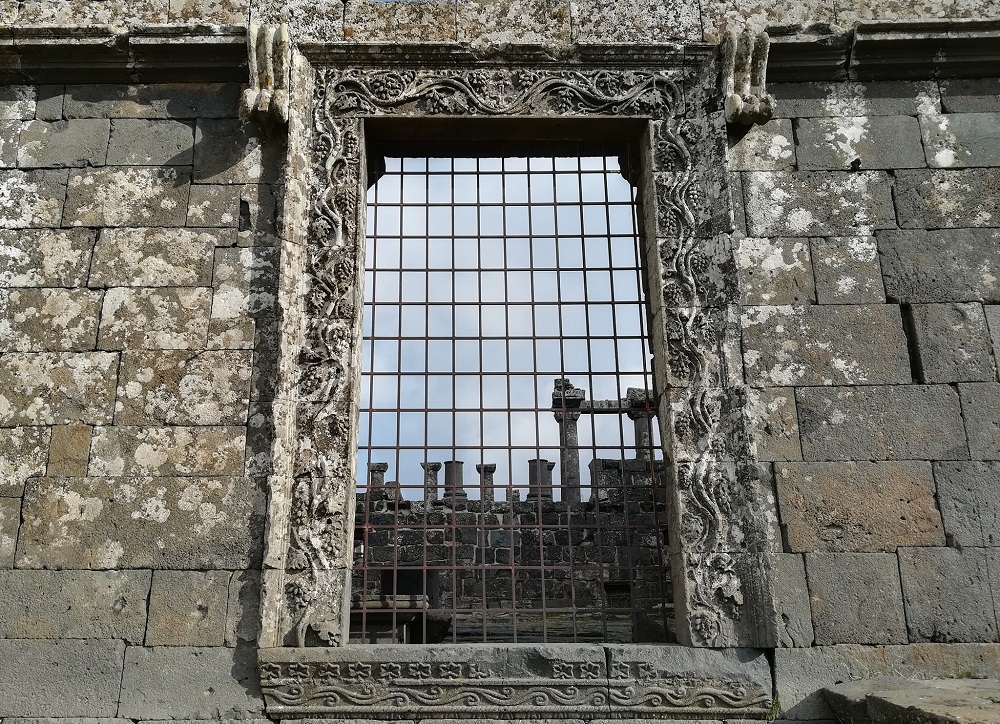

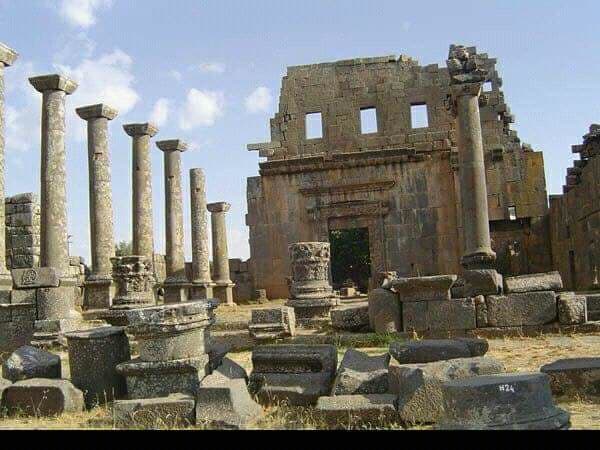
Qanawat “Canatha” was one of the most important cities of the entire Roman era. Its magnificent basalt antiquities are evidence of its grandeur and splendor, blending with the beauty of its climate to form a museum that combines nature with deep-rooted heritage.
Qanawat held great religious significance during the Roman era through its temples, whose features still stand today, and it also became a pilgrimage center for Christians after the Romans adopted Christianity as the official religion.
Five Temples
The city, located 7 km northeast of the city of As-Suwayda, is distinguished by its abundance of temples. It later became a pilgrimage center after Christianity was declared the official religion of the Romans, as well as an episcopal see affiliated with Antioch.
The city contained five temples considered the most beautiful in the region, such as the Temple of “Zeus”, located at the top of the upper city, the “Acropolis”. Its construction dates back to the first century BC, dedicated to the chief of the gods. An aqueduct and architectural chambers were discovered inside it, and it consists of three terraces carved into the bedrock.
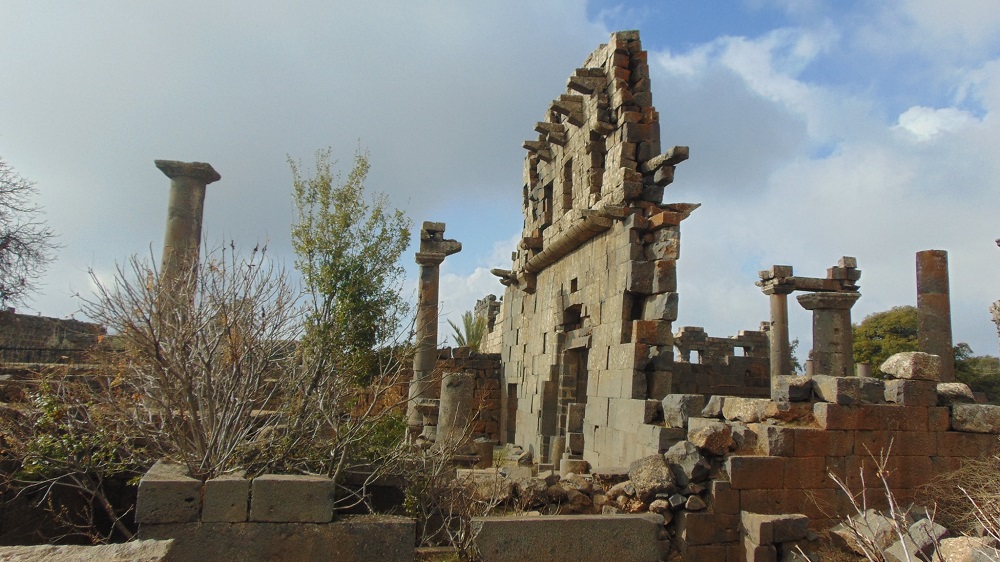
The city also includes the Temple of “Helios”, dedicated to the worship of the sun god, dating back to the second century AD. It consists of six columns at its entrance facade—four in the front line and the remaining two framing the doorway—topped with capitals decorated with acanthus leaf wreaths in the Corinthian style. In addition, there is the Temple of “Athena-Allat”, or goddess of wisdom (Athena), of which four Corinthian-style columns remain, with its construction dating back to the second century AD.
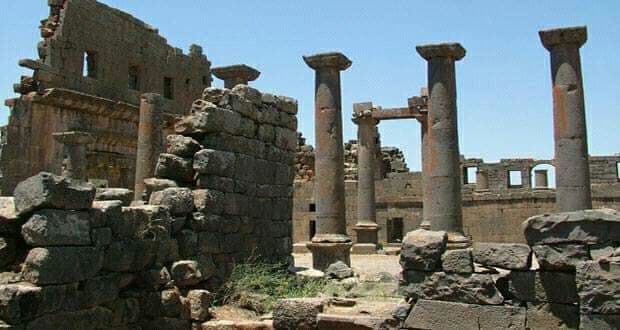
Also built in the city was the Temple of the “Water Goddesses”, the Nymphaeum (Allimthimyum), located within the Qanawat Valley to the east of the old town wall and dedicated to the worship of water deities, as well as the “Odeon”, a small theater situated on the eastern bank of the valley to the north of the Temple of the Water Goddesses, of which nine tiers remain, some carved directly into the rock. The construction of these two structures dates back to the second half of the third century AD.
The Archaeological Seraglio and Churches
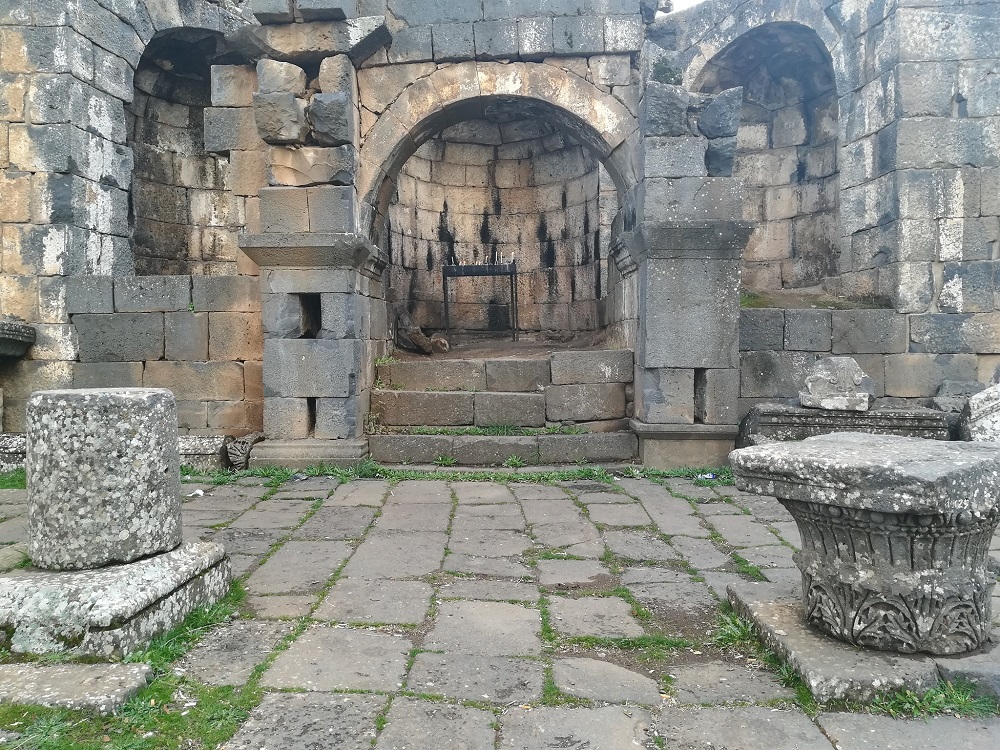
The archaeological Seraglio in Qanawat is one of the city's most important and largest archaeological landmarks, where the Temple of Athena-Allat stood. A church was subsequently built in the fourth century AD following the declaration of Christianity as the official religion of the Roman Empire, and a larger church was later constructed in the fourth and fifth centuries AD behind it, complete with a forecourt and a grand reception hall.