
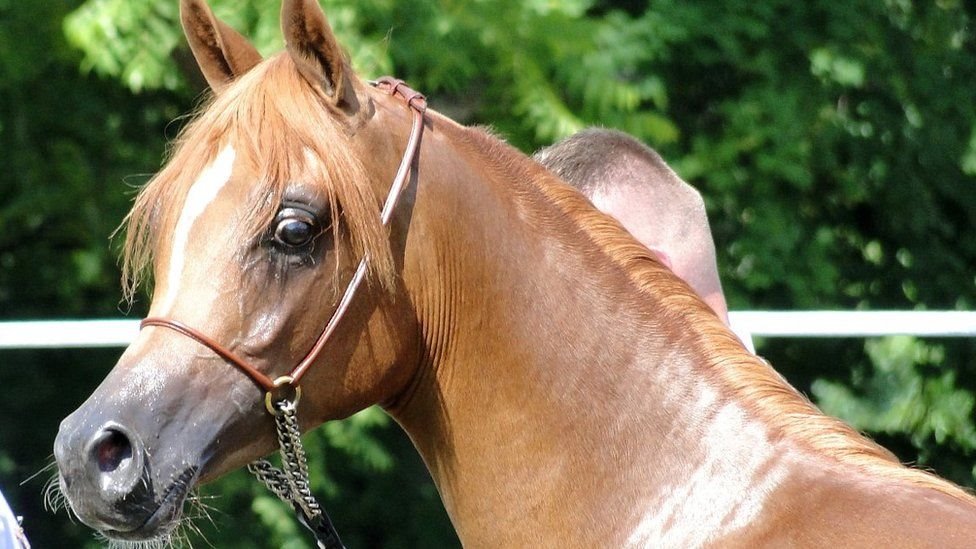
In Jabal al-Arab, during the last quarter of the nineteenth century, what became known as the judiciary for horses and livestock began, following the emergence of disputes over the partnership of thoroughbred horses.
Researcher “Hayel al-Qantar” says that “partnerships in thoroughbred horses increased, as did disputes among new immigrants over the ownership of horses and livestock. Economic life became fraught with tension and disagreement, which necessitated the presence of a judge for horses and livestock in Jabal al-Arab, with conditions that included special specifications for the personality of this judge. He must possess ‘manliness’, be ‘composed’—meaning he is a master of what he sees, hears, and says—be ‘qualified’—meaning he is not exposed to anything that would lose him his legal capacity—possess sound judgment, be ‘pious’ and a believer in God, righteousness, and godliness, and be distinguished by honesty and integrity.”
Al-Qantar added that Sheikh “Mohammed Abu Assaf,” nicknamed “al-Qumayzi,” was the first to be appointed to the horse and livestock judiciary for over two years before his death in 1885. This means that the horse and livestock judiciary began in the Mountain in the village of “Salim” in 1883. This custom was tested through partial ownership among partners by buying and selling shares according to the lineage and offspring, with each partner holding shares proportional to what they owned, whether small or large. The partner who owned the mother mare would “receive the surplus” of her offspring—meaning they held the largest share—while the smaller shareholders retained their stake. If the mare died and left no offspring, everyone’s right to the shares would vanish, similar to a business bankruptcy. As for “employment,” or using a thoroughbred mare or her offspring for plowing, threshing, or pulling—meaning agricultural work—it was strictly forbidden to preserve their nobility. They remained held in high regard, reserved only for war raids, racing, or rapid riding; they remained prepared solely for the battles and raids that used to occur. However, this type of judiciary has ended and has been replaced by official courts.”
Regarding the story of the horse judiciary and the beginning of its events among the “Abu Assaf family,” researcher Dr. “Ali Abu Assaf” clarified in his book, “From the Papers of the Two Sheikhs Fahd Hamad and Salman Dawood Abu Assaf on the History of the Abu Assaf Family.” He said, “The horse judiciary began with the ‘Abu Assaf family’ when two people came to “Shahin Abu Assaf” in the village of “Salim,” leading two mares and a foal, requesting a judgment—meaning conducting a judicial proceeding. He asked each of them to present their argument or complaint.”
The first said: “My mare was grazing—meaning grazing in the spring season on the back of the mountain—and I looked at her and saw her nursing the foal. When I wanted to take my mare and the foal back to my house, this man stopped me and said the foal was his and that my mare was nursing it.” The second said: “When I checked on my mare, she was nursing this foal and constantly hovering around it.” Then the first returned and said: “My mare was also nursing the foal, which was also hovering around her.” “Shahin Abu Assaf” thought and asked each person: How many times did you visit the place? And was the foal following your mare all the time? From the answers, he concluded that the foal was most likely attached to one of their mares.
Then, “Shahin Abu Assaf” secretly instructed one of his sons to go to a pond called “Bahaha,” next to the village of “Salim” to its south, and stay there until the mares and the foal arrived to see what would happen.
“Shahin Abu Assaf” asked one of the men to lead the horses to the “Bahaha” pond. When they went to drink water, he was to push the foal into the pond, and you must recognize which mare neighs—meaning by the sound of the horse. The plan was executed, and the two people returned to their seats. “Shahin” asked his son: “Which mare neighed?” The son pointed out the mare to his father. Then “Shahin” said: “Oh brothers, the mare that neighed is the mother of the foal, and the other one may have occasionally cared for it to relieve herself of milk.”