
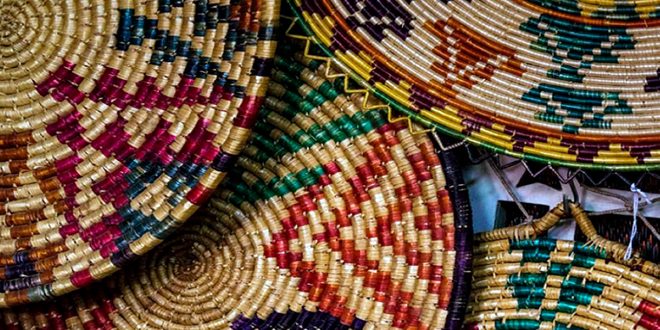
Straw craft is considered one of the trades that the women of As-Suwayda excelled in the past, by making plates and vessels of various sizes as alternatives to trays and food dishes, baskets for storing provisions and fruits, as well as clothes boxes.
Long wheat stalks form the main component of this material, as straw craft goes through several stages. It begins with obtaining the long wheat stalks, then removing the ears of grain from them, followed by dyeing a portion of them with colors using a primitive method as the ancestors used to do. Then, they choose the shape they intend to make and the pattern they will place on that masterpiece, to eventually produce, after some time, a work of art that carries much beauty and creativity.
Women used to try to highlight their proficiency in this craft and boast about it, competing to make the best and most beautiful straw products, to the point that this skill was once a required condition for betrothing young women.
Despite the multitude of modern handicrafts and the significant decline in the consumer market for straw-made tools, the women of As-Suwayda Governorate have continued to practice this craft, transforming its market from tools necessary for daily use into household collectibles that preserve heritage, decorations that adorn restaurants, or gifts acquired by tourists.