

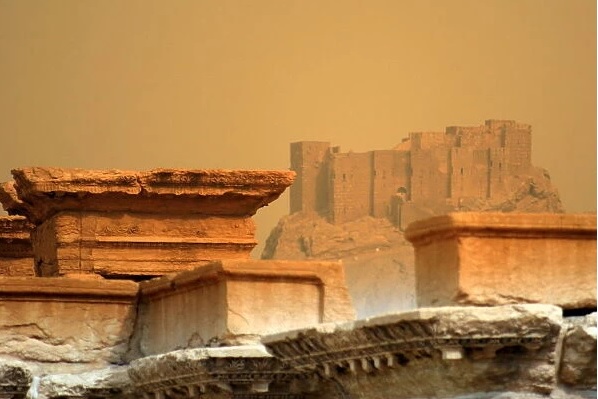
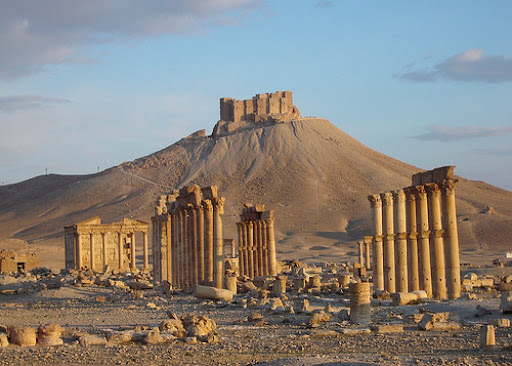
Fakhr al-Din al-Ma'ni Castle is one of the most beautiful sights and monuments in Palmyra. It is located atop the largest and highest mountain in Palmyra, on a rocky outcrop 150 meters above the ground, overlooking the city of Palmyra and its oasis.
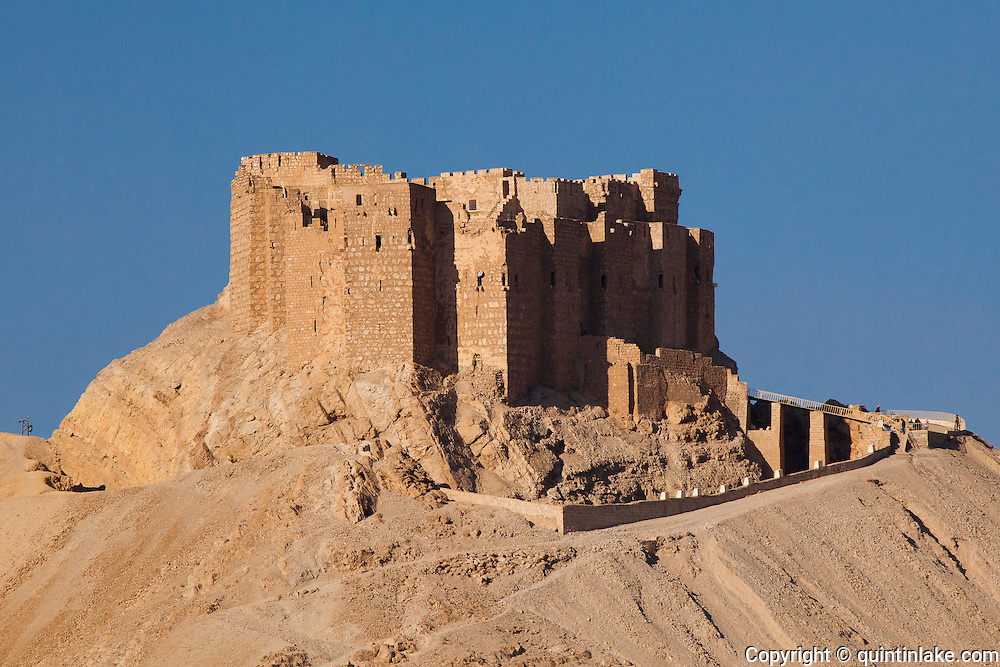
The castle is distinguished by its square shape and winding entrances. It also contains several underground rooms that were used as storage cisterns; rainwater was channeled into them via gutters into basins carved into the rock to collect it for use by the garrison stationed in the castle.
The castle is surrounded by a moat 12 meters wide and 12 meters deep, which was built as a water barrier to prevent attackers from entering. The only means of entry into the castle was a drawbridge resting on supports, located over the moat in front of the main entrance facing the southeast.
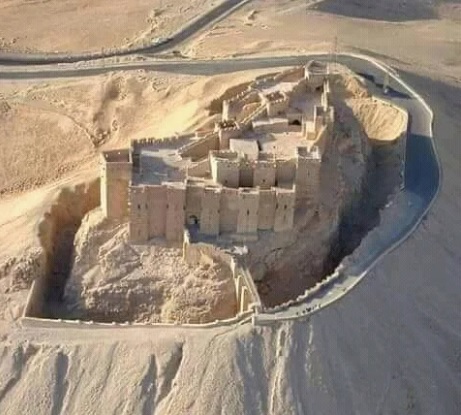
When the enemies of Palmyra reached the bottom of the castle, the garrison soldiers would retract this bridge to prevent them from ascending, leaving the castle completely isolated from its surroundings by the moat, which was used as a quarry to obtain stones for the construction of the castle itself.
It is noted that all the stones of the castle were taken from this moat, with the exception of two small pillars used in the construction of the inner door. This was a great gain for the city of Palmyra, because if the builders of the castle had wanted to take stones from Palmyra itself to build the fortress, they would have destroyed many of its monuments, and nothing of archaeological importance would have reached us.
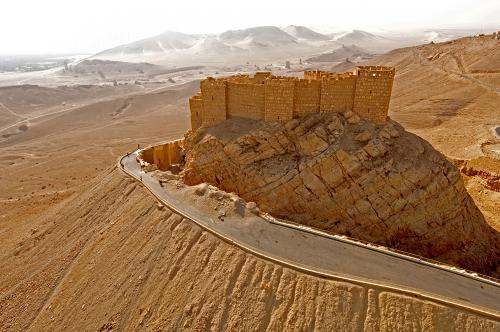
The construction of the Palmyra castle, which occupies the summit of a towering height with steep slopes on all sides, came as the first strong, integrated structure in the eras of Palmyra. The moat dug on its sides increased its fortification, while the height of its walls and floors contributed to increasing its range of oversight and monitoring of what was happening in the Palmyra basin and parts of its mountains and valleys.
The castle is attributed to Prince Fakhr al-Din al-Ma'ni II, who ruled Mount Lebanon and parts of Syria in the early seventeenth century AD. The origin of the castle dates back to the time of the Crusades, when the Atabegs of Damascus, the Zengids, and the Ayyubids worked to equip the city with various means of defense, making it a well-fortified defensive site standing against the Crusaders.
It is worth noting that pottery dating back to that era was found among the ruins of the castle.