
The blessed Eid al-Adha arrives carrying with it all its religious and spiritual meanings, regional traditions, and an invitation to joy despite all the darkness.
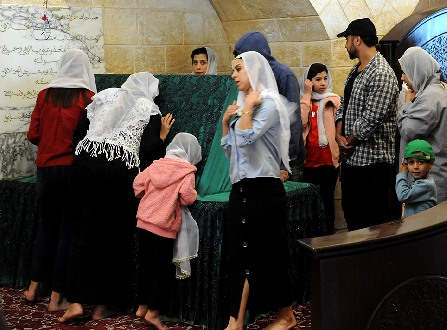
Eid al-Adha is distinguished by its unifying nature, celebrated by all Islamic denominations, and holds a special status among the Unitarian Druze community.
Sheikh Kamel Al-Aridi explained via the mtv website the meanings of Eid al-Adha, noting that “linguistically, the word 'Eid' is derived from 'ada ya'ud' (to return), meaning that which recurs and gathers people together, bringing joy and happiness to hearts. It is also said to refer to the abundance of blessings that God Almighty bestows upon His servants during it. Among the holidays celebrated by the Monotheistic Muslims is the blessed Eid al-Adha, a holiday shared and agreed upon across Islamic sects, just like the joyous Eid al-Fitr.”
Regarding the observances of this holiday, he says: “Many of the faithful observe the ten days of the holiday through frequent prayer, recommended fasting, supplication, and invocation, following the words of our noble Prophet, peace and blessings be upon him and his family: ‘There are no days in which righteous deeds are more beloved to God than these ten days (of Dhu al-Hijjah); fasting each day of them is equivalent to fasting a whole year, and spending each night of them in worship is equivalent to praying on the Night of Decree (Laylat al-Qadr).’ Likewise, the eve of Eid is spent in prayer, glorification, supplication, and the recitation of surahs and verses from the Holy Book of God until morning, in accordance with his saying, peace and blessings be upon him and his family: ‘Whoever stands in prayer on the two nights of Eid seeking reward from God, their heart will not die on the Day when hearts die’ (a hadith considered weak by some, though the recommendation of vigil prayers on the two Eids is affirmed).”
Al-Aridi added: “Along with obligatory and recommended acts of worship, these days are accompanied by deeds of charity and benevolence toward orphans, the poor, and the needy, as well as the upholding of kinship ties through visits to family, relatives, and loved ones. For the Unitarians, these blessed days and nights become an opportunity for self-reckoning and encouragement toward worship and good deeds, an oasis of calm and tranquility in the presence of God Almighty, a vehicle for reconciliation among those in dispute and forgiveness for God's sake, and a noble means for a spiritual, devotional, and monotheistic pause between human beings and their Creator that may (and must) extend beyond.”
From a social perspective, Al-Aridi says: “The joy of Eid is visible among children in their new clothes and fireworks play, and among adults through perfuming themselves, visiting one another, and exchanging holiday greetings. In some villages, such as Baysour in the Aley district, the townspeople—elders and youth, women and children—gather in the village square at sunrise on the first day of Eid al-Adha to exchange greetings and blessings for the holiday, a tradition dating back over a century.
As for the food, or what is known as ‘naql al-Eid’ (holiday treats), there are special kinds of sweets made specifically for the holiday, known as ‘Ka'akat al-Eid’ or ‘Kamaj al-Eid’, such that you rarely visit a home without finding these sweets offered.”
These are some of the hallmarks of Eid al-Adha, yet what remains most essential is peace of mind and tranquility, and for our land to celebrate the holiday in stability, safety, and security, in the South as well as in Gaza.