
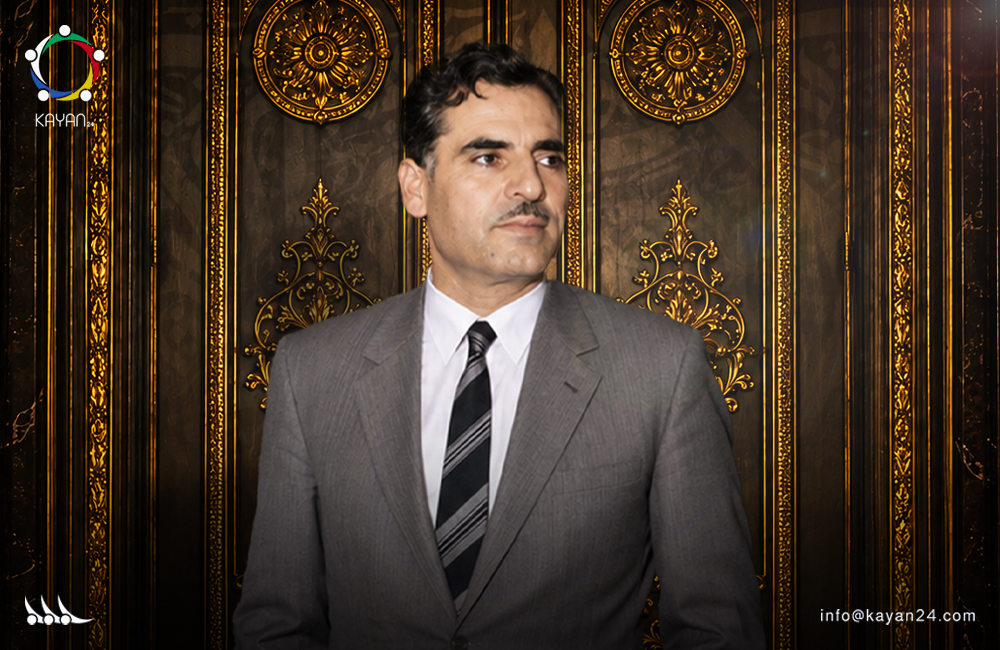
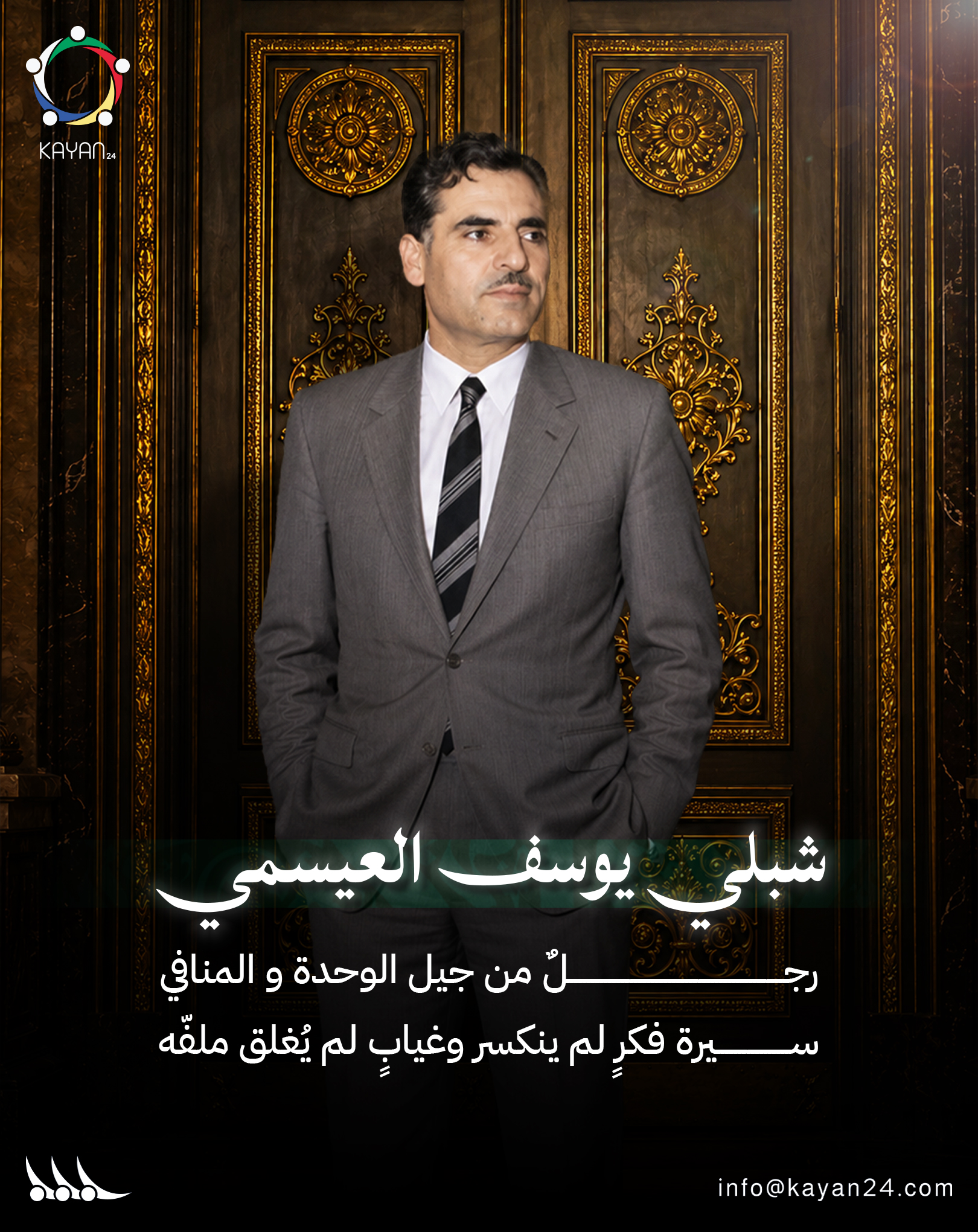
The Arab political memory is replete with figures who left indelible marks on the path of nationalist and intellectual action, forming pivotal milestones in the modern history of the region. Among these prominent figures stands the name of the Syrian thinker and politician Shibli Yusuf Hamad Al-Aysami, the former Secretary-General of the Arab Socialist Ba'ath Party, who lived through the labor pains of the Arab nation and participated in shaping one of its most prominent political currents, paying throughout his life the price of his positions and steadfastness in his principles through prisons, exile, and travels.
Shibli Al-Aysami was born on February 5, 1925, in the village of Amtan in the As-Suwayda Governorate. His political journey began early, as he joined the Arab Socialist Ba'ath Party in 1943. He was among the first generation who attended its historic founding congress in 1947, making him one of the true founders of the party and a prominent member of its National Command. Al-Aysami rose through party and political positions due to his intellectual weight, becoming a member of the party's Regional Command in 1956, then Assistant Secretary-General from 1964 until 1992, and he held the position of Acting Secretary-General at various stages.
His path was not paved with roses; he was arrested three times for political reasons between 1952 and 1966. During the period between 1963 and 1966, he held high ministerial portfolios in Syria, including the Ministry of Agrarian Reform, the Ministry of Education, and the Ministry of Culture and National Guidance, later becoming Vice President of the country. After the military coup and the rise of Hafez al-Assad and his regime to power, Al-Aysami managed to escape prison in August 1966, heading to Lebanon, and from there he moved to Baghdad in September 1968. The Syrian regime subsequently issued a sentence of death in absentia against him, which was later commuted to life imprisonment after about a year.
Al-Aysami resided in Iraq for many years, remaining there until the entry of American forces in 2003, when he left for Egypt to settle there. In the spring of 2011, shortly after the outbreak of the Syrian revolution, the chapters of his human tragedy unfolded in Lebanon; during a family visit to his daughter residing in the town of Aley in Mount Lebanon, the Syrian regime's intelligence abducted the octogenarian (88 years old). The group tasked with the kidnapping transported him to a location under the control of the Lebanese Hezbollah, before he was forcibly deported to Damascus, and his trail has been lost ever since.
Despite this tragic scene, Al-Aysami left behind a rich intellectual library that focused on issues of Arab unity, secularism, and identity. He published prominent works including: "On Arab Unity" in 1957, the book "As-Suwayda Governorate" (co-authored) in 1959, "On the Arab Revolution" in 1968, and "Arab Unity Through Experience" in 1971. He also chronicled the party in his book "The Arab Socialist Ba'ath Party - The Founding Phase" in 1974, followed by "Some Arab Issues" in 1975, "On Unity, Freedom, and Socialism" in 1976, "On Unity, Solidarity, and Settlement" in the same year, then "The Message of the Arab Nation" in 1978, "The Arab Socialist Ba'ath Party - Phase of Growth and Expansion" in 1979, leading up to his important books "The Arabism of Islam and its Universality" in 1985, and "Secularism and the Religious State" in 1986. In addition to this, he enriched the Arab library with valuable printed lectures, including: "The Role of Ideological Parties and their Impact on the Development of the Nation" (Damascus, 1954), The History of the Ba'ath: Thought and Struggle
(Baghdad, 1976), Foundations of Unity and Future Horizons (Baghdad, 1978), "Democratic Dialogue Style" (Baghdad, 1984), "The Arabs: The Material of Islam" (Baghdad, 1984), and finally, The Unity of Syria and Egypt: Lessons and Examples in 1985.
The biography of Shibli Al-Aysami encapsulates the details of a struggle by an entire generation that believed in Arab unity and worked for it. Despite his mysterious forced disappearance and his multiple exiles, the intellectual and political legacy he left behind remains a living testament to the thought of a man who did not compromise his principles, ensuring his story remains both a tragic and inspiring chapter in the history of Syria and the modern Arab world.
#kayan24