
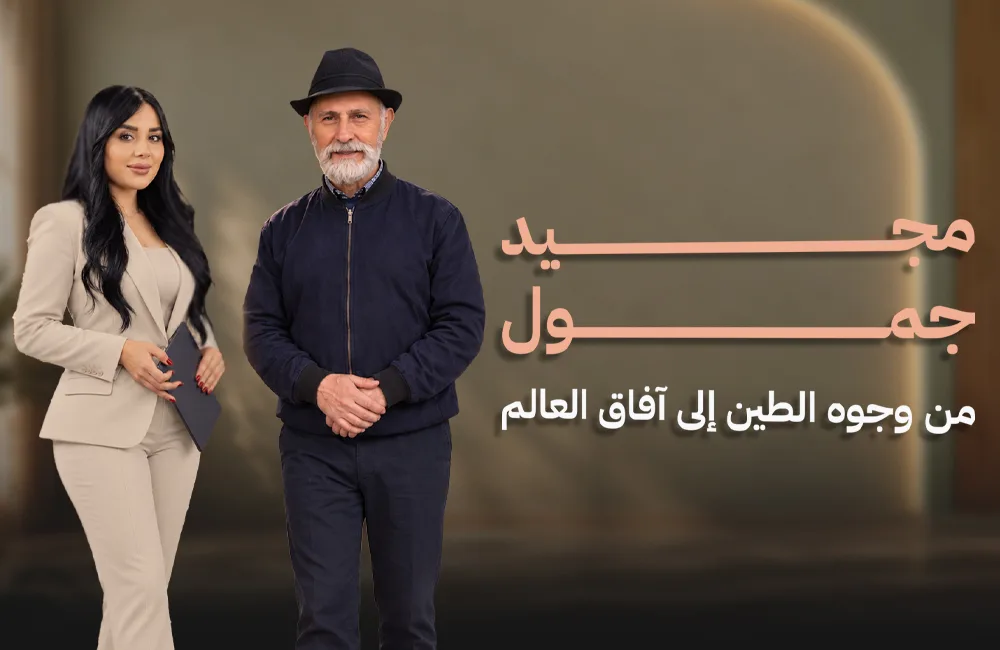
From a small village in Sweida to international museums, spans the journey of Syrian-Polish artist Majid Jammoul, who did not merely shape stone, clay, and metal, but turned art into a space for expressing humanity, its emotions, and its transformations.
In this episode of the program "Journey," we go back with Jammoul to his early beginnings, when in the fifth grade he crafted a human face using clay, goat hair, and glass beads, leading to his academic and artistic journey that took him from Damascus to Europe, opening new horizons for him in the world of sculpture and fine arts.
We pause at the impact of childhood in shaping the artist, the role of study and experience in refining his talent, and the challenges he faced during his career, leading to his experience in Poland, and how living abroad transformed over the years into a new space for life and creativity, without ever detaching from his roots and original identity.
The episode also explores his relationship with artistic material, and how stone and clay can transcend their physical form to carry human thoughts and feelings, in addition to the symbolism of the phoenix in his exhibition "Sublimation of Emotions," as an expression of transformation and the ability to rise again.
The conversation also touches upon his work in administration, academic teaching, and union activities, and their influence on his artistic vision, alongside his reflections on the legacy an artist leaves behind, and the advice he offers to the young generations seeking to build their own artistic identity.
Majid Jammoul's journey is not just a story of artistic success, but the story of a human being who reshaped his experience at every stop, confirming that art does not just give material a new form, but gives the human experience a language capable of enduring.
This was our journey with the artist Majid Jammoul, in an episode of the program "Journey," with Hamsa.