

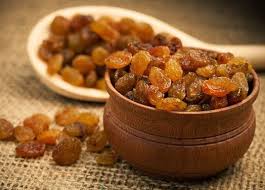
The raisin industry is one of the popular and inherited traditional professions in As-Suwayda Governorate, as it is famous for grape cultivation. It has great nutritional and health benefits that make it a primary health product.
Raisins are prepared in several stages, starting with cleaning the grapes from the bunches, which is called the granulation process—that is, manually separating the berries from the cluster, where it is preferred to choose large berries. Then, they are placed in water to clean them, followed by the boiling process, where the granulated grapes are submerged in boiling water for two minutes. Afterwards, olive oil and potash powder are added to the grapes to reach the drying process after spreading the berries on rooftops or in agricultural fields, where they are left for several days under the sun. Once they dry, they become ready.
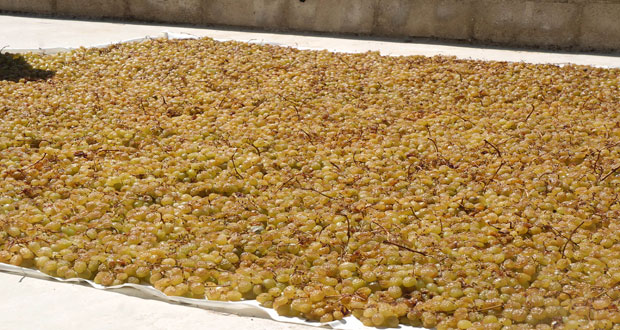
The raisin-making season is characterized by its family atmosphere, where family members gather after the raisins have dried, and the process of collecting the raisins and cleaning them of stems begins.
Raisins have great nutritional and health benefits that make them a primary health product. They constitute an important food substance and enjoy therapeutic benefits, most importantly that they retain most of the properties of fresh grapes. They provide the body with calories, in addition to dozens of other health benefits, as they are considered a tonic for the stomach, liver, and spleen, are beneficial for strengthening memory, and have great utility in helping the body get rid of toxins.
Furthermore, raisins are resistant to microbes and viruses and are prescribed in alternative medicine for treating rheumatism, liver and gallbladder diseases, and high blood pressure. They are also considered a remedy for dry coughs, a preventative for heart diseases, and a source of a number of nutrients essential for health, such as potassium, fiber, and iron.